
Best Arabian Perfumes for Women
When the Algorithm Discovered Arabian Perfumery
The moment that changed how many Western shoppers thought about Middle Eastern fragrance was not a glossy campaign or a department-store launch. It was a seven-second TikTok clip of someone uncapping a gold bottle and calling it the richest perfume they had ever smelled for a fraction of what a comparable Western bottle costs. The bottle was Khadlaj's Hareem Al Sultan Gold. Within weeks the searches were spiking, the stock was clearing and a generation of shoppers was discovering that the Gulf had been making genuinely impressive perfume, at genuinely impressive prices, for decades before anyone pointed a phone at it.
The fragrances on this list sit at the point where that discovery happens. Two of them — Lattafa Yara and Mayar — belong to the milky-sweet school that has driven the most searches and most first purchases. One, Hareem Al Sultan Gold, is the oil-style amber that sparked the conversation. And one, Swiss Arabian Yulali, is the traditional floral-oriental that predates all of it: the scent that represents what Middle Eastern feminine perfumery looked like before the gourmand wave arrived.
Worth noting before you proceed: these are not budget approximations of European fragrances. They are originals in their own aesthetic register, built for a tradition that has different rules about sweetness, sillage and richness than the French or Italian houses tend to follow. Treating them as if they need to be evaluated against a Western template misses the point. The best way in is simply to smell them and adjust your expectations accordingly.
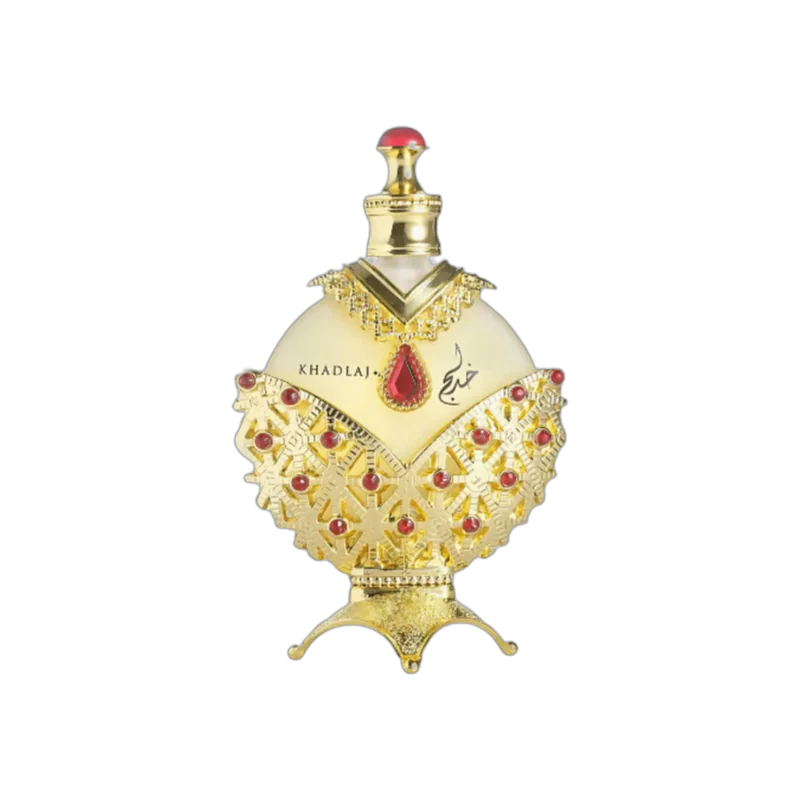
Hareem Al Sultan Gold
Khadlaj's Hareem Al Sultan Gold is the UAE house's amber oil-style concentrated perfume that TikTok turned into a phenomenon, and a reasonable introduction to why. The scent is built around a thick, resinous amber accord — warm and almost edible, with saffron and rose threading through a base of oud, musk and a heavy vanilla haze. It wears like an oriental oil rather than a standard spray-on: dense, close-sitting and rich rather than bright or airy. The opening is warm and slightly animalic, calming down within half an hour into the deep amber sweetness that everyone screenshots. It was already well regarded in its region before the algorithm caught up; the gold bottle, squat and ornate with a faceted stopper, photographs beautifully and that did not hurt. Performance is serious, clinging to skin and fabric for most of a day and making its presence felt in a room without needing reapplication. The syrup factor is real. This is a genuinely heavy oriental and those who find amber gourmands cloying should know what they are walking into. That said, for the price it delivers a richness you would usually expect to spend considerably more to find, and among the gold-and-amber fragrances in its tier, few are as widely stocked with the retailers we track.
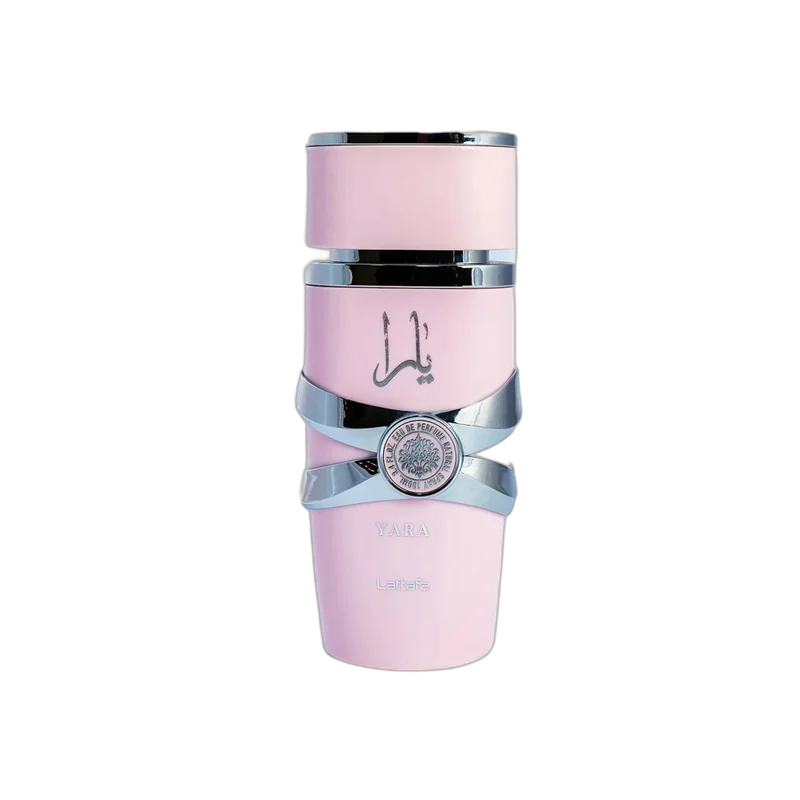
Yara Eau De Parfum
Launched in 2020, Lattafa Yara quickly became one of the most talked-about women's releases from the UAE. A milky peach-and-vanilla gourmand that threads the needle between sweet and wearable without tipping into sticky, it earned its reputation the old-fashioned way. The opening gives you a bright hit of peach and pear, ripe rather than tart, and within twenty minutes it settles into the heart that made it famous — creamy milk, warm vanilla and a faint floral note that keeps the whole thing from reading as pure confection. The base is musked and gently woody, and that is where it stays on skin for the rest of the day. Performance is a significant part of the appeal. It projects confidently for the first few hours and then clings as a sweet skin scent well beyond that, output that embarrasses bottles costing three or four times as much. For anyone stepping into Arabian perfumery after years of mainstream designers, Yara explains the genre's appeal cleanly and immediately. The bottle is quietly considered: soft-curve white glass with a gold cap, understated for something that performs at this level. At the price, it is one of the easier entry points into the milky-gourmand school the Arabian market does better than almost anyone.
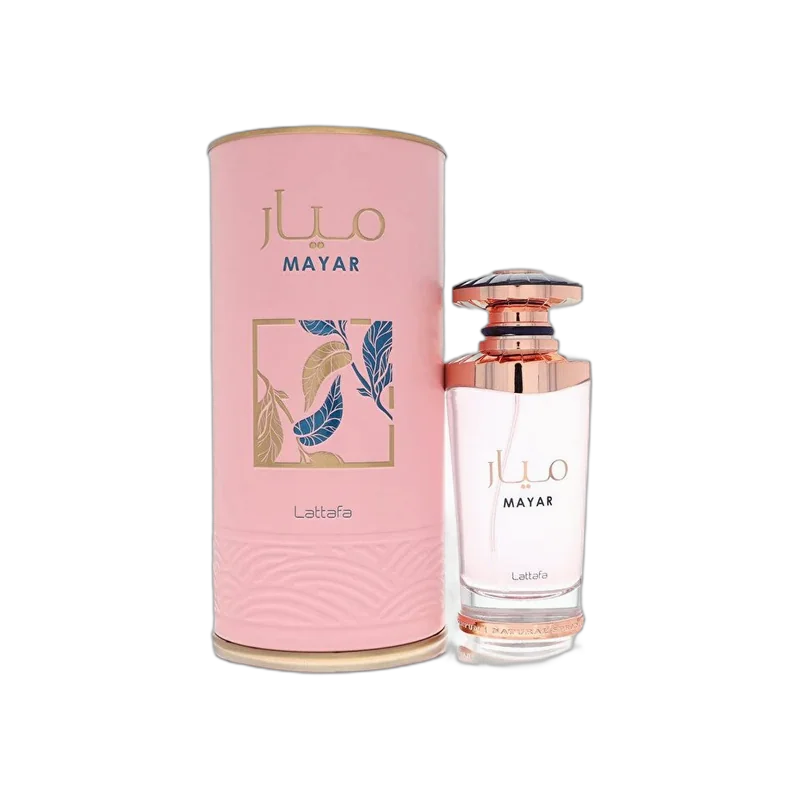
Mayar Eau De Parfum
Where Yara keeps things soft and milky, its 2022 stablemate Mayar turns up the volume. The opening is fruit-forward and loud, a rush of red berries and peach over something slightly floral, and the heart is thicker and more intensely sweet than Yara's measured creaminess. The vanilla base is present from the start and leans gourmand, backed with musk and caramel-adjacent warmth that pushes it firmly into dessert territory. That sweetness is the defining quality and the main thing to calibrate around — Mayar is not subtle and does not try to be. Those who find Yara pleasant but slightly tame often land on Mayar as the register they wanted all along. Projection is strong in the first couple of hours: it announces itself, then settles into a skin scent that is still detectable half a day later. It suits the same cool-weather and evening occasions as its sibling, though it earns more notice from a closer range. Stocked across a smaller number of retailers than Yara but reliably available, with prices sitting in the same affordable bracket as the rest of the Lattafa range. Between the two siblings, Mayar is the bolder and more demanding proposition, the one worth trying once you know Yara's quieter register no longer satisfies.
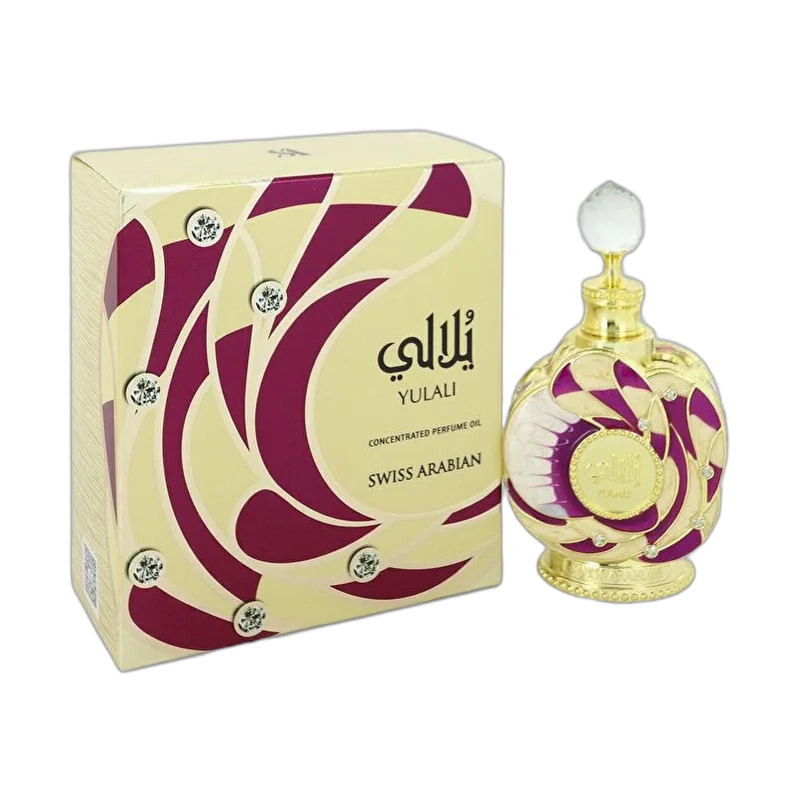
Yulali
Swiss Arabian's Yulali comes from a different school entirely. Where the Lattafa pair leans on milky sweetness, this is a traditional floral-oriental: rose and jasmine over warm woods, with a resinous base of amber and a quiet oud thread running underneath. The flowers here are full and rounded rather than modern-abstract, with the rose reading as natural and slightly rosy-waxy, the kind of material that points back to classical Gulf feminine perfumery. The oud note is restrained by regional standards, present as texture and depth rather than barnyard or medicinal, which makes Yulali accessible even to wearers who find heavy oud compositions difficult. The dry-down is warm and powdery, with amber and musk giving the base a comfortable softness that stays close to skin rather than projecting outward. It rewards anyone who wants to understand what classical Arabian feminines actually smell like, as opposed to the sweeter, more international-pop style of the gourmand school. Swiss Arabian has been making perfumes for the Gulf market for over four decades and that heritage is audible in the construction, a reminder that Middle Eastern perfumery predates any TikTok trend by a considerable distance. Among the fragrances we track in this category, Yulali stands as the traditional counterpoint worth knowing.
The Sweet-Milky School
Lattafa built the genre, or at least gave it its current shape. Yara and Mayar are the two bottles most shoppers encounter first, and they make a logical pairing: both are sweet, both are creamy, both over-perform on projection relative to what you pay. The difference is one of register. Yara is the gentler of the two, a milky peach-vanilla that stays soft and approachable across the whole wear, suited to daily use and younger shoppers who are, as our best fragrances for teenagers guide notes, exactly the audience that pushed Arabian houses into the mainstream. Mayar is the same idea with the dial turned up: fruitier in the opening, sweeter in the base, louder in projection. It rewards occasions where you want to be noticed rather than half-felt.
Both are cold-weather and evening scents more than summer dailies. Both are heavily stocked with the retailers we track, which means the live price is usually well below what a comparable designer sweet fragrance costs. If you are undecided, Yara first, Mayar after you know you want more.
The success of these two fragrances tells you something about what the current market wants. Milky-sweet, long-lasting, and genuinely affordable; those are the criteria that tens of thousands of shoppers have decided matter more than a heritage house name or a department-store counter. Lattafa works from Dubai, composes in-house, and keeps margins lean. The result is that the live price for Yara sits at a level that makes most mainstream sweet feminines look overpriced. The Lattafa guide covers the broader range if you want to explore further, but Yara and Mayar are still the two releases most likely to convert a new buyer to the house.
The Traditional Counterpoint
Swiss Arabian Yulali sits slightly apart from the trio above. It does not belong to the sweet-milky school; it belongs to the older, classical tradition of Gulf feminine perfumery — rose and jasmine over amber and restrained oud, warm and powdery in the dry-down. It is the bottle to reach for when you want something genuinely rooted in regional perfume culture rather than a product of the genre's more recent international crossover.
This distinction matters if you are building out a small collection of Arabian fragrances rather than simply hunting for the most Instagrammed options. The gourmand school and the traditional floral-oriental school represent two genuinely different ideas about what a feminine Middle Eastern fragrance should do, and having one of each gives you a much clearer picture of the range the region produces.
For those already comfortable with the sweet side and curious about where the tradition came from, Yulali is the natural next step. And for anyone arriving from a background in classical florals — French-style rose compositions, powdery orientals — it is arguably the most legible of the four listed here because it speaks a language that formal perfumery has always spoken.
The Amber Oil Experience
Hareem Al Sultan Gold is in a category of its own on this list. It is not a gourmand in the Lattafa sense, and it is not a classical floral-oriental like Yulali. It is an oil-style amber: thick, resinous, heavy and deliberately rich. The concentration means it behaves more like a traditional attar than a modern spray-on eau, clinging to skin and fabric and building in warmth rather than projecting outward.
That richness is the product and the point. The materials — saffron, rose, oud, amber, musk — are the canonical vocabulary of Gulf luxury perfumery, and Khadlaj has put them together in a way that reads as genuinely plush rather than synthetic. The viral moment helped, but the fragrance would have earned its reputation eventually through sheer staying power.
If you have previously explored the vanilla-forward end of Arabian perfumery and want to understand the amber-oud tradition, this is the most accessible entry at its price point. It is also, as our best vanilla fragrances guide makes clear, a useful reference point for what warm, resinous vanilla smells like when it is anchored by oud and saffron rather than built on a clean Western gourmand base.
How to Choose
Start with what kind of sweetness you want. Yara and Mayar are fruit-cream-vanilla: wearable, pretty and broadly accessible, with Yara the gentler option and Mayar the bigger, louder version. Hareem Al Sultan Gold is a different kind of richness — amber and resinous rather than milky, heavier and more immersive. Yulali sits outside the sweet school entirely, for anyone who wants to understand the classical rose-and-amber tradition rather than the modern crossover style.
On occasion: the Lattafa pair and Hareem Al Sultan Gold all lean evening and cool-weather. Yulali, while still a warm fragrance, has enough floral freshness to carry into the afternoon. On budget, all four sit in or near the same affordable bracket, which is the broader case the Arabian perfume market has been making for a decade: genuinely complex, genuinely long-lasting fragrance does not require a European address on the bottle.
A word on performance expectations. One of the consistent surprises for shoppers coming from mainstream Western fragrances is that these bottles tend to last substantially longer than the designer comparison. This is partly a matter of composition style — Middle Eastern houses have traditionally built for longevity — and partly a matter of concentration, particularly with the oil-style formats like Hareem Al Sultan Gold. That means buying one of these to try is relatively low-stakes: a single bottle should last considerably longer than a comparably sized spray-on Western fragrance at double the cost. That value ratio is part of what makes Arabian perfumery worth exploring seriously rather than treating as a novelty.
Compare Arabian perfume prices across every retailer on Aurexum