
Best Leather Fragrances
Leather Is an Accord, Not a Note
Before buying, it is worth understanding what you are actually shopping for. Leather fragrance is not extracted from hide; it is constructed in a laboratory, built from a toolkit that typically includes birch tar, isobutyl quinoline, saffron, suede musks and sometimes a touch of oud or castoreum. The perfumer decides how much of that toolkit to use and in what combination, which is why "leather" covers an enormous amount of ground. From the barely-there chamois of a soft suede scent to the raw, animalic punch of a birch-tar-heavy classic, fragrances in this family share a resemblance but can smell like distant relatives rather than twins.
The two main directions in modern leather perfumery are worth separating early. The European tradition, with French and Italian houses leading it, tends to use birch tar and isobutyl quinoline as the core, producing dry, assertive, sometimes smoky leathers with real edge. The more recent suede-and-musk approach, common in contemporary niche and Middle Eastern houses, produces leathers that are skin-close, warm and approachable, easier to wear daily but less structurally interesting at the austere end. Neither direction is wrong; they are just answering different questions about what you want from the category.
This list covers seven leather fragrances we track in Australia, spread across the full spectrum. They are grouped below from softest suede to most assertive raw leather, with notes on which reads office-safe and which is better understood as a deliberate statement of character.
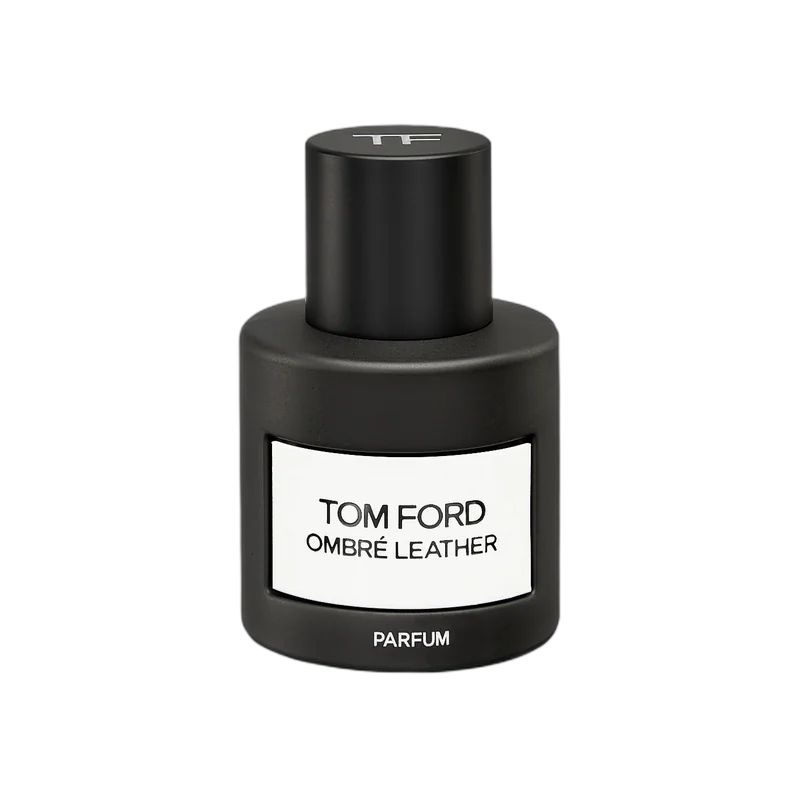
Ombre Leather
Tom Ford's 2018 suede-and-cardamom study, the softer, more wearable face of the Private Blend's leather chapter. Where Tuscan Leather goes raw and animalic, Ombré Leather goes the other direction, opening on a bright cardamom and floral heart before settling into a dry suede accord, warm amber and a trail of patchouli that keeps it from ever reading harsh. The leather here is smooth-sided and skin-close, more the inside of a quality handbag than a saddle, and that texture is what makes it so easy to wear across seasons and settings. The Givaudan team built it around a suede musk rather than birch tar, which is why it sits comfortably at the office end of the leather spectrum. Projection is moderate for the first few hours, with the sillage dropping to a warm, close trail by midday and lasting well into the evening on skin. It reads genuinely unisex despite the marketing, and the dark amber bottle, part of the Private Blend visual language, has become one of the range's best-recognised shapes. For anyone walking into leather fragrance for the first time, Ombré Leather is the natural starting point: accessible, clean and a reliable daily wear that never announces itself too loudly.
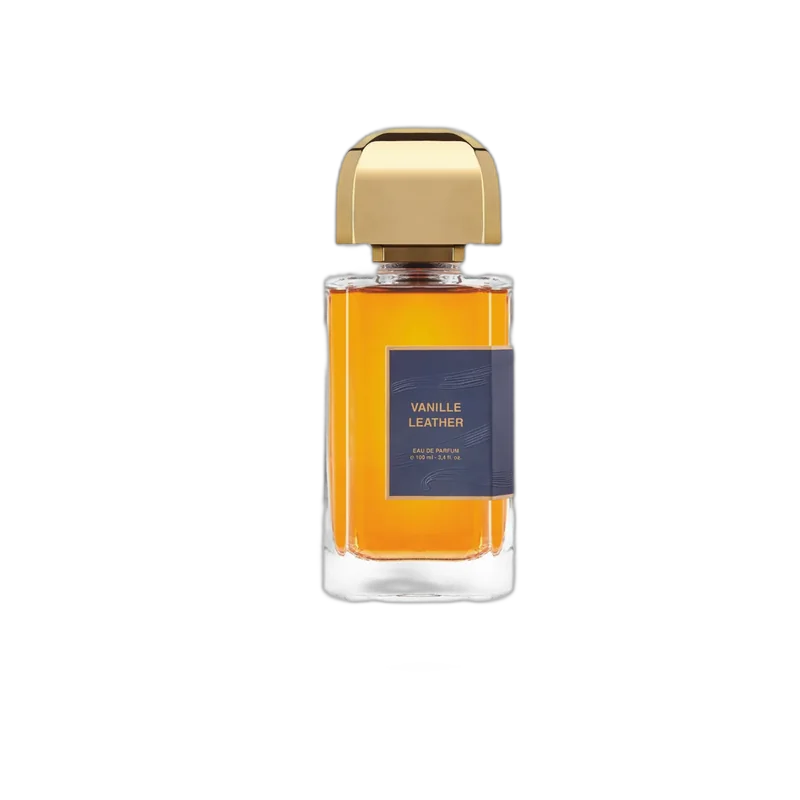
Vanille Leather
BDK Parfums' 2023 suede gourmand and the niche-darling leather of the moment, created by David Benedek for his Paris house and quickly adopted by the niche crowd as one of the range's defining releases. Vanille Leather is exactly the pairing it claims, a soft suede accord wrapped in a warm vanilla and tonka base, with bergamot and a subtle iris keeping the sweetness from running away with it. The leather here is the softest on this list, more chamois cloth than hide, and the vanilla keeps it firmly in the wearable-any-season camp. What makes it interesting is the tension between the two materials: the sweet vanilla keeps the leather from going dry or austere, and the leather stops the vanilla from collapsing into gourmand territory. The result is a modern suede skin scent with genuine crossover appeal, unisex in a way that reads natural rather than deliberate. Performance is moderate to good, projecting gently for a few hours then sitting close for the rest of the day. It is priced at the accessible-niche tier, below most of the prestige leather-ouds on this list, and delivers a polished result that has clearly resonated. For sweet suede that stays grown-up, this is the current reference.
Soft Suede: The Daily-Wear End
Ombré Leather and Vanille Leather are the two soft-suede entries on this list, and they are the obvious starting point if you want leather that does not announce itself across a room. Both are built around suede musks rather than birch tar, both read as close, skin-warm scents, and both work comfortably across seasons in a way that the rawer leathers below do not.
The character difference between them is real and worth knowing before you choose. Ombré Leather is the drier and more architectural of the two, with cardamom keeping the opening interesting before a smooth suede and patchouli base takes hold. It has a quiet authority to it, the kind of fragrance that improves the longer it is on skin, revealing a bit more warmth as the day goes on. Vanille Leather is the warmer and more immediately approachable of the two, wrapping the suede in a sweet vanilla and iris accord that keeps the whole thing firmly in the wearable-anything camp. Where Ombré Leather reads as a confident daytime choice, Vanille Leather leans toward a comfortable evening skin scent that just happens to be suitable at all hours.
For anyone already drawn to smoky fragrances and looking for something in a similar temperature range that works through the day, Ombré Leather is the closer neighbour: warm and dry without the smoke, easy to wear at a desk and still interesting enough to hold attention into the evening.
Tuscan Leather
The one that built Tom Ford's reputation for leather. Tuscan Leather arrived in 2007 in the line's second year and remains the benchmark raw-leather fragrance in the designer-niche bracket. The opening is the surprise: a bright, tart raspberry and saffron accord, slightly fruity, before the leather arrives with a force that is unmistakably birch-tar derived, animalic and dry with a petrol edge. The base settles into thyme and a little amber, but the leather stays dominant through the whole arc. It is loud, projects hard and lasts a long time, one of the better-performing Private Blends on longevity. The gender framing is nominally masculine but it wears more broadly than that, and a committed audience of women has always run with it. Among the cult leathers it is probably the most copied, with a wave of budget options chasing the raspberry-leather opening. The current formulation runs slightly tamer than the original batches, though the character is intact. For raw, confident leather with a fruity opening that cuts the heaviness, this is the Private Blend to start with, and the reference most of the niche-leather market is quietly arguing against.
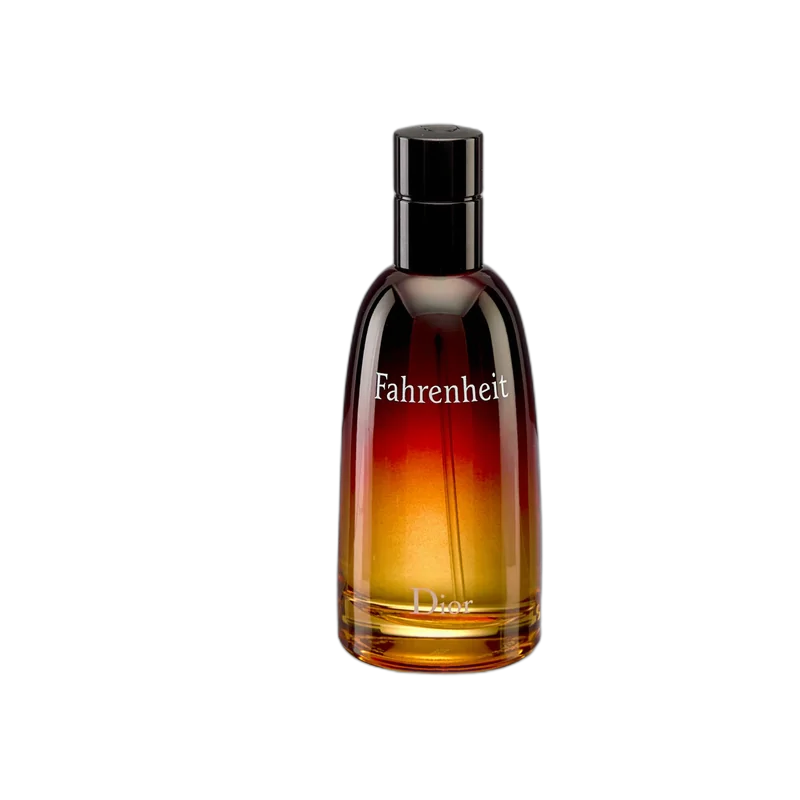
Fahrenheit Eau De Toilette
Dior's 1988 violet-and-petrol leather, composed by Jean-Louis Sieuzac at Roure, and one of the few genuinely vintage classics that still has a living pulse in the market. Fahrenheit is a leather fragrance only in the loosest sense as a category: it is built from violet leaf, cyclamen and a petrol-like accord that reads synthetic and woody, with a soft floral leather underneath and a base of sandalwood and vetiver that reads dry and faintly smoky. That petrol-violet combination was unusual at launch and has aged well, in the sense that nothing else has fully replicated it. There is also a Fahrenheit flanker world now, including an Absolute and a few limited editions, but the original EDT remains the one enthusiasts seek. Performance is solid on skin, projecting well for the first few hours and lasting a respectable six to eight hours without reinforcement. It reads masculine but sits firmly in the unisex camp by modern standards, and it has the kind of cult following that means it regularly ends up on best-of-decade lists written forty years after the fact. The vintage reformulation discourse is real but the current version is still deeply distinctive. For violet-leather with that famous petrol edge and proper heritage status, Fahrenheit remains unchallenged.
Raw and Vintage Leather: The Statement End
Tuscan Leather and Fahrenheit occupy a different territory entirely, and they are worth approaching with honest expectations. These are fragrances with a strong opinion about themselves, and wearing them is a deliberate choice rather than a sensible default for all occasions.
Tuscan Leather leads with that memorable raspberry-saffron opening, which softens the arrival of the birch-tar leather and gives the whole thing a slightly fruity, almost sweet first impression. Once the leather is fully open, though, there is no ambiguity: it is dry, animalic and projecting hard, one of the most assertive designer-niche leathers on the market. It has a wall of budget imitators to show for it, which is the clearest possible signal of how much the original impressed people. If you have ever smelled something that made you think of expensive car leather, polished horse tack or the inside of a well-worn jacket, Tuscan Leather is working in that direction — but louder and more insistent.
Fahrenheit runs stranger. The violet-petrol accord is a thing unto itself, a 1988 move that still does not have a clear successor, and wearing it now feels like handling a genuine artefact from a different era of perfumery when experimentation with synthetic accords was more daring. It reads unmistakably masculine by contemporary standards but has always attracted wearers outside that framing who find the petrol-leather character impossible to replicate elsewhere. Both fragrances project more than the suede leathers and carry themselves as signatures rather than crowd-pleasers. Strangers may notice; that is largely the point.
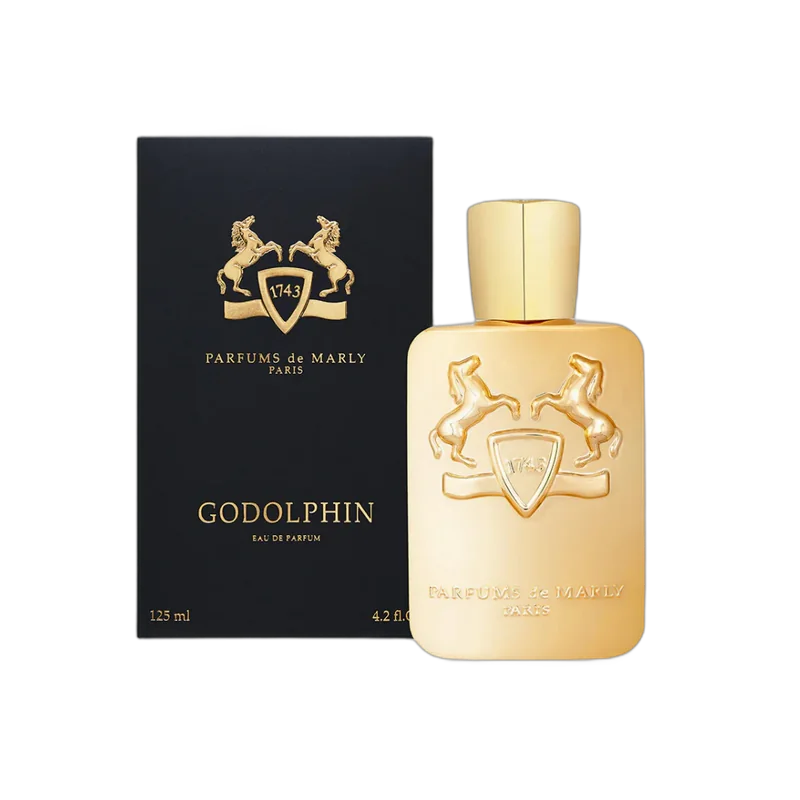
Godolphin
Parfums de Marly's 2011 equestrian leather, one of the house's most cohesive releases from the early catalogue and a favourite among those who want leather paired with something genuinely warm and aromatic. Godolphin is named for the legendary eighteenth-century racehorse, and the brief translated cleanly into scent — a polished, saddle-leather accord built on saffron and oud, with bergamot lifting the opening and a vanilla, amber and sandalwood base that gives it depth without going gourmand. The leather reads smooth and dry rather than animalic, the kind that reads as fine goods rather than stables, and the oud is restrained, adding a woody resinous quality without ever dominating. It sits comfortably alongside the house's other oud-anchored releases and shares the polished, wealthy-stable aesthetic of the PdM brand. For those drawn to oud fragrances but put off by the more medicinal or incense-heavy styles, Godolphin is the accessible oud-leather route, the one that stays wearable and professional. Projection is good for a few hours before settling into a close, warm skin scent that lasts most of the day. At the affordable-prestige price the house occupies, it delivers the equestrian leather concept with a conviction most designers cannot match.
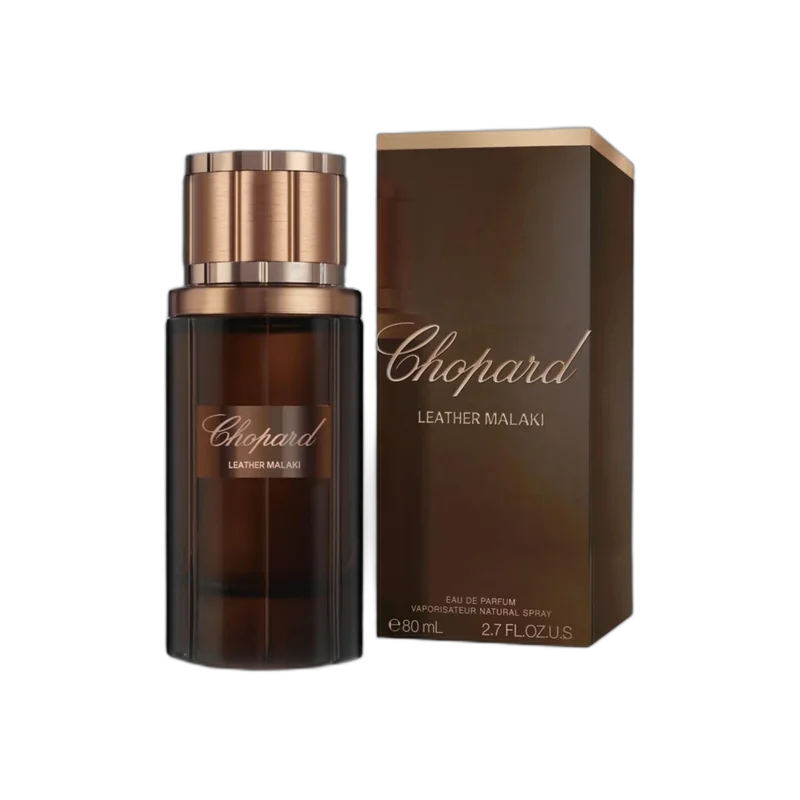
Leather Malaki
Chopard's 2024 amber-leather, positioned within the house's Haute Parfumerie line and built with a rich oriental warmth that sits close to the alcohol-free style common in Middle Eastern fine fragrance. Leather Malaki opens on saffron and rose, a classic Middle Eastern opener, before a smooth leather accord enters alongside oud and amber resins that give the mid-section that sweet, dense, almost balsamic quality. The base is warm amber, sandalwood and musk, so it finishes rich and lasting rather than fading cleanly. The leather component plays a supporting role to the amber-oud architecture, which makes it read less like a leather fragrance in the European sense and more like an oud-amber where leather provides the through-line structure. It projects warmly for several hours and has the kind of longevity you would expect from a fragrance built on heavy resins. Availability in Australia is more limited than the Tom Ford or PdM options, which shows in a smaller number of tracked retailers, but the live price data we hold is worth checking before buying elsewhere. For those who find straight leather too austere and want the note embedded in something rich and amber-driven, Leather Malaki is the most distinctive proposition on this list.
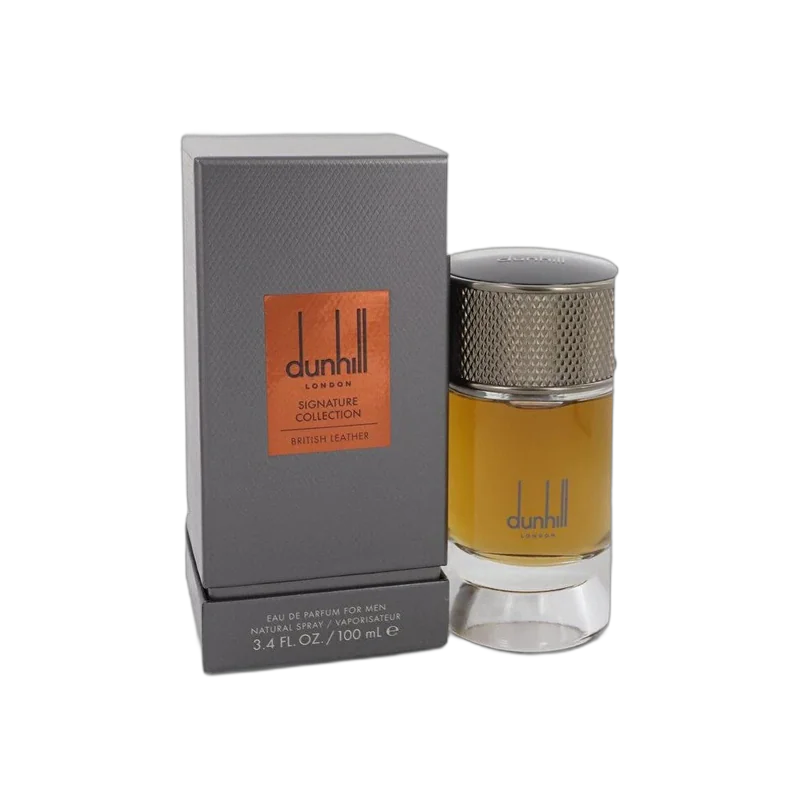
British Leather
Dunhill's 2019 accessible leather, the entry point on this list and a quiet overperformer at its price tier. British Leather is the British house revisiting its heritage codes via a dry, woody leather accord, opening with a bergamot and cardamom freshness before the leather arrives alongside cedarwood and vetiver, giving the whole thing a slightly green, outdoorsy quality. The leather reads clean and modest rather than animalic or synthetic, which keeps it from challenging anyone and makes it the easiest daily wear on the list. It is not a fragrance that competes with Tuscan Leather for presence or Godolphin for polish, and it does not try to. The pitch is confident wearability at a fraction of the niche price. Performance is decent for the tier, projecting moderately for a few hours before hugging the skin for most of the day. Stock availability is lighter than the designer names above, but the live prices we track are frequently well under full retail. For someone curious about leather as a category who does not want to commit to the Private Blend price point, British Leather is the honest answer: woody, clean and quietly well-made.
Leather-Oud and Amber: The Warm Middle Ground
The remaining three fragrances on this list approach leather as one voice in a richer conversation, rather than as the sole argument of the scent. They share a warmth and depth that the raw leathers above lack, and they tend to wear with more versatility across temperatures and occasions as a result.
Parfums de Marly Godolphin is the most polished of the group, an equestrian-leather accord built on saffron and a restrained oud, finishing with vanilla and amber in a way that reads professional without tipping into gourmand territory. The oud adds a woody, slightly resinous quality underneath the saddle-leather mid-section, but it never pushes to the front. For anyone already interested in oud fragrances, Godolphin is the easiest entry point from the leather side, well-mannered enough for work and rich enough for evenings.
Chopard Leather Malaki is the most Middle Eastern in character and the most resinous of the entire list, an amber-oud oriental where leather provides the structural backbone but saffron, rose and heavy amber resins carry the lead. It is built for longevity and warmth, better suited to cooler weather and evenings than to a warm Australian afternoon, and the character reads as considerably richer and more resinous than the other entries here. It is also the one with the fewest Australian retailers in our tracking, so checking live availability before assuming a price is worth doing.
Dunhill British Leather is the most accessible of the group on price and the most restrained on character, a clean woody leather with bergamot and cardamom freshness at the top and a vetiver-cedarwood base that keeps it grounded. It is not trying to match Godolphin for polish or Leather Malaki for richness; the pitch is honest daily wearability at a realistic price, and it delivers that well. For a first leather fragrance, or a lower-stakes alternative to keep alongside something more assertive, British Leather earns its place.
How to Choose
The practical split is straightforward. For leather that works daily and earns no second glances, begin with Ombré Leather or Vanille Leather. For a statement fragrance with genuine heritage and force, Tuscan Leather or Fahrenheit is where the category earns its reputation. For warmth and richness where leather is one element in a more complex whole, Godolphin and Leather Malaki are the two to explore.
On value, British Leather is the honest entry point for anyone curious about the family without wanting to commit to niche prices. Vanille Leather and Ombré Leather are both well stocked and typically priced well under full retail across the retailers we track. Tuscan Leather commands the Private Blend premium but is usually available from multiple stockists, so checking live data before buying makes a real difference to the final cost.
If you can, sample the raw and vintage leathers before committing to a bottle. Birch tar and isobutyl quinoline are polarising materials that interact with skin chemistry in unpredictable ways: on some wearers they are magnetic and distinctive, on others they turn harsh or medicinal. The suede and amber options are far more forgiving and worth buying with less hesitation. The vintage leathers reward patience and skin testing; everything else on this list is approachable enough to reach for with confidence.
Compare leather fragrance prices across every retailer on Aurexum