
Best Prada Fragrances
The Prada Approach to Fragrance
Prada's fragrance output has never chased trends the way most designer houses do. The aesthetics that run through the line are consistent: restraint, clean materials, and a tendency to approach popular categories from a slightly oblique angle. The gourmand is made with benzoin instead of ethyl maltol. The masculine soap-amber arrived before the category was crowded. The fresh sport flanker uses ambrette seed instead of calone. It is a house that knows what it wants to smell like, and it has held that position long enough that the through-line is obvious once you know it.
What Prada fragrance is not, for the most part, is loud. You will not find many beast-mode projectors or attention-seeking sillage monsters in the catalogue. The house preference runs toward dressed rather than overdressed, and most of what it makes sits in the confident-quiet register: the kind of fragrance that reads well in a professional context and does not exhaust itself in the first hour. That is either exactly what you want or a reason to look elsewhere, and knowing it upfront saves the trip.
This list covers the three distinct chapters in the Prada catalogue worth knowing: the Luna Rossa franchise built around the house's sailing sponsorship, the iris-soap signature that defines L'Homme and La Femme, and the sweeter side of the house with Candy and Amber Pour Homme. Paradoxe, the current pillar built on a transparent musk-and-ambroxan structure, is worth sampling but thin in our tracking data so it sits outside this selection. Everything here is well documented, broadly stocked and available to compare on live pricing.
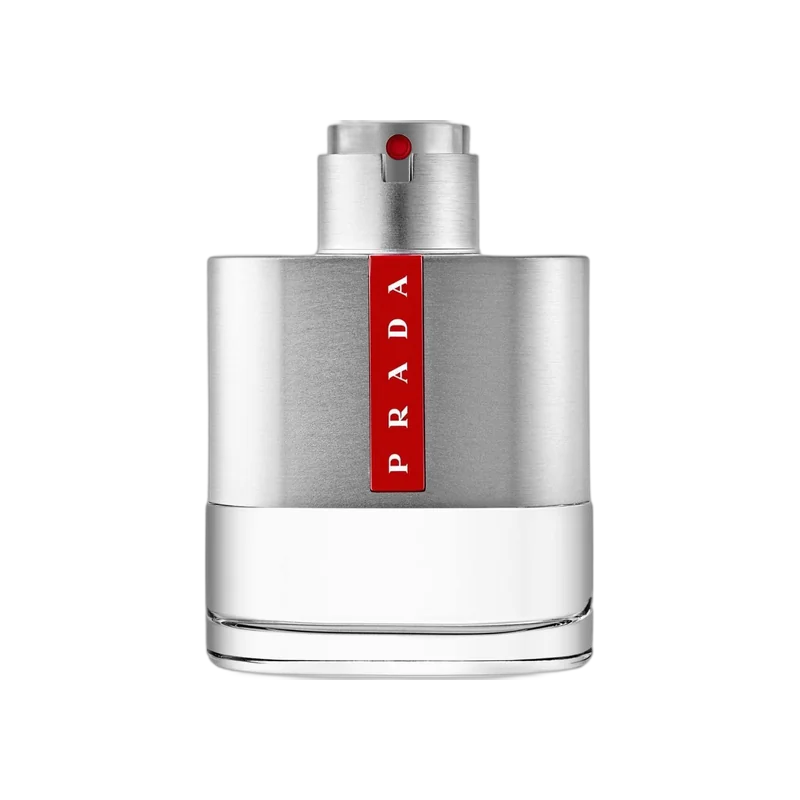
Luna Rossa Eau De Toilette
The original Luna Rossa from 2012 and the scent that tied Prada to sailing culture before the franchise really took off. A fresh fougère built around ambrette seed and lavender over a clean cedar and amber base, with an aquatic coolness running underneath that keeps it firmly outdoors rather than gym-counter fresh. It was composed as a companion piece to Luna Rossa's sailing team sponsorship, and that brief shows, there is salt air and movement in the open and very little warmth in the drydown. What made it click was the ambrette note, a musk-adjacent material with a soft, skin-like quality that keeps the whole thing from reading as a generic sport flanker. Performance sits in the comfortable middle, projecting well for the first three or four hours before settling into a close-wearing skin scent. It launched the franchise as a genuinely wearable alternative to the cool-aromatic freshies dominating shelves at the time, and it still holds up as the purist option in the line for anyone who finds Carbon too synthetic and Black too sweet. Well stocked across the retailers we track, with prices typically running below full retail.
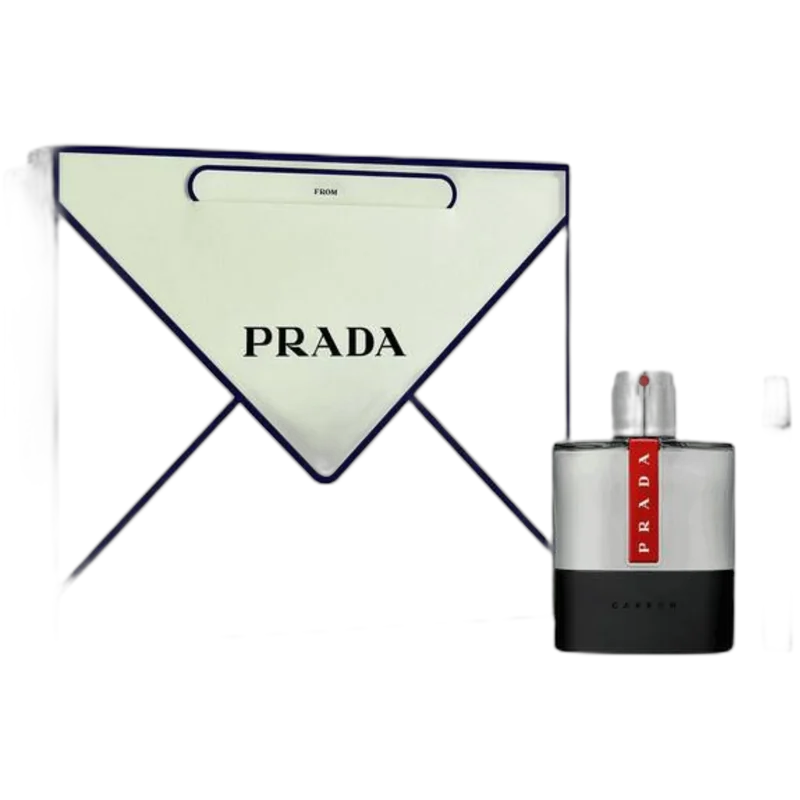
Luna Rossa Carbon Eau De Toilette
Luna Rossa Carbon from 2017 became the line's signature almost immediately, and nearly a decade on it remains one of the most widely stocked freshies in the Prada catalogue. The house brought in a woody-aromatic take this time, pairing ambrette seed with a sharp patchouli and a carbon-mineral accord that gives the whole thing a clean, almost metallic edge. Lavender and bergamot open it in a familiar way before the patchouli kicks in around the heart, angular and dry rather than earthy. The base leans metallic and slightly powdery over musks, which is where it keeps its character longest. It projects confidently for the first several hours and has above-average longevity for the genre. Carbon sits at the more mainstream end of the line, which is precisely why it sells: it is easy to wear and hard to dislike without asking for much commitment from the wearer. For anyone deciding between Carbon and Ocean, a head-to-head comparison is available elsewhere on the site and worth reading before you choose. Heavily stocked across the retailers we track with live prices regularly below full retail.
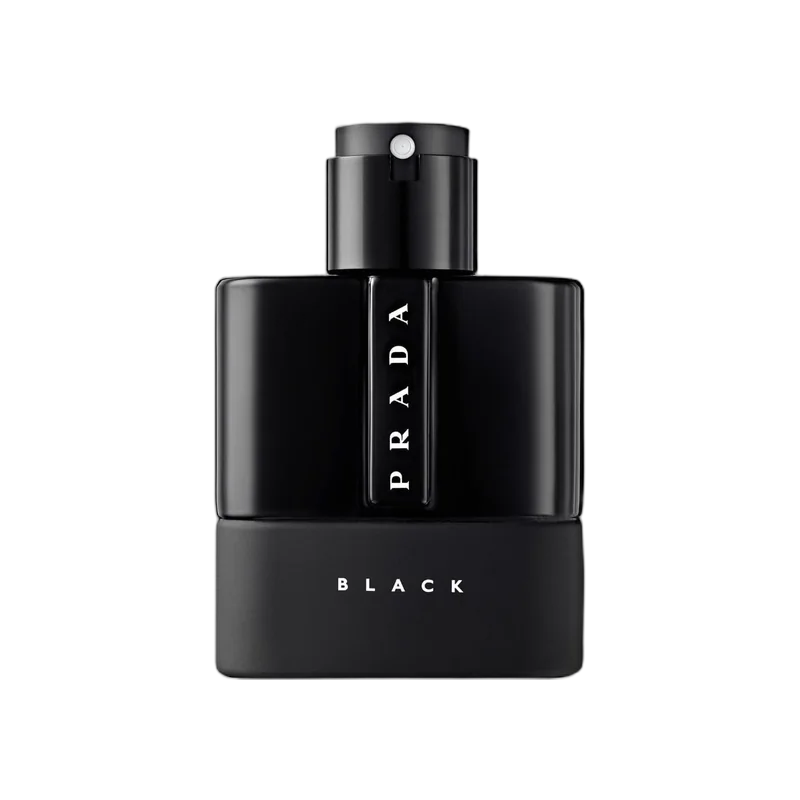
Luna Rossa Black
Luna Rossa Black from 2018 is the flanker that stepped furthest from the sailing brief, trading the line's aquatic freshness for a sweet amber warmth that makes far more sense in autumn than on a boat. Where the original and Carbon run cool and clean, Black opens with bergamot and iris before dropping into an accord of tonka, ambergris and amber, the warmth arriving quickly and staying. The effect is richer than anything else in the franchise, closer to a woody amber with a little freshness bolted on than a genuine aquatic, which is why it tends to appeal to people who do not usually reach for sport flankers. Longevity is the strongest of the three original Luna Rossa pillars, projecting well for most of the day and wearing into the evening without falling apart. It markets masculine but reads close to unisex in practice. If you find the standard Luna Rossa line a touch cool and linear, Black is the one worth trying: the same house fingerprint but given weight and sweetness that reward colder weather and quieter nights.
The Luna Rossa Franchise
Three pins, three distinct personalities, and a shared house DNA that makes them unmistakably related. Luna Rossa EDT is the original, a 2012 ambrette-and-lavender fougère that sits in the well-considered corner of men's freshness: clean and outdoorsy without borrowing the generic aquatic vocabulary that most sport flankers default to. It reads like something from the quieter end of fresh fragrances rather than a loudly branded sports product, and it has aged better than most of its 2012 contemporaries as a result.
Carbon arrived five years later and found the broadest audience, pairing that ambrette-seed signature with a sharp patchouli and a synthetic metallic accord that gives it an edge and a clarity the original does not have. The carbon mineral note is the piece that made it distinctive, a cool-clean character that wears as confident rather than cold. It is the one that gets recommended most and stocks accordingly. The Carbon vs Ocean comparison breaks down how it fares against the aquatic flanker for anyone deciding between the two.
Luna Rossa Black is the one that surprises most. It keeps the franchise name but trades the whole cool-outdoor premise for a sweet amber warmth, tonka and ambergris under a cleaned-up iris, that reads much more comfortably indoors and in cold weather. Of the three it projects longest and wears deepest, and it attracts a different kind of wearer entirely: someone who wants the Prada name and a confident winter scent rather than anything you would reach for at the beach. The sweet amber base gives it crossover appeal with people who would not normally reach for something in a sailing-team franchise.
The question of which to buy comes down to season and preference rather than quality. All three are well made and genuinely distinct from each other. Carbon for the broader occasion and the wider year, Black for colder months when the sweetness earns its keep, the original EDT for anyone who finds the flankers too constructed and wants the cleaner ambrette character on its own terms.
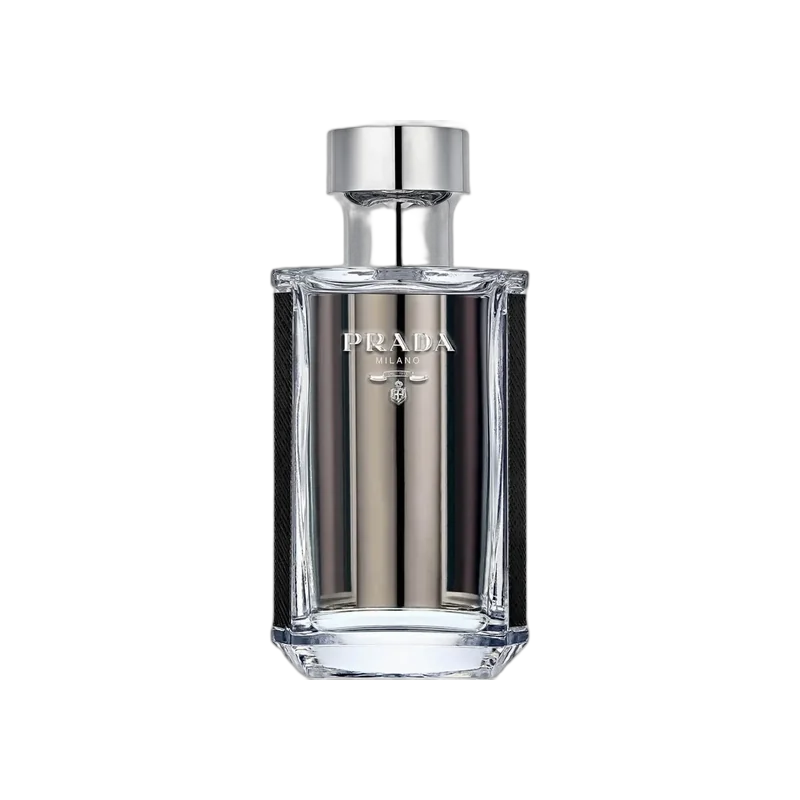
Lhomme
Prada L'Homme from 2016 is the house's iris-soap signature stripped to its essentials. The structure is deliberately spare: iris and geranium over amber-infused woods and a clean musk base, with no citrus fanfare on the open and very little warmth at the base. That restraint is the point. L'Homme sits in a tradition of quietly assured iris masculines, the kind that read clean on skin without smelling scrubbed, and it does so at a price that the niche iris fragrances it competes with cannot match. Performance is moderate, a gentle projector that lasts a reliable day, suited to office, meetings and anything that requires presence without volume. The iris here is powdery and slightly soapy rather than rooty and cold, which puts it closer to a well-dressed skin scent than an abstract floral. It wears masculine-leaning but has enough restraint that plenty of women take it without it reading off. Heavily stocked at the retailers we track, and live prices typically land well under full retail, making it one of the more accessible ways into a good iris masculine at the designer level.
La Femme
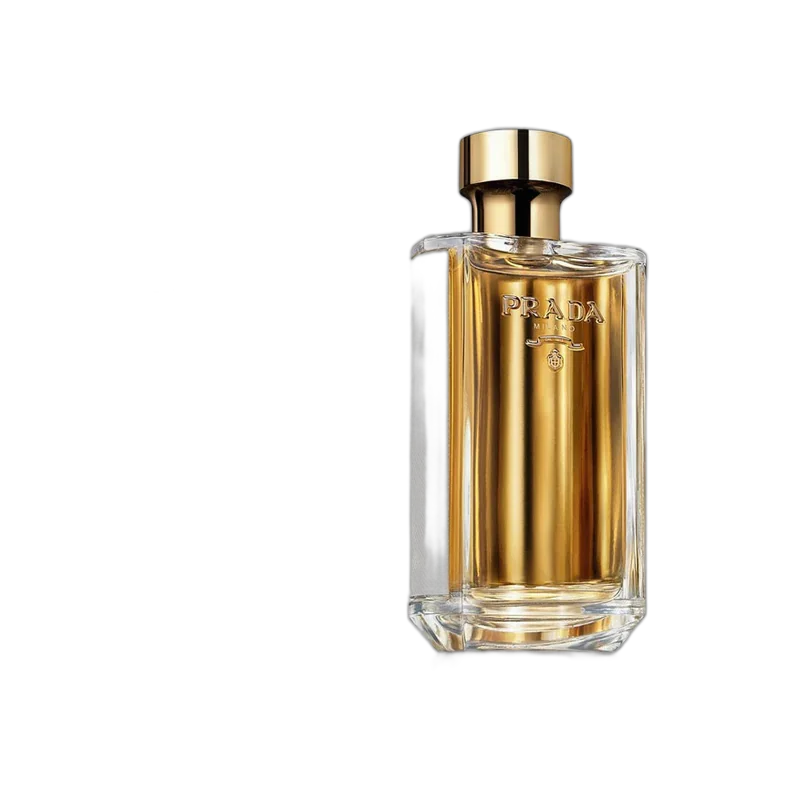
La Femme Prada from 2016 is the feminine counterpart to L'Homme and built on a different but related idea: frangipani and ylang-ylang over a cedar and amber base, with a vetiver and musk drydown that grounds the florals without burying them. The result reads as a modern white floral with a woody backbone rather than a conventional feminine bouquet, and it wears cooler and more restrained than the sweetness of frangipani might suggest. The opening is the richest part, the ylang giving a creamy, almost tropical quality before the cedar pulls things into drier territory in the heart and base. Projection is moderate and longevity is dependable without being heavy, all of which makes it an office and daytime piece rather than something you would save for evenings. It sits in the same intellectual corner as L'Homme, sharing the house's preference for restraint over impact, but the florals give it a warmer core. It is well stocked across the retailers we track, and live prices tend to sit at a comfortable distance from department-store full retail.
The Iris Signature
L'Homme and La Femme sit slightly apart from the Luna Rossa energy, quieter and more considered, built around the iris-soap accord the house has used as an aesthetic through-line since the early Prada feminines. L'Homme is the more stripped-back of the two: iris, geranium, amber and musks in a structure that reads clean without smelling laundered. The iris here sits in the soapy-powdery range rather than the cold-rooty range you get from niche iris specialists, which makes it easier to wear across a wider range of occasions. It competes comfortably with niche iris fragrances that cost significantly more, and it does so without needing any of the story or ceremony those bottles carry. For a broader picture of where iris fits as a note and how L'Homme compares to the wider field, iris fragrances covers the category in full.
La Femme shifts the formula toward frangipani and ylang-ylang with a cedar-vetiver base, a white floral built with the same restraint as its counterpart. The ylang gives the opening a creamy, slightly tropical warmth before the cedar takes over and dries things out, which is a more interesting arc than the name might suggest. It runs cooler in feel than the tropical notes suggest, and it shares L'Homme's preference for a moderate projection and a close, dependable drydown. Neither of these two is a loud fragrance. Both reward wearers who want presence without performance: the Prada house quality distilled into something that works reliably across most contexts without ever announcing its arrival.
Candy Eau De Parfum
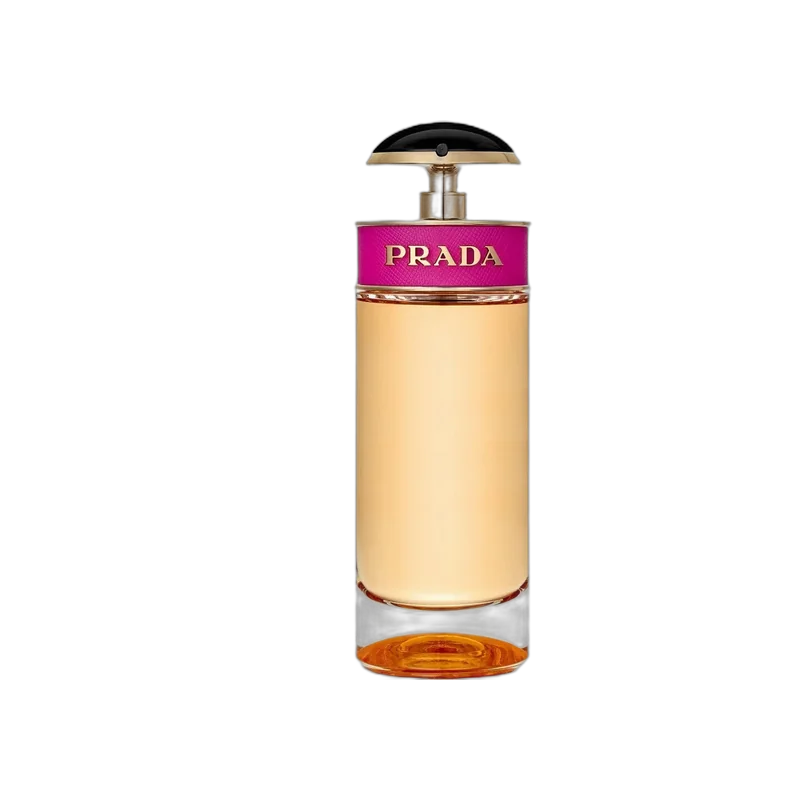
Candy was Prada's deliberate pivot into gourmand territory when it landed in 2011 and it remains the most purely fun scent the house has made. The structure is a caramel and benzoin base softened by a touch of musk and a faint powdery rose, with caramel as the main event from the first spray to the last hour on skin. The benzoin gives the sweetness a slightly resinous depth so it reads as grown-up caramel rather than straight confectionery, and the musks underneath keep it from turning sticky. It is an unabashedly sweet feminine, the kind that polarises fairly neatly between people who find sweet-amber fragrances cosy and comforting and those who find them cloying. On longevity it is strong, projecting well for the first part of the day and then hugging the skin for hours after. Candy has since spawned a substantial flanker line, including the richer Candy Kiss and the various Florale and Rose editions, but the original remains the clearest expression of the concept. For anyone after a designer gourmand that actually commits to the sweetness rather than hedging, this is the Prada to reach for.
Amber Pour Homme Eau De Toilette
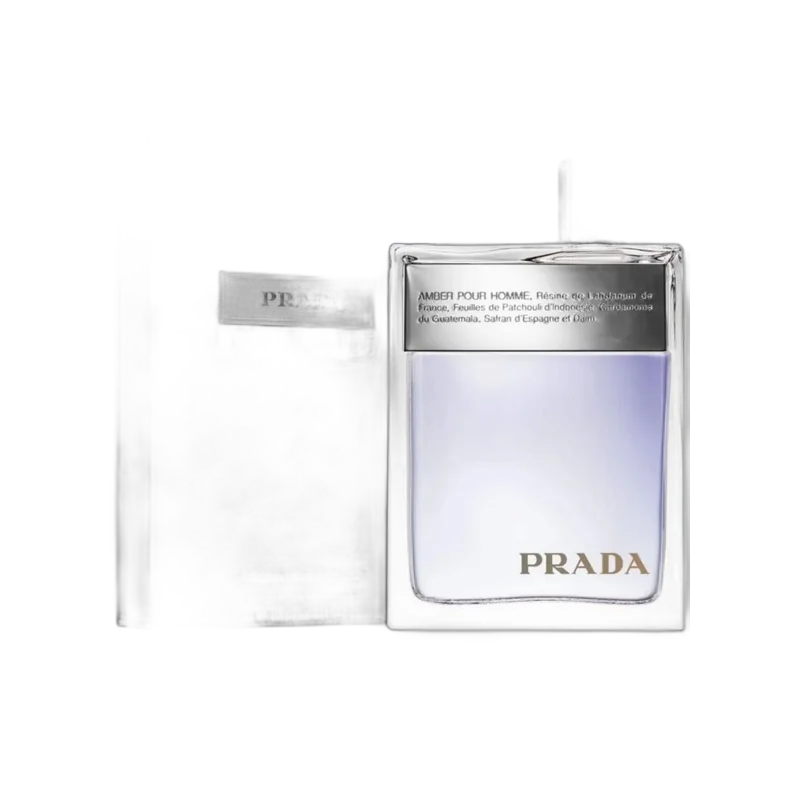
Amber Pour Homme from 2006 is Prada's heritage masculine and arguably the house's most studied fragrance from that era. The structure is built on a patchouli and amber accord over sandalwood and leather, with bergamot and mandarin on the open and a clean soap register running through the heart that stops the amber from going heavy. That soap-and-amber combination was something of a Prada house signature at the time, and Amber Pour Homme wore it with more authority than most of its contemporaries. Performance is the one caveat: longevity is modest by current standards, projecting for the first few hours before settling into a skin scent, which is worth knowing if you expect all-day projection. But what it does in those hours is distinctive, clean and warm and slightly powdery rather than loud, the kind of thing that draws comments without announcing itself. It sits at the accessible end of Prada's catalogue and stocks modestly across the retailers we track. For anyone interested in where the house's aesthetic came from before Luna Rossa and L'Homme defined it, this is the obvious starting point.
The Sweet Side
Candy arrived in 2011 as Prada's most open embrace of gourmand territory, and the benzoin-and-caramel structure it introduced has proved durable enough to anchor a whole flanker line since. It is sweet and resinous rather than sugary, which keeps it from reading as simple dessert, but you should know going in that it is genuinely sweet rather than sweetness-as-accent. Benzoin does a particular thing with caramel, adding a slightly resinous, almost incense-like depth that stops the whole accord from flattening into straight confectionery, and that is precisely why Candy has lasted when so many of its contemporaries have dated. The original is still the clearest version of the concept; the flankers soften or redirect it in various ways, but if you want Prada Candy, the original is what it is and the one to try first.
Amber Pour Homme pre-dates all of this, a 2006 masculine built on patchouli, amber, sandalwood and leather with a soap-and-citrus open that sits comfortably in the heritage amber category. It is modest on longevity by modern standards, a caveat worth noting upfront, but the character it delivers in the first few hours is distinctive and the price reflects where it sits in the range. The soap-and-amber combination was something the house wore as a signature in that period, and Amber Pour Homme is the fullest expression of it. For anyone tracing the Prada aesthetic back to its origins, understanding how this 2006 masculine leads logically to L'Homme's iris-soap register and eventually to the stripped-back clarity of Carbon makes the house's direction legible in a way that starting with the newest releases does not.
How to Choose
Start with what you actually want the fragrance to do. For a confident, wearable fresh masculine across three seasons, Carbon is the obvious answer and the most stocked in the retailers we track. For a winter pick from the same franchise, Black is the step up. For office and daytime wear built around iris, L'Homme and La Femme are both reliable and priced to move regularly below full retail on live data. For a designer gourmand that commits rather than hedges, Candy is the one. And for a lower-cost look at where the Prada masculine aesthetic came from, Amber Pour Homme is worth the sample.
All seven are available to compare on current live pricing across the retailers we track, and most run well under full retail at some point in the data.
Compare Prada fragrance prices across every retailer on Aurexum