
Attars and Perfume Oils Explained
What Is an Attar?
An attar is an alcohol-free perfume oil, traditionally made by distilling flowers, woods and resins into a base of sandalwood oil, and it wears closer, longer and quieter than sprayed alcohol perfume. It is the classical fragrance format of the Middle East and South Asia, worn by dabbing a drop onto the pulse points rather than spraying it into a cloud, and it behaves so differently from a Western eau de parfum that first-timers often think something is wrong. Nothing is wrong. Oil simply moves through its life on the skin in a completely different way, and once you understand that shift, the appeal is obvious.
The word itself, sometimes spelled ittar or otto, comes from the Persian and Arabic for fragrance or essence. For most of its history an attar meant a single distilled material or a small natural blend captured in sandalwood oil, which acted as both a solvent and a fixative, holding the volatile florals in place and lending its own soft, milky woodiness to everything it carried. Rose was and remains the classic subject, along with jasmine, saffron, oud, musk and the strange, earthy monsoon note called mitti, distilled from sun-baked clay. These were luxury goods long before French perfumery existed, and the craft still survives in Indian towns like Kannauj, where copper stills called degs are fired the traditional way each season.
The Craft and Its Heritage
Traditional attar-making is slow, seasonal work. Petals are packed into a copper still over water, gently heated, and the fragrant vapour is led through a bamboo pipe into a receiving vessel already part-filled with sandalwood oil sitting under the water. The aromatic compounds condense and dissolve straight into the oil rather than into water, and the batch is decanted, rested and repeated, sometimes over many cycles, until the sandalwood is saturated with the flower. Because real sandalwood oil has become scarce and costly, many modern attars use a liquid paraffin base or another carrier instead, which changes the feel but keeps the alcohol-free principle intact.
This heritage runs across a huge region, from the perfume bazaars of the Gulf to the distilleries of northern India, and it carries real cultural weight. In much of the Muslim world, alcohol-free fragrance is not just a preference but a requirement for many wearers, which is one practical reason the oil tradition stayed strong while the West moved almost entirely to alcohol sprays. Applying scent by hand, sharing a vial among guests, layering one oil over another, these are social rituals as much as grooming habits. If you want to go deeper on that whole world of rose, oud, amber and saffron, our guide to the best Arabian fragrances is the place to start.
Mukhallat, or the Art of the Blend
Not every attar is a single note. A mukhallat, from the Arabic for "mixed" or "blended", is a composed oil, several materials married into one accord the way a Western perfumer builds a pyramid, only here the whole thing lives in an oil base. A classic mukhallat might weave rose, oud, amber, musk and saffron into a single dense, resinous blend, and the best of them are as considered as any niche perfume, just delivered in a format that behaves nothing like a spray.
Mukhallats are where the oil tradition gets its reputation for richness and depth. Because there is no alcohol to flash off, every material stays present from the first dab, and the blend reveals itself slowly as body heat draws it out over hours. This is also why the format rewards restraint. A single touch to each wrist is genuinely enough, and overdoing it is the most common beginner mistake, because oil does not disperse and dilute the way an alcohol cloud does. Where a spray announces itself and then fades, a mukhallat starts quiet and grows, which is the opposite of what most Western noses expect.
How Oil Wear Differs From Spray Wear
The single most important thing to understand is the missing top-note blast. A sprayed eau de parfum opens loud, with a burst of bright citrus or aldehydes carried on evaporating alcohol, then loses that opening within minutes as the volatile top notes burn off. An oil has no alcohol to carry that burst, so there is no dramatic opening at all. You dab it on and get a soft, close impression that slowly deepens as your skin warms it, often not hitting its full character for half an hour or more.
Sillage is the next big difference. Alcohol is what throws a fragrance off your skin and into the air, so sprays project and leave a trail. Oils sit tight against the skin with very low sillage, which means they are intimate by nature, noticeable to someone leaning in but rarely filling a room. For some that is a downside and for others it is precisely the point, a scent that belongs to you and the people close to you rather than the whole lift. The upside of all that density is longevity. A good attar or mukhallat can outlast almost any spray, clinging to skin and especially to fabric for a full day and often into the next, because there is simply more concentrated material sitting there and nothing volatile pulling it away. Application is the practical corollary. You dab, you do not spray, targeting warm pulse points where the heat will develop the oil, and you use far less than you think.
Khaltat Night Eau De Parfum
Attar Collection's 2016 rose-amber and the bottle that made the Dubai house's name in the West, Khaltat Night is an alcohol perfume built to chase the density of a traditional oil rather than a spray. The open is a jammy Bulgarian rose and saffron laid over honey, then the heart thickens into a warm amber, patchouli and vanilla base with a thread of oud running underneath. It reads sweet and resinous rather than fresh, a cold-weather and evening scent that sits close to the skin for the first hour before slowly blooming outward. Longevity is the selling point, holding on skin and fabric the better part of a day, which is exactly the marathon wear people come to this style hoping for. The gilded, gem-topped flacon leans hard into the ornate Middle Eastern house aesthetic, and the juice matches it, plush and unhurried. It wears unisex despite the feminine framing on the packaging, and it undercuts the French niche ambers it echoes while carrying more of that oil-adjacent weight. Think of it as the gentle bridge between sprayed perfume and the attar texture, the density without the vial.
The Modern Attar-Style Category
Here is where honesty matters, because the market has blurred the line. A large and growing category of "attar-style" fragrances are not oils at all. They are ordinary alcohol eaux de parfum, built by houses drawing on Middle Eastern perfumery, that chase the density, sweetness and resinous depth of a traditional oil while keeping the convenience of a spray. Attar Collection, the Dubai house behind Khaltat Night above, is a clear example. Its bottles wear with the plush, ambery weight people associate with oils, and they lean into the ornate, gilded presentation of the tradition, but they are alcohol perfumes you spray like any other, and they behave that way, with real sillage and a proper opening.
That is not a criticism, just a distinction worth keeping straight when you shop. These modern EDPs give you the mood and materials of the attar world, rose, saffron, amber, oud, vanilla, with the projection and easy application of a Western spray. If the closeness of a true oil does not suit your life, the attar-style EDP is the sensible compromise, and it is where most people new to this style will happily land.
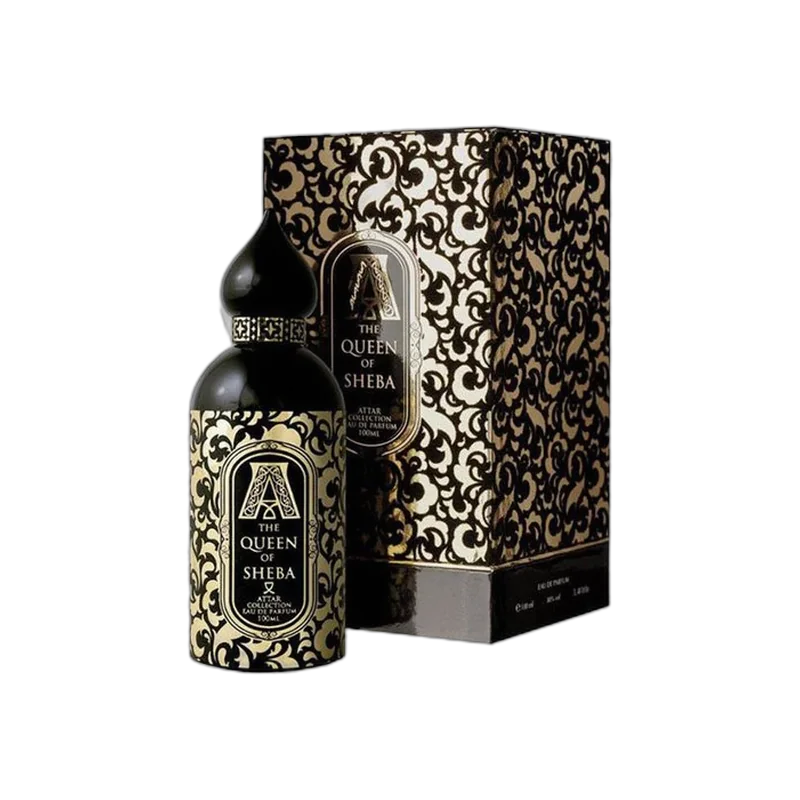
The Queen Of Sheba
The Queen of Sheba is the ornate feminine in Attar Collection's line, an alcohol eau de parfum styled to wear with the richness of an oil rather than the lift of a spray. It opens on a candied rose and lychee sweetness before settling into a warm heart of jasmine, amber and a creamy sandalwood, with a soft musk and vanilla drydown holding it all close. The overall effect is plush and slightly powdery, a scent that reads as dressed-up and celebratory rather than everyday, best suited to cool evenings and occasions where a quiet trail is welcome. Projection stays modest and intimate for the first stretch, then it lingers on skin for most of a day, the sort of tenacity this house builds its reputation on. The heavily jewelled bottle is the point as much as the juice, part of the gift-forward presentation these Dubai lines lean into. It sits well below the French niche florals it takes cues from, offering that dense, oil-inspired feel at a friendlier tier. Rose-and-amber wearers who find Western designer florals too sheer will recognise what this is reaching for.
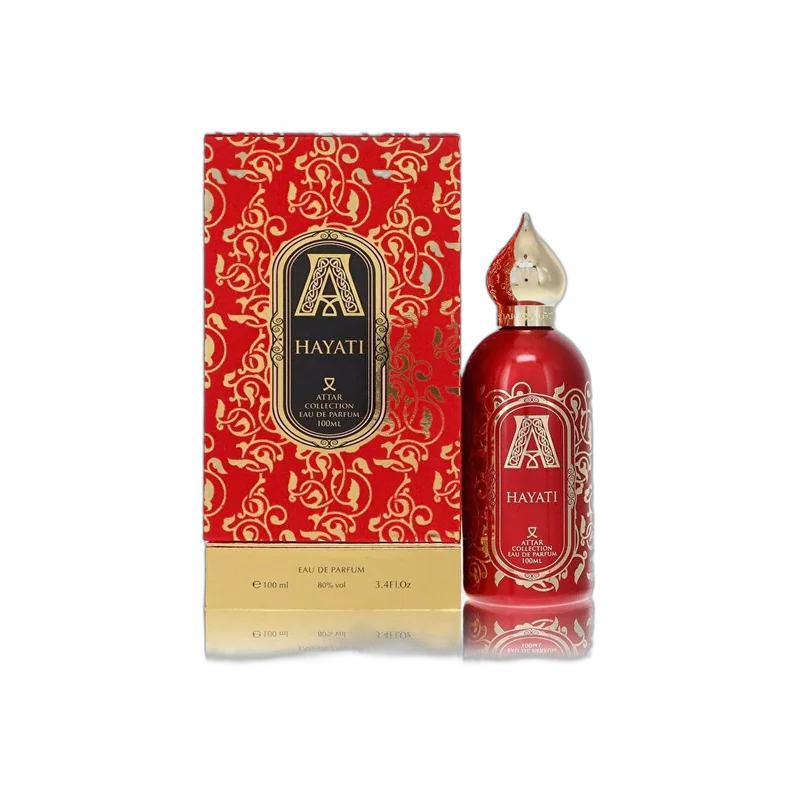
Hayati
Where Khaltat Night and The Queen of Sheba press deep into rose, amber and resin, Hayati pulls back — this is the daytime-and-warm-weather side of Attar Collection's catalogue rather than the evening-and-occasion side. The alcohol eau de parfum opens brighter than the rest of the line, a fruity sweetness over a floral heart that dries down onto a light amber, musk and vanilla base. The result wears warmer and rounder than a true fresh scent yet stays far more breathable than the heavy oud-and-rose blends around it, which is what makes it the daytime option in a line built mostly for evenings. Performance is moderate by this house's standards, projecting gently for a few hours before settling into a close skin scent that lasts most of the day. The bottle carries the same gilded, ornamental styling as the rest of the collection, so it presents as a gift even at the softer end. It positions itself in the fruity-floral oriental territory that sits comfortably between Western designer fare and the fuller density the house is better known for, undercutting the niche orientals it nods toward without abandoning the attar-inspired warmth in the base.
The two Attar Collection pieces above sit either side of the house's flagship. The Queen of Sheba is the dressed-up feminine, plusher and more powdery, while Hayati is the softer, fresher entry built for warmer weather and daytime wear. Neither is a literal attar, but both capture the texture that draws people to the category in the first place.
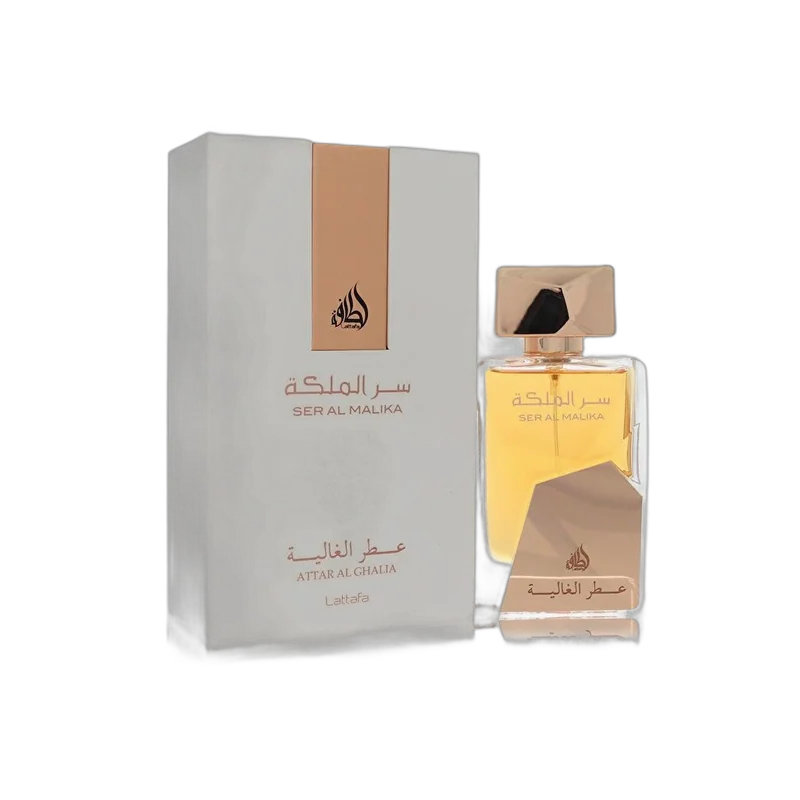
Ser Al Malika Al Ghalia Attar Non Alcoholic Perfume Oil
Lattafa's Ser Al Malika Al Ghalia is the true traditional-format piece here, a concentrated alcohol-free perfume oil rather than a spray, meant to be dabbed onto pulse points and worn close. The blend leans warm and oriental, a sweet rose and floral heart folded into amber, musk and a creamy vanilla, with a resinous depth that unfurls slowly as the oil warms against skin. Without alcohol there is no sharp top-note blast on application, just a quiet start that grows over the following hour into something rounder and denser, the way a mukhallat is supposed to behave. Sillage stays low by design, so this is a scent for the person beside you rather than the room, but the trade-off is longevity that outlasts most sprays by hours on skin. The small bottle looks modest next to the ornate flacons of pricier lines, yet the format is the authentic one and the value is hard to argue with, this being the UAE house that built its name undercutting the field. A little goes a long way, which is the whole logic of buying oil this way.
The Lattafa oil is the genuine article among these four, a concentrated alcohol-free perfume oil in the traditional dab-on format rather than a spray. It is the one that will actually teach you how oil wear feels, the slow start, the low trail, the marathon longevity, all of it. Buy it and a bottle of any attar-style EDP together and the contrast tells you everything about the difference between the two formats.
How to Buy Without Getting Burned
Three things trip up newcomers, and all are easy to avoid. The first is size. True perfume oils come in tiny bottles, often just a few millilitres, and that can look alarming next to a hundred-millilitre spray. Remember that you apply a fraction as much per wear and that oils are far more concentrated, so a small vial lasts far longer than the numbers suggest. Judge value by wears, not by volume.
The second is dosage. If your first oil seems weak, you have almost certainly applied too little in Western terms and too much in oil terms at once, which sounds contradictory but is not. Start with a single dab on one wrist, give it half an hour, and only then decide whether to add more. Nearly everyone over-applies at first and finds the scent muddy and heavy as a result.
The third is knowing what you are actually buying. If longevity with no trail is the goal and alcohol is a dealbreaker, you want a real oil or mukhallat. If you want that Middle Eastern character but with the projection and grab-and-go ease of a spray, an attar-style EDP is the smarter buy, and you should not pay oil prices for it. It also helps to understand how concentration shapes any of this, which our rundown on concentrations explained covers in plain terms.
Prices on this style move around a lot, since the same bottle turns up across very different sellers, so it pays to check the live lowest and average prices from our data before you commit rather than taking the first listing you see. Whether you are after a true dab-on oil or a spray that borrows the tradition, the format you choose matters as much as the scent.
Compare attar and perfume oil prices across every retailer on Aurexum