
EDT vs EDP vs Parfum — What Concentration Actually Changes
The Short Answer
Concentration is simply the share of aromatic oils dissolved in the alcohol base: roughly 5 to 15 per cent for an eau de toilette, 15 to 20 for an eau de parfum, and 20 to 30 for a parfum or extrait. So an EDP usually has more oil than an EDT of the same fragrance, and that is where the popular advice stops. The catch is that more oil does not reliably mean stronger or longer-lasting, because houses very often build a genuinely different formula at each concentration rather than one juice poured at different dilutions.
That single fact undoes most of what people assume about these labels. The bottle marked "eau de parfum" is not automatically the better, bigger or longer-lasting one, and buying the highest concentration you can afford is not the shortcut to value it looks like. What the label reliably tells you is the ballpark oil percentage. What it does not tell you is how the scent actually smells, how it performs on your skin, or whether you are paying for depth or just for a heavier base.
What The Labels Legally Mean
Here is the part that surprises people: the concentration names are not legally defined in any meaningful way. There is no regulation setting the exact oil percentage of an eau de toilette versus an eau de parfum. The ranges above are industry convention, not law, and houses move within and sometimes outside them as they please. One brand's EDT can carry more oil than another brand's EDP, and a few designer "parfum" flankers sit closer to a rich EDP than a true extrait.
The ordering, from lightest to heaviest, generally runs eau de cologne, then eau de toilette, then eau de parfum, then parfum or extrait de parfum. Cologne here means the concentration, not the old citrus style, and it is the weakest of the lot at a few per cent oil. But treat the whole ladder as a rough guide to strength, not a guarantee. The only number that matters is the one specific to the bottle in front of you, and most houses do not print it.
The practical takeaway is that the label sets an expectation, nothing more. It is a starting point for a conversation about a fragrance, never the final word on how it wears.
Why EDP Is Not Always Stronger
The real reason the "EDP is always stronger" rule fails is formula divergence. When a house releases the same scent at two concentrations, the perfumer frequently rebalances the whole composition, not just the dilution. The EDT version is often built brighter and fresher, leaning on citrus and green top notes that suit daytime. The EDP is often reworked warmer and rounder, with heavier florals, more amber and a denser base. They share a name and a bottle, and they are different fragrances.
Chanel Chance is the clean example. The eau de toilette is a crisp, green, daytime floral led by pink pepper and hyacinth over a light patchouli. The eau de parfum is warmer and powdery, with muskier florals and an ambered base that reads cool-weather and evening. Sniffed blind, most people would not immediately clock them as the same line. The EDP is deeper, but "deeper" is not the same as "just a stronger EDT," and plenty of wearers prefer the fresh snap of the toilette regardless of the lower oil count.
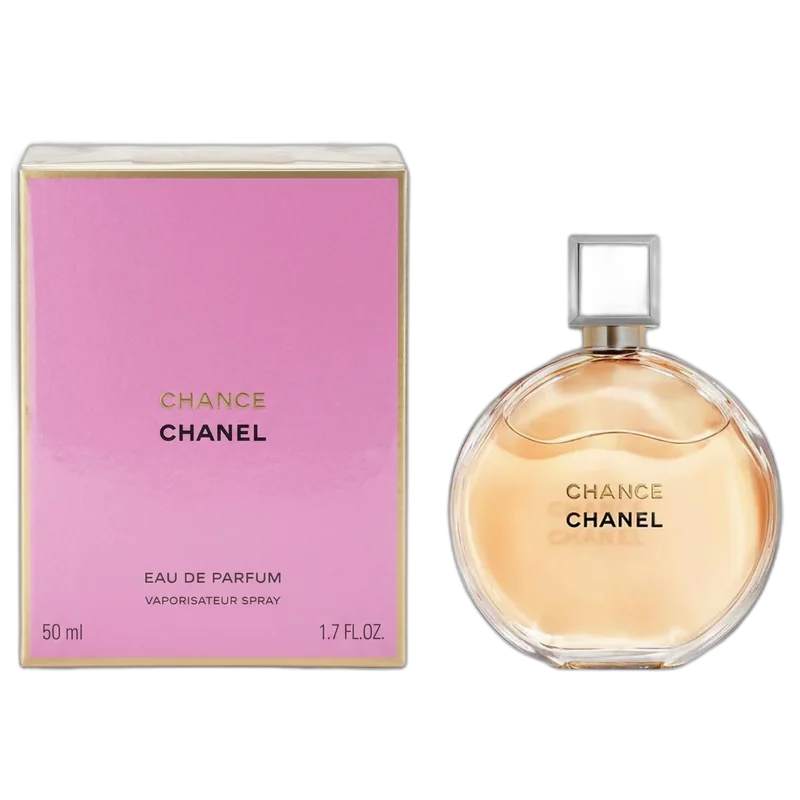
Chance Eau De Parfum
Chanel's 2002 round-bottle floral, the eau de parfum that turned Chance into a modern pillar for the house. Composed in-house by Jacques Polge, the EDP heart is a warm chypre-adjacent floral built on pink pepper and jasmine over patchouli, vetiver and a soft musk, with iris and amber giving it a powdery weight the other versions never reach. This is the deepest, most rounded reading of the line, and it is the one that leans cool-weather and evening rather than daytime. On skin it projects moderately then settles into a close, slightly ambered hum that carries most of a day, which is the payoff for the higher oil load. Worth knowing that it is not simply the toilette turned up, the base is genuinely heavier and the florals are muskier, so people who find the EDT too sharp often prefer this. The frosted circular flacon set the whole Chance family apart on the shelf and spawned a run of flankers, the Eau Tendre and Eau Fraîche among them. For anyone wanting the softest, warmest take on Chance, the parfum concentration is the one to reach for.
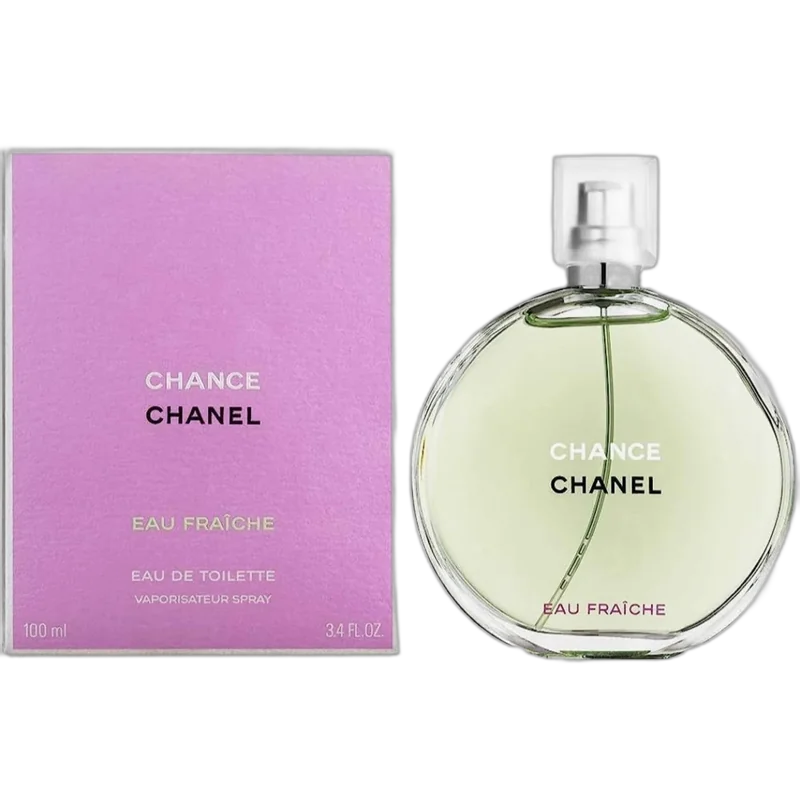
Chance Eau De Toilette
Chanel's eau de toilette flanker to the original Chance, and the version that shows how much a concentration can change a formula rather than just its strength. Jacques Polge built the EDT brighter and greener than the eau de parfum, leading with a snappy pink pepper and lemon over hyacinth and jasmine, with a patchouli and vetiver base that stays lighter and airier than the parfum's ambered one. Where the EDP reads warm and powdery, this wears fresh, sparkling and distinctly daytime, a spring and summer scent rather than a cold-weather one. That is the useful lesson here, the two share a name and a bottle shape but are noticeably different fragrances, not one juice at two dilutions. Performance sits where you would expect for a toilette, projecting well for the first hours then dropping to a skin scent by the afternoon, so it needs a top-up on a long day. It suits anyone who finds the parfum too heavy or too grown-up. Fresh, green and easy to wear, the Chance EDT is the lighter half of a pair that proves the label alone tells you very little about how a scent actually smells.
Because the formulas diverge, a well-made EDT can genuinely outperform its EDP sibling on the right skin or in the right weather. A fresh, citrus-forward toilette can project more obviously in summer heat than a dense, ambered parfum that hugs the skin. Longevity is skin-dependent too: dry skin holds scent poorly at any concentration, and oilier or well-moisturised skin makes even a modest EDT last. If you want the mechanics of how projection, sillage and longevity actually work, we cover them in detail in projection and longevity explained. The short version is that concentration is one input among several, not the master switch.
A Second Pair That Proves The Point
YSL La Nuit de L'Homme makes the same case in a masculine register. The eau de toilette is the famous one, a smooth, sweet, spiced-woody scent built on cardamom, lavender and tonka that wears intimate and close. The Le Parfum concentration is not simply that juice turned up. It is drier, spicier and more resinous, pushing the cardamom and black pepper harder and trading some tonka sweetness for a smoky woodiness. The two share a DNA and diverge on purpose.
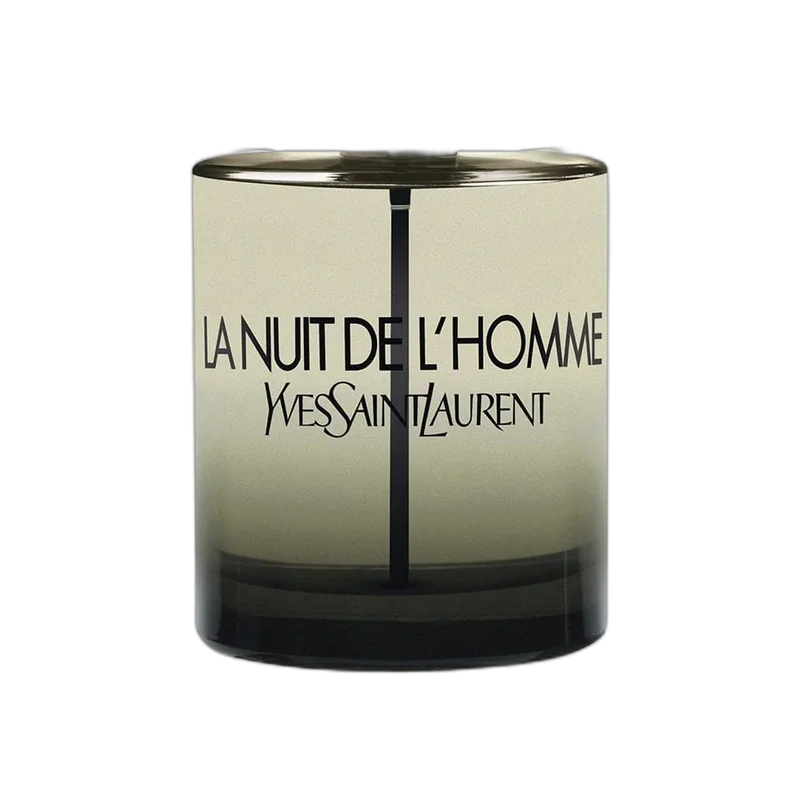
La Nuit De Lhomme Eau De Toilette
Yves Saint Laurent's 2009 spicy aromatic and one of the most reliable date-night masculines of its era, composed for the house by Anne Flipo and Pierre Wargnye. La Nuit de L'Homme is built on the cardamom and cedar spine of the original L'Homme but darkened and sweetened, with a lavender and bergamot open giving way to a cardamom, cumin and vetiver heart over a coumarin and tonka base. The eau de toilette is the version everyone knows, a smooth, slightly sweet spiced-woody scent that reads intimate rather than loud, made to be worn close in the evening. It is worth stressing that this EDT holds its own against the pricier Le Parfum, projecting moderately and lasting a solid few hours before turning into a warm skin scent, which is why many wearers never bother upgrading. It skews masculine but sits on the softer, more romantic end of that framing rather than the aggressive one. Made for YSL by L'Oréal, it became a genuine blind-buy staple and a fixture on every recommendation list for cold-weather evenings. For approachable, sweet-spiced woods that wear intimate and never overpower a room, the toilette remains the default pick.
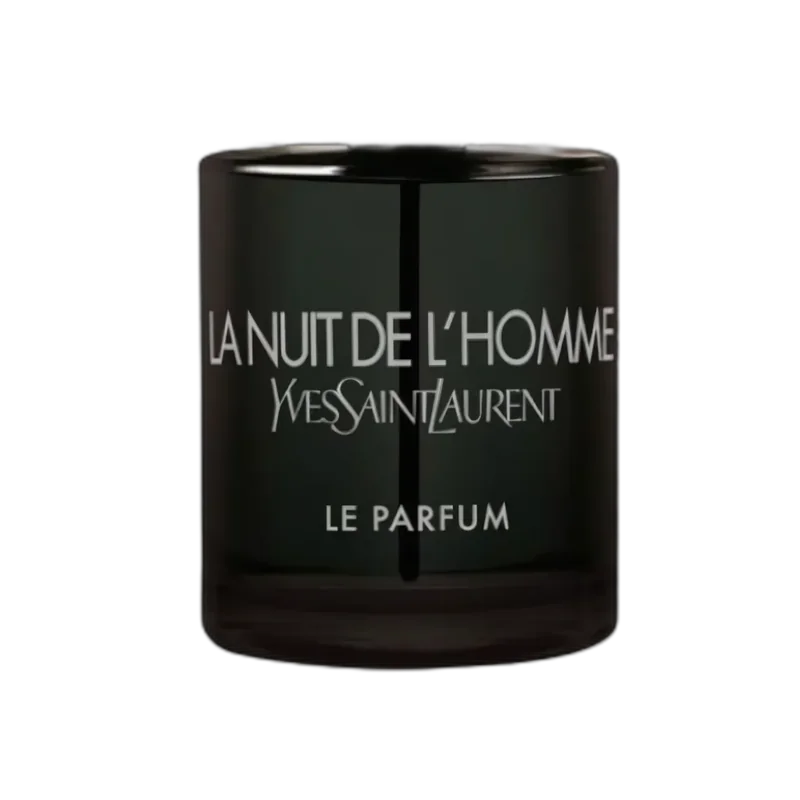
La Nuit De Lhomme Le Parfum
Yves Saint Laurent's Le Parfum flanker to La Nuit de L'Homme, the deeper and darker sibling in the line and a clean example of what a higher concentration reworks rather than merely amplifies. Where the eau de toilette is smooth and sweet, this version is drier, spicier and more resinous, pushing the cardamom and black pepper harder and swapping some of the tonka sweetness for a smoky, almost incense-flecked woodiness. It is not just the toilette poured stronger, the balance shifts toward spice and depth, which is exactly why the two are worth owning side by side rather than treating one as an upgrade. On skin it projects with more authority than the EDT and lasts noticeably longer, holding a spiced-woody presence well into the evening, which suits cold weather and formal nights. It reads masculine and grown-up, less the romantic daily and more the considered choice for occasions. Made for YSL by L'Oréal like the rest of the family, it sits above the toilette on price and rewards anyone who already knows the original and wants the same DNA turned darker. For depth, projection and a spicier take on the same idea, Le Parfum is the heavier half of the pair.
This is why the "always buy the parfum" instinct misleads. The Le Parfum does project harder and last longer, so if you want depth and evening presence it earns its place. But the toilette is not a lesser version of it; it is the lighter, more romantic take that many wearers prefer for daily use and never feel the need to upgrade. Owning both makes sense in a way that owning two dilutions of an identical formula never would. The same holds across the big designer trios: our breakdowns of Bleu de Chanel concentrations and Sauvage concentrations walk through exactly how each step up rewrites the scent rather than merely thickening it.
Heat, Skin And How It Actually Wears
Concentration interacts with your skin and the weather, which is the other reason the label is a weak predictor. Heat accelerates evaporation, so a heavy parfum can bloom faster and read louder in summer than it does in winter, while a light EDT can flash off within an hour on a hot day. Cold weather does the reverse, holding scent close and making dense concentrations shine. This is why the same bottle behaves differently across seasons regardless of what its label says.
Skin chemistry matters just as much. Body heat, natural oils, hydration and even diet shift how a fragrance develops and how long it lasts. Two people can spray the identical EDP and get very different results, one getting six hours of projection and the other a two-hour skin scent. There is no concentration high enough to override dry skin entirely, and layering with an unscented moisturiser often does more for longevity than paying up for a higher-oil bottle. The label cannot account for any of this, which is why sampling on your own skin beats reading percentages every time.
The Price-Per-Millilitre Trap
Now the part that matters for your wallet. Higher concentration is not automatically better value. A parfum costs more per millilitre than an EDP, and an EDP more than an EDT, but you also tend to use less of the heavier ones, and the formulas differ enough that you are not always comparing like for like. Paying a premium for a "stronger" bottle only pays off if you actually prefer how that concentration wears, which sampling will tell you and a spec sheet will not.
The smarter move is to work out which concentration of a given scent you genuinely like first, then compare the live price per bottle across retailers rather than assuming the pricier label is the safer buy. Prices swing widely between stockists and between the EDT and EDP of the same line, so the concentration you prefer is often available for far less than the one you assumed you should want. Two bottles of the same fragrance at different concentrations can sit at very different price points, and the cheaper concentration is frequently the better wear for your skin and climate.
So ignore the hierarchy as a value guide. Decide which concentration you actually reach for, then let the live lowest and average prices in our data settle where you buy it. That is the only comparison that reflects what you will really pay and really enjoy, rather than what the label implies you should.