
Best Aquatic Fragrances
The Material Behind the Aquatic Genre
Marine perfumery has a more specific origin than most fragrance families. The genre was largely defined by a single synthetic molecule: calone, a white crystallite with a pronounced watermelon-sea note that arrived commercially at the start of the 1990s and exploded across the decade once perfumers realised it could simulate the smell of ocean air in a bottle. The original Acqua di Gio for men in 1996 popularised it at designer scale, and within a few years nearly every house had an aquatic on the shelf. A wave of imitators and a thousand flankers followed: the marine note was everywhere, and it all smelled very similar. By the early 2000s, calone overuse had given the genre a reputation for sameness, and a certain section of the fragrance community wrote it off entirely as a category for the uninitiated.
That reputation is now somewhat outdated. The more interesting thing to trace is what happened after the calone peak: houses began reaching for alternative marine materials — mineral salt accords, posidonia seagrass, ozonic aldehydes, vetiver-water combinations, and eventually ambroxan-driven bases that deliver an aquatic warmth without any literal wave. The result is a genre that now spans genuine fresh-synthetic beach spray all the way to complex niche compositions with serious compositional intent. Mapping those two ends is the work of this list.
Understanding which part of the spectrum you are on is half the work of buying an aquatic. A 1990s calone-forward EDT and a 2020s mineral-ambroxan EDP share a family tree but almost nothing else in the glass. One is a light, disposable summer refresher; the other is a full day's wear with an identifiable character. Both are valid. They are not the same thing.
A note on Acqua di Gio: the original 1996 EDT sits on our citrus fragrances list because of how strongly its bergamot and citrus structure defines the opening. This post picks up where that one leaves off, focusing on the marine and mineral side of the family rather than the citrus-aquatic bridge the original EDT represents.
The Armani Empire
No house has done more for marine perfumery than Giorgio Armani, and three pins here reflect that directly. The Acqua di Gio line launched in 1996, expanded through several decades of flankers, and has become the category reference point in a way that essentially no other fragrance family has a single-brand equivalent for. The house owns this territory, and comparing these three concentrations across their respective eras is a faster way to understand the genre's evolution than reading any history piece.
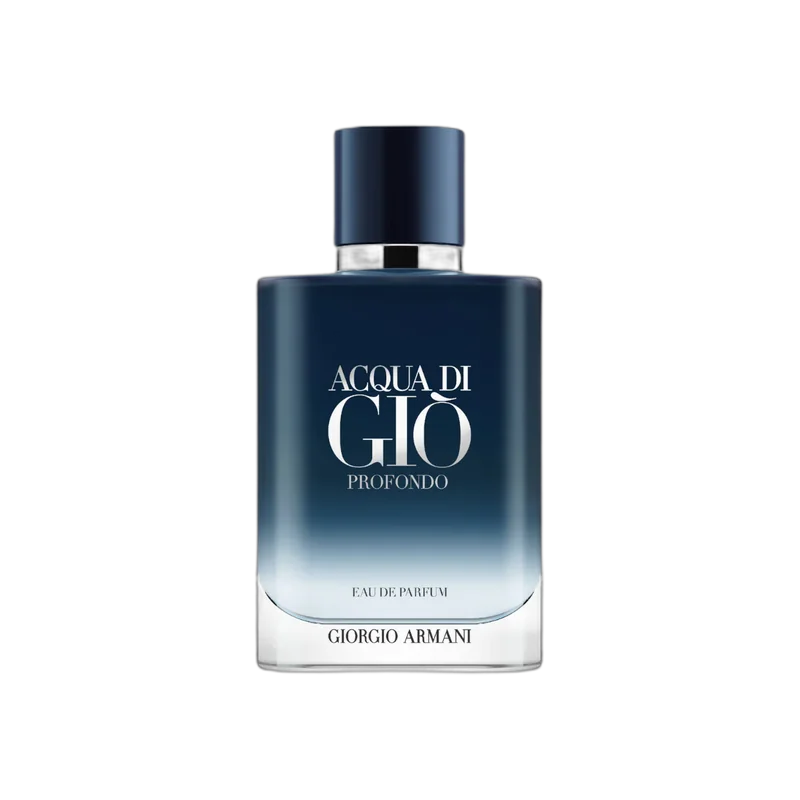
Acqua Di Gio Profondo 2020 Eau De Parfum
Giorgio Armani's 2020 deep-dive into the aquatic family it invented. Profondo is the line's attempt to move beneath the surface: calone is still present but dialled back, and what replaces it is a blueberry and vetiver accord that gives the open a darker, cooler register than the original Acqua di Gio. The heart is built on a synthetic aquatic mineral accord over labdanum and clearwood, adding a flinty, almost oceanic-trench quality that earlier flankers never reached. It is marketed masculine and wears that way, suited to warmer months but substantial enough for year-round use in moderate climates. Longevity is the flanker's biggest upgrade over its predecessor, projecting well for several hours and holding through the day as a closer marine skin scent. The deep-blue juice in the Acqua di Gio bottle, here given a textured cap, has become the modern benchmark for the genre — the scent serious buyers now compare everything else against. It sits in the mid-designer price range and is heavily stocked here, with live prices usually sitting well below the retail tag. Start here if you want the genre at its most current.
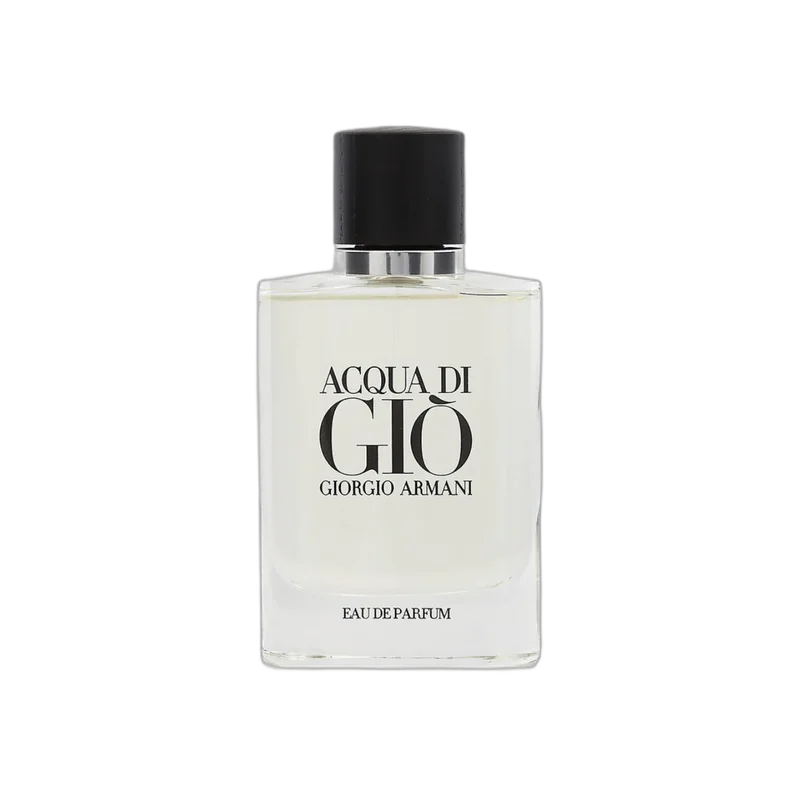
Acqua Di Gioia Eau De Parfum
Acqua di Gioia, released in 2010, is Giorgio Armani's feminine answer to the aquatic genre it dominates — and while the house's masculine line gets most of the attention, this is a quietly accomplished composition. It takes a marine-citrus-floral route: a clean watery-peach opening leads into a heart of peony, jasmine and lavandin, before settling on sugar cane, cedarwood and white musk. The oceanic freshness comes from an aquatic accord rather than raw calone, which gives it a softer, more floral register than the masculine line. It reads feminine and is marketed as such; it wears well in warm weather and lighter settings, suited to daytime and warmer months rather than evenings. Performance lands where you would expect a designer EDT, a few hours of moderate projection before pulling in close. It is one of the best-selling women's aquatics on the market and heavily stocked here, with prices regularly well below full retail. The clear faceted flacon and glacier-green aesthetic are deliberately more delicate than the original line's darker direction. For a feminine aquatic that does not sacrifice the structure or quality of the main franchise, this is the considered choice.
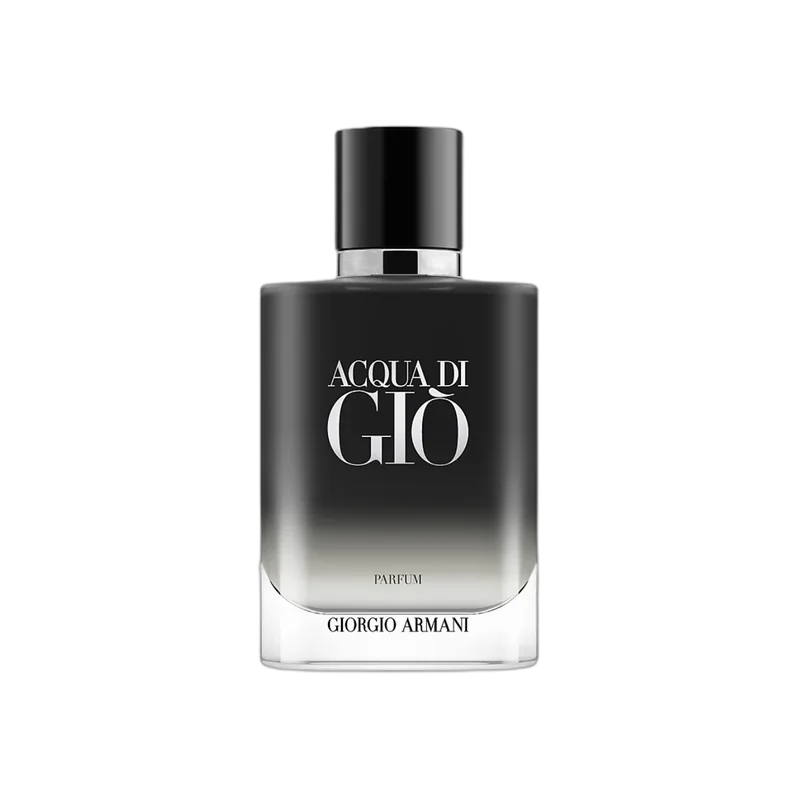
Acqua Di Gio Parfum
By 2023, the Acqua di Gio line had spent thirty years refining where calone-led aquatics could go, and the Parfum is the result of following that direction to its logical end. The marine synthetic is barely present here, replaced by an ambroxan-dominated base, a citrus and incense opening, and a marine mineral heart that reads more mineral than oceanic. The effect is a warmer, drier, more resinous interpretation of the AdG DNA, closer to an aromatic woody amber than the genre's classic fresh-watery register. It is the most substantial concentration in the line, projecting with real presence and lasting well through the day, which makes it the one to reach for in cooler months or for occasions that reward longevity. The juice is darker than the Profondo and the character more authoritative, which is appropriate for the format. Three Armani pins in this list is deliberate. No other house has mapped the aquatic genre across decades and concentrations as consistently as this one, and comparing these three bottles tells you more about where marine perfumery has travelled than any history piece would. For aquatic-adjacent without the wave, this is the pick.
Acqua di Gio Profondo (2020) is the modern deep-marine benchmark, using darker materials and a richer mineral-aquatic accord to update the DNA for buyers who grew up knowing the original. Acqua di Gioia (2010) is the feminine line's reading of the same material language — a floral-aquatic that keeps the house's structural clarity but routes it through peony, jasmine and a softer oceanic heart rather than the masculine line's bluer register. The Parfum (2023) goes furthest from literal water, trading the calone-adjacent freshness of earlier concentrations for ambroxan warmth and a mineral-incense drydown that reads more as aromatic woody amber than anything you would traditionally file under aquatic.
Together they show a house that stayed in one category long enough to exhaust it from the inside, arriving somewhere more interesting in the process. The progression from Profondo to Parfum is particularly instructive: each step takes the marine note slightly further into abstraction, until the Parfum is essentially a warm, mineral-woody fragrance that remembers the ocean rather than smelling of it.
The Founders of the Genre
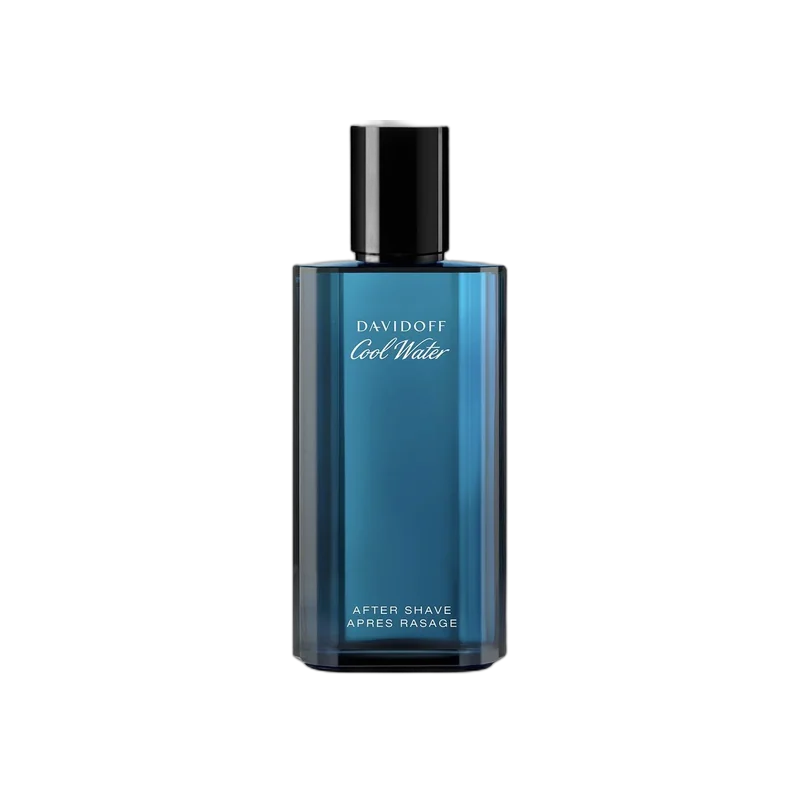
Cool Water Eau De Toilette
Davidoff Cool Water arrived in 1988, four years before calone became the dominant marine synthetic of the 1990s — which makes it an interesting case study in how the genre smells when it has to work without the molecule that later defined it. Pierre Bourdon composed it as a fougère with an unmistakably aquatic personality: lavender, mint and a green-watery note open it, before the familiar lavandin-and-sandalwood heart settles in over a dry musk and cedarwood base. It is classified as a fresh fougère, and that is exactly what it smells like, cooler and slightly watery rather than the pure synthetic-ocean rush of mid-90s aquatics. The result is that it has aged better than almost anything else from its era. It reads slightly formal and is light enough for the office. Longevity and projection are modest by modern standards, though very much in keeping with what an EDT delivers at this price. Made for Davidoff under licence by Coty, it is one of the most-sold colognes in history and still widely available at prices that make it a genuine value proposition for a genre that can cost considerably more.
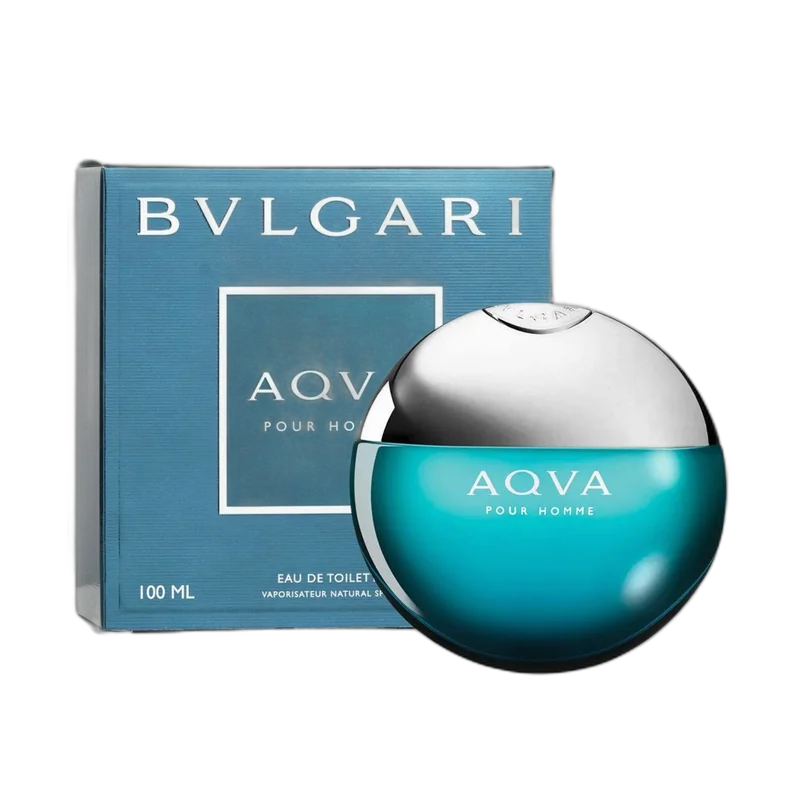
Aqva Pour Homme Eau De Toilette
Bvlgari's 2005 masculine was built around a specific marine material: posidonia, a seagrass that grows along Mediterranean coasts and smells of salt, mineral algae and something faintly smoky when dried. Alberto Morillas composed Aqva Pour Homme at Givaudan, and his brief centred on that seaweed-mineral angle rather than the calone-ocean route most of the category had settled into. The result opens with mandarin and a thin citrus brightness before arriving at the heart — aquatic-mineral, slightly salty, with a smoky vetiver note threading through. The base is clean amber and woody musk, restrained enough to stay out of the way. It wears masculine and skews warm-weather, suited to days rather than evenings, and performs modestly in terms of projection and longevity. What it lacks in throw it makes up for in coherence. The posidonia accord is genuinely distinctive and gives the whole thing a dry, mineralic character you do not find in the rounder, sweeter aquatics. The squat, water-drop flacon is unmistakably Bvlgari. For anyone who finds standard aquatics too synthetic or too sweet, this is the genre's more restrained, geologically grounded alternative.
The two pins above represent the before and after of how calone changed marine perfumery. Cool Water (1988) was composed without it and works instead through a fresh fougère structure — lavender and mint over a dry sandalwood and musk base. It still smells aquatic, but the mechanism is different: it is the suggestion of cool, sea-adjacent air rather than a direct synthetic simulation of waves, and that restraint is what makes it hold up better than most of what the 90s subsequently produced. It is the genre's pre-history, composed before the calone rush made aquatics synonymous with a specific kind of synthetic wetness.
Bvlgari Aqva Pour Homme (2005) takes the genre's alternative route: not calone-ocean but mineral seagrass. Alberto Morillas used posidonia as his central material at Givaudan, a choice that lands drier and more saline than the standard synthetic-aquatic register. Where most aquatics reach for the impression of sea spray, this one reaches for the sea floor — mineral, flinty, a little dark. These two sit together because they demonstrate that the genre has more than one map. Neither follows the dominant calone path, and that is precisely what makes them worth revisiting if your only reference point is the mainstream shelf.
Niche Marine: Proof the Genre Grew Up
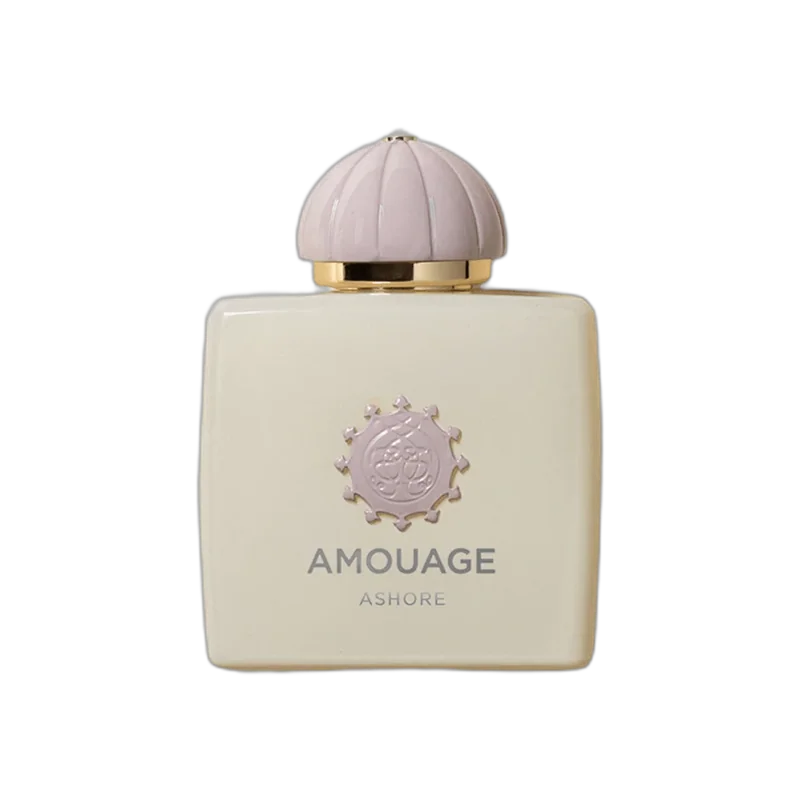
Ashore
Amouage's 2020 marine release is the niche category's proof of concept — what happens when a house with serious creative and material resources decides to work in a genre usually associated with airport duty-free. Ashore was built for the British-Omani house, and it takes the aquatic family somewhere considerably more complex. The open is watery and ozonic but with an unusual depth: sea salt, mineral accords and a raw, almost driftwood quality frame the heart, which adds galbanum, a smoky seaweed note, and a cedar-vetiver underpinning. The base is warm and dry, anchored by ambergris-style accords that give it a natural saltwater character rather than the clean synthetic brine of mass-market aquatics. It is formally unisex and wears that way in practice. Performance is in line with Amouage's reputation, with good projection and a long drydown. The price sits at the upper end of the category, as you would expect from the house, but what you get is a marine scent with genuine compositional ambition. It is the one on this list that demonstrates the genre has genuinely grown up.
If you have written aquatics off as airport-cologne territory, Amouage Ashore is the counter-argument. It is built with materials and compositional ambition that simply do not appear at the designer price tier: ambergris-adjacent accords that give the drydown a natural, seawater quality, an unsettled driftwood character in the heart, and a galbanum-seaweed note that introduces an edge the polished Armani bottles deliberately smooth away. It is not a pretty or immediately accessible fragrance. It smells like the genre taken seriously, with all the complexity and slight difficulty that implies, and it costs accordingly.
Ashore also illustrates the endpoint of the move away from calone: a marine fragrance that mostly does not smell synthetic at all, that leans mineral and natural rather than ozonic and clean. The genre has reached a point where casual beach scents and high-end marine compositions barely share a register. Both have their place — a light, easy aquatic for summer days is not a lesser thing than a niche marine with architectural ambition — but they serve completely different needs and should be bought for different reasons.
How to Choose
The question to settle first is whether you want the genre classic or the genre evolved. Cool Water and Aqva Pour Homme are the cases for restraint and material specificity over synthetic freshness — both are lighter propositions that reward patience and suit people who find the standard aquatic register too insistent. Acqua di Gio Profondo is the mainstream modern benchmark, the one that most people are thinking of when they reach for an aquatic and the safest recommendation if the category is new to you. It is also the most heavily stocked, which means the live price data we track tends to sit well below full retail.
For the feminine aquatic, Acqua di Gioia does most of what the original does without borrowing the same DNA, and it stands on its own terms within the women's market more clearly than most flankers manage. For summer colognes, Profondo and Cool Water are the practical picks: both are light enough to wear in the heat without feeling heavy, and both are distinctive enough to wear on purpose rather than by default.
The Parfum is the choice for buyers who like the Armani lineage but want more presence and longevity, or who want to reach for an aquatic outside the traditional warm-weather window. It bridges the gap between the marine genre and the woody amber family, which makes it the most versatile concentration in the Armani line and the one that works across the widest range of occasions.
Ashore is the one to try if budget allows and you already know you enjoy the genre, because it demonstrates what a house with serious resources and creative latitude does with the same starting materials. It is not the entry point — it is where the genre ends up when resources and imagination are not the constraint.
On performance: aquatics are typically lighter-projecting by design, and EDT concentrations will pull close within a few hours. That is not a flaw in the format — it is part of what makes them appropriate for warm weather and everyday wear. Longevity-focused buyers should look to the Parfum concentration in the Armani line or to Ashore, which delivers projection appropriate to the Amouage price tier.
Prices across the category vary considerably. The live lowest and average prices from our data are available for each bottle below. The mainstream picks here are among the most heavily stocked fragrances we track, which keeps prices competitive. The Amouage is more selective, but the live data is there.
Compare aquatic fragrance prices across every retailer on Aurexum