
Best Blue Fragrances
What "Blue" Actually Means
Blue fragrance is a community shorthand, not a formal category. It covers a loose cluster of masculine-marketed scents that either come in a blue bottle, smell of what people associate with blue — fresh air, sea water, minerals, clean skin — or both. The palette leans citrus, aquatic, woody amber, and in more recent years ambroxan, a synthetic ambergris-style molecule that reads as clean and skin-warm simultaneously. The term has spread across enthusiast forums and fragrance communities until it now functions as a genuine genre descriptor, understood immediately by anyone who has spent time in the category.
The genre has obvious founders. Bleu de Chanel is the prestige reference, a clean woody amber built for the serious end of the designer market. Dior Sauvage is the most commercially dominant of them all, fresh and spicy with its own heavy ambroxan signature — the Sauvage vs Bleu de Chanel comparison is worth reading if you are weighing up those two. Acqua di Gio from Giorgio Armani is the aquatic archetype and remains one of the best-selling fragrances globally. YSL Y sits in the same fresh-woody neighbourhood.
All four of those are well-executed and commercially proven. None of them are pinned here, because the picks below either deliver more character at a comparable or lower price, predate the trend entirely, or make an argument for spending more when the quality actually earns it. This is not a contrarian list. It is a practical one built around what these four do differently, and what kind of shopper each one suits.
The Shape of a Blue Fragrance
It helps to understand what makes a blue fragrance smell like a blue fragrance, because the same underlying logic runs through all four picks here even though they execute it differently.
The signature is openness. Blues tend to read as uncluttered, as if there is air around the notes rather than density. Citrus and marine materials provide the top-note impression of freshness, aromatic-herbal notes like rosemary and lavandin give structural lift, and then woody ambers or ambroxan hold the dry-down and keep the whole thing from evaporating the moment you spray it. The best blues manage to smell clean without smelling generic, which is harder than it sounds given how much the category has been replicated.
Ambroxan deserves a specific mention because it has become so central to the modern blue. It is a synthetic ambergris-derived molecule — produced from sclareol, a compound found in clary sage — and it generates a warm, radiant, skin-close effect that registers as a kind of attractive cleanness, close to freshly washed skin but with real depth. It is what gives Sauvage its projection and Dylan Blue its warmth. At high levels it can overwhelm, but when handled well it is the ingredient that elevates a blue from pleasantly fresh to genuinely memorable.
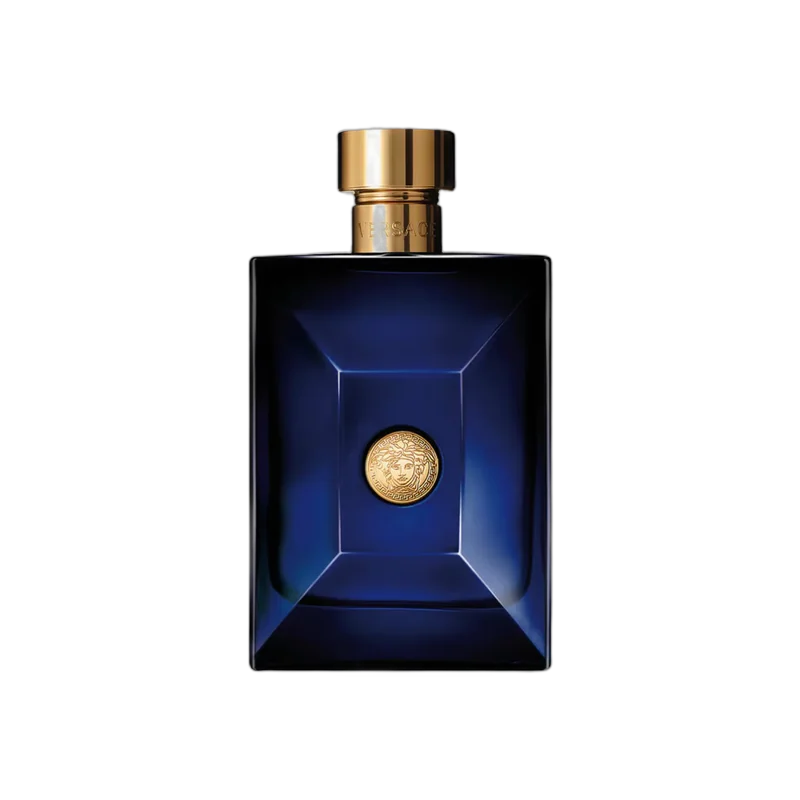
Versace Pour Homme Dylan Blue Eau De Toilette
Versace's 2016 ambroxan-fig take on the blue brief, and the one that showed the genre could do more than clean aquatic. Dylan Blue Pour Homme opens with fig leaf, violet and a shot of bergamot, aromatic and slightly vegetal in the first minutes, before settling into the heart that sells it: a dense ambroxan accord underpinned by patchouli and labdanum. The ambroxan here is forward rather than skin-like, projecting that warm musky-woody radiance that reads as clean to most rooms and slightly addictive up close. Underneath runs a base of incense, papyrus and black suede, which gives it more shadow than the average blue. It is heavier and richer than the citrus-marine classics that defined the category, which makes it the autumn and cooler-months pick of the four here. Performance is strong, with solid projection for the first several hours and respectable longevity on skin and fabric. The deep-blue square bottle is one of the better-looking flacons in the Versace range. It is marketed masculine but wears close enough to unisex that plenty of women have adopted it, and in a category prone to safe sameness, it stands out by actually having a point of view.
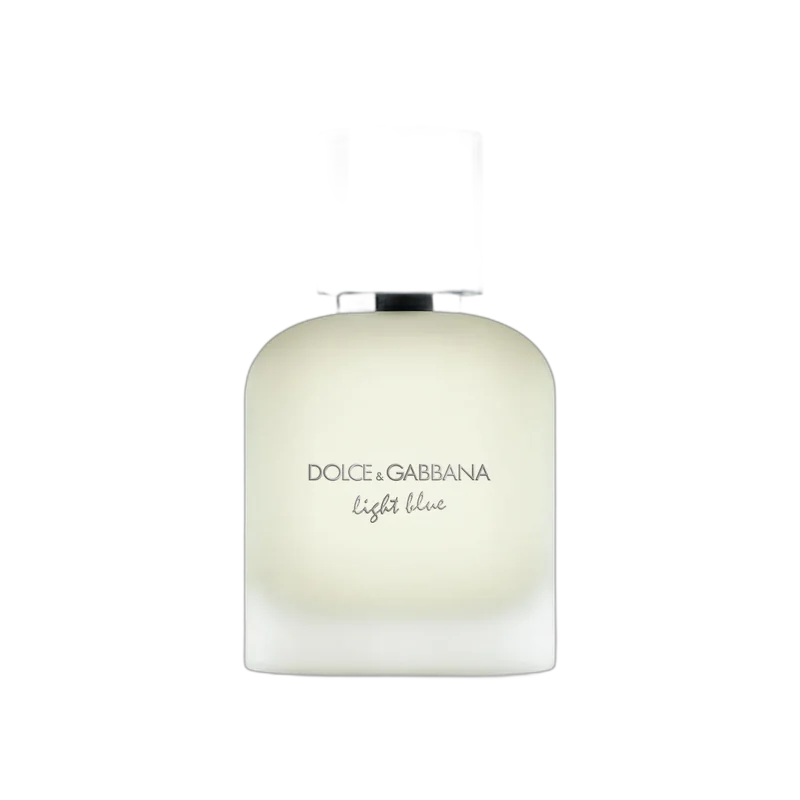
Light Blue Pour Homme Eau De Toilette
Light Blue Pour Homme has been the Mediterranean-summer reference since its 2007 launch, and it earns the reputation without leaning on novelty. The scent opens on Sicilian mandarin and frozen grapefruit with a hit of pepper, fresh and citrus-forward in a way that reads genuinely coastal rather than synthetic. A heart of rosewood, rosemary and a woody amber accord holds the structure together, and the dry-down pulls towards white cedar, oakmoss and incense, a restrained and slightly mineral close that keeps it from sweetness. It wears masculine without being gendered in any serious way, and the projection is calibrated for warm weather: present enough to be noticed, well-behaved enough for most occasions. Longevity is modest by design, a feature rather than a flaw in something you reach for when it is hot. What makes it durable as a reference is how well-proportioned it is, nothing dominates, nothing clashes, the whole thing just hangs together cleanly. The blue frosted bottle and a campaign shot against the Amalfi coast are part of the picture. It is one of the most dependable options in the accessible-designer tier and has earned that position the hard way — by being genuinely well made rather than by being the only thing in the shop.
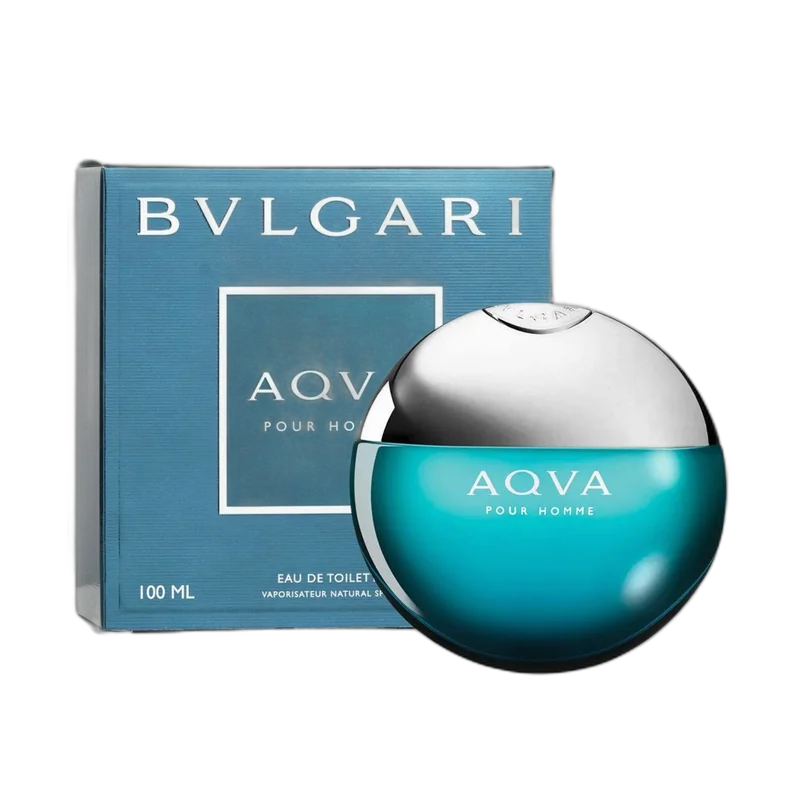
Aqva Pour Homme Eau De Toilette
Aqva Pour Homme from Bvlgari came out in 2005, a few years before the blue wave properly crested, and the fact that it still holds together today says something about how well the brief was executed. The opening is mineral and almost saline, with posidonia seaweed and a green aquatic accord that smells less like beach spray and more like the actual sea: slightly vegetal, faintly iodic, and genuinely marine rather than ozonic. A heart of lavandin and cypress anchors it in the aromatic-herbal territory, and the base pulls towards amber, sandalwood and a little guaiac wood, which gives it a warm-dry finish rather than a cold-watery one. The result wears as a fresh aromatic marine that reads more architectural than most aquatics, less about projecting volume and more about holding an interesting shape quietly on the skin. Projection is restrained and longevity moderate, which puts it in the same practical bracket as Light Blue — a warm-weather and summer scent rather than a year-rounder. It was doing the coastal-mineral thing before the category had a name for it, and that alone makes it worth knowing.

Blue Talisman Eau De Parfum
Blue Talisman from Paris niche house Ex Nihilo, released in 2023, is the list's outlier: a blue fragrance built with the ingredient quality and structural ambition that designer blues rarely attempt. It opens with a cold, almost metallised bergamot and violet accord, precise and a little austere, before opening into a woody-iris heart layered over a cool sandalwood and ambroxan base. The ambroxan sits lower in the mix than in something like Dylan Blue, used more as a warm skin-layer than the main event, which gives Blue Talisman a subtler, more skin-close radiance. The overall effect is a blue that smells like a blue without actually smelling like anything else on the market, which is the point of the exercise. Performance is what you expect at the niche price bracket — good projection in the early hours and serious longevity on skin. The bottle is characteristically Ex Nihilo, architectural and transparent, and the price reflects the house's positioning at the serious end of Paris niche. If the others on this list are the answer to a brief, this is the brief rethought from scratch.
The Crowd-Pleaser and the Classic
Versace Dylan Blue Pour Homme and Dolce & Gabbana Light Blue Pour Homme are the two that most people looking for a blue fragrance are actually after, and they solve different problems.
Dylan Blue is the one to reach for if you want presence in the room. The ambroxan sits high in the structure and projects that warm, slightly addictive radiance the genre became famous for after Sauvage proved there was a market for it. It is richer and darker than a citrus marine, anchored by fig leaf and patchouli rather than sea salt and bergamot, and it wears better in the evening and in cooler months than on a hot summer afternoon. If you find the aquatic blues feel a little thin or diffuse, this is the answer, a blue that has actual weight. Heavily stocked from the retailers we track, live prices are generally well under full retail and competitive with anything in the accessible-designer tier.
Light Blue Pour Homme is the warm-weather answer. It is a textbook Mediterranean fresh, well-proportioned and genuinely easy to wear, and it has held that position without revision since 2007. It works for outdoor events, warm-season office wear, daytime errands — any context where you want to smell clean and present without the sillage getting ahead of you. Where Dylan Blue earns its place with projection, Light Blue earns it with appropriateness, a scent that is almost impossible to wear wrong in the right conditions. For anyone building out a summer wardrobe, it belongs on the shortlist of best summer colognes.
The Mineral Original
Bvlgari Aqva Pour Homme sits slightly apart from the other three because it predates the modern blue wave and does not quite sound like anything on either side of it. It arrived in 2005, before ambroxan-forward fresh masculines had fully colonised the market, and it went a different way: mineral and coastal rather than ozonic and bright.
Where most aquatics reach for synthetic sea-spray brightness, Aqva goes to posidonia seaweed, a saline accord, and herbal lavandin. It arrives at something that smells more like a rocky shoreline than a clean shower — slightly vegetal, genuinely marine in the iodic sense, and more structured than the genre average. The dry-down is warm and woody rather than cold and watery, which means it does not feel disposable in the way some clean aquatics do.
The projection is restrained and the longevity moderate, so it is not trying to compete with Dylan Blue's presence. It is the considered choice for someone who has tried the louder options and wants the category stripped back to what actually makes it interesting. It also predates the trend long enough that wearing it reads as a choice rather than a default, which is its own kind of quiet appeal. For a deeper look at what the broader best aquatic fragrances category has to offer, Aqva is one of the most instructive starting points.
The Niche Argument
Ex Nihilo Blue Talisman sits at a different price point from the others, and the gap is justified in the materials and the construction. The bergamot-violet-iris opening is more precise than anything the designer tier attempts, and the ambroxan integration in the base is subtler and more considered — used as a warm underlayer rather than a headline accord.
It does not announce itself as a blue fragrance in the self-referential way that Dylan Blue does. It inhabits the same olfactory space with more restraint, more accuracy, and more texture. Whether that trade-off makes sense depends on what you are optimising for. If you wear blue scents daily and have found the designer options feel interchangeable after a while, this is the logical next step. If you are buying your first blue fragrance, the designer three are more sensible starting points.
How to Choose
Match the blue to the season and the occasion. Light Blue and Aqva belong in warm weather, worn light, and suited to daytime and outdoor settings where citrus and marine accords have room to breathe. Neither is trying to fill a room; both are trying to smell appropriate in warm air, which they do. Dylan Blue crosses seasons more easily. It wears well in spring and autumn, projects in a way that reads as a deliberate scent rather than a background one, and suits evenings better than the other designer options. Blue Talisman is the year-round choice for someone who wants a daily-wear blue that holds up at close range and does not smell like the other three.
On budget, Dylan Blue and Light Blue are the value anchors — widely stocked, with live prices from the retailers we track. Aqva sits in a similar accessible-designer bracket. Blue Talisman is niche money, a real step up but reflected in what you get in terms of materials and longevity.
Sample before committing to anything at the pricier end. Ambroxan in particular varies between skin types: on some people it amplifies into something commanding, on others it quietens to almost nothing. The same bottle can smell very different on two people standing next to each other, which makes testing non-negotiable at that level of spend.
Compare blue fragrance prices across every retailer on Aurexum