
Best British Fragrance Houses
Why Britain Punches Above Its Weight in Niche Perfumery
Ask most fragrance shoppers to name the great perfumery nations and France comes first, Italy second, and the Middle East somewhere in the conversation. Britain rarely appears near the top of that list, which is odd given that London has been one of the world's important centres for fine perfumery since at least the mid-nineteenth century, and that the cluster of independent British houses operating today is quietly one of the most interesting in niche fragrance anywhere.
Part of the reason is structural. Paris has Guerlain, Chanel and the whole apparatus of the French fine-fragrance trade, and they take up enormous oxygen. Britain's major contribution to mainstream fragrance has largely been through the global licencing business, with London-connected operations producing for multinationals rather than under their own names. The niche houses — which is where the real argument lives — are smaller, less loudly marketed, and tend to rely on word-of-mouth among enthusiasts rather than splashy campaigns. That suits the houses and tends to disadvantage them in the attention economy.
What the best of them share, broadly, is a preference for quality raw materials, a certain understatement in how they present themselves to the world, and in the case of the older houses, a genuine historical lineage to draw from. Penhaligon's opened in 1870 on Jermyn Street, the same street of barbershops and shoemakers that still defines a particular version of British masculine style. The Crown Perfumery, from which Clive Christian traces its descent, was granted a royal warrant and operated in the same Victorian era. Ormonde Jayne's Hyde Park shop is considerably newer, but the philosophy of leading with ingredient quality rather than marketing concept connects it directly to that tradition. Even Boadicea the Victorious, the youngest house represented here, deploys a very British mythology in its warrior-queen branding, reaching back to ancient history for its character rather than inventing one from nothing.
This guide takes four of those houses and five of their most representative fragrances, maps them by house and approach, and tries to make the case that the British niche scene deserves more attention than it typically receives from shoppers who default to French and Italian houses.
The Barbershop-to-Niche Lineage
The thread connecting the old Jermyn Street barbershops to today's London niche houses is real and worth tracing, because it explains a lot about what British fine fragrance actually values. The barbershop tradition was practically-minded: scents that worked on a man getting a shave before a day in the City, clean and well-made but not theatrical. Penhaligon's emerged from that world and never entirely left it, even as the house has evolved its offer enormously over a hundred and fifty years.
What the niche generation added to that foundation was an interest in materials for their own sake, and a willingness to charge accordingly. Ormonde Jayne's Linda Pilkington is explicit about this, building compositions around sourced ingredients rather than market research. Roja Dove, whose house sits outside the scope of this particular guide but is worth knowing about — the full Roja Parfums guide covers that territory — took the idea further into outright luxury positioning.
Boadicea the Victorious went a different direction entirely, replacing understatement with theatre and making that theatricality itself the brand identity. The result is that the British niche landscape in 2026 contains houses at genuinely different registers: quiet and ingredient-focused, historically grounded, or confidently extravagant. That range is its own kind of argument.
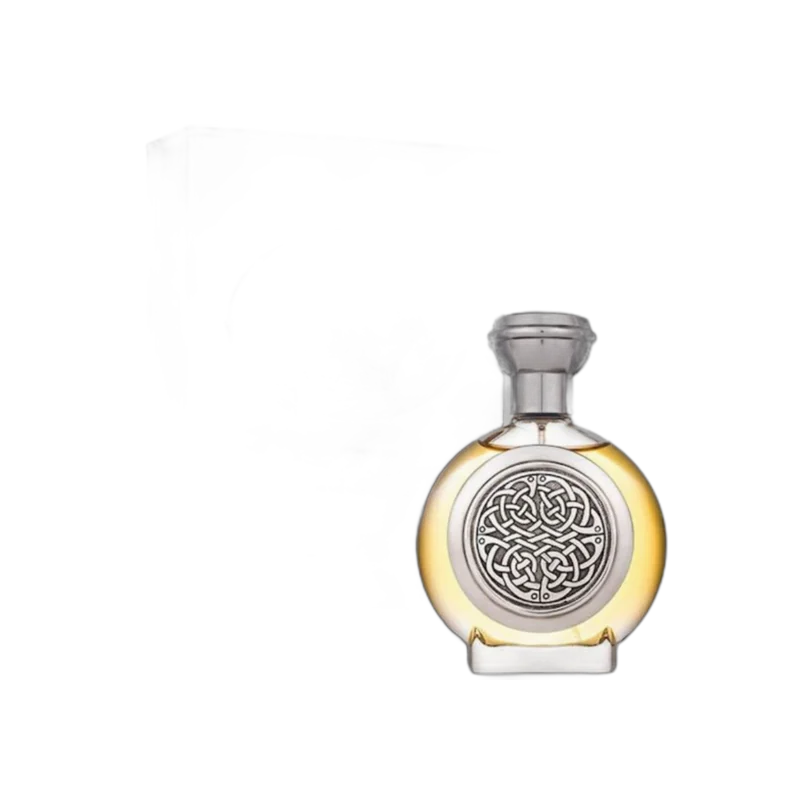
Complex Eau De Parfum
Heavy pewter crests, warrior-queen mythology and a 2008 launch that arrived with a conviction rarely seen in British perfumery at the time — Boadicea the Victorious announced itself as a house that was not going to whisper. Complex is the one most often cited as the house's calling-card, and the name is not hyperbole. It opens with a warm, slightly animalic leather-and-spice accord, then the composition opens outward into a dense heart of florals and resins that manages density without collapsing into mud. There is an oriental backbone holding the whole thing together, woody and a little smoky, with enough sweetness in the base to prevent it turning austere. Projection is the house's signature: these are compositions built to announce a room rather than sit quietly on skin, and Complex lives up to that brief. The bottles are part of the appeal too, heavy glass weighted with crested pewter lids that sit on a shelf as decorative objects in their own right. For those who find mainstream British houses too restrained, Boadicea offers an alternative lineage entirely, one that reaches for grandeur rather than understatement. As the house's flagship, Complex is the logical first port of call.
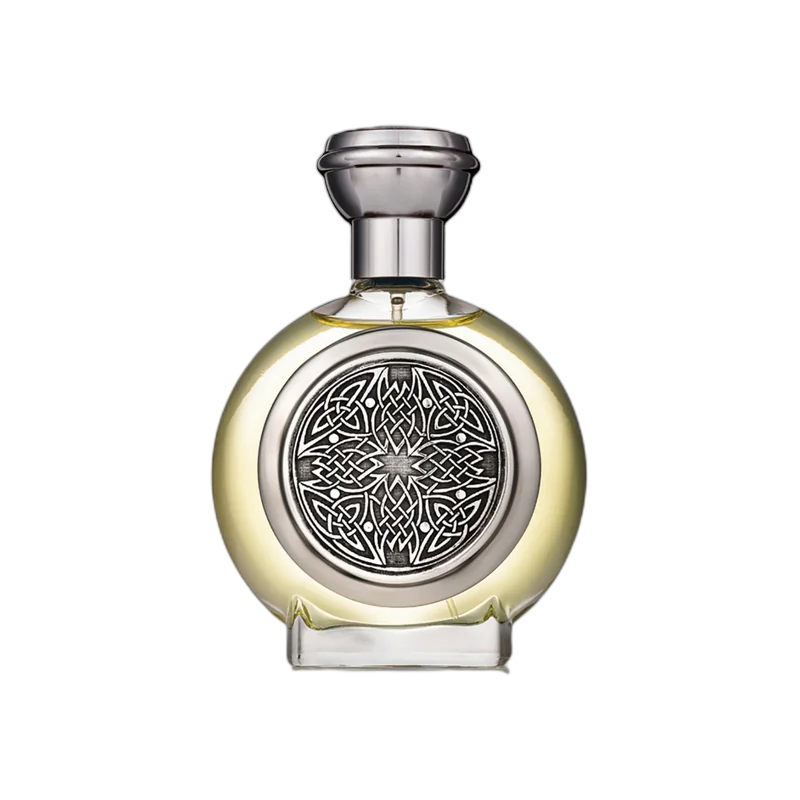
Ardent Eau De Parfum
Launched in 2012, Ardent is the smoky-leather chapter in the Boadicea the Victorious story and the one with the most devoted following. Where Complex reaches across every register, Ardent sharpens its focus: leather is the protagonist, smoky and dry in the early stages, warming slowly as a resinous core of amber and incense opens beneath it. There is something of the saddle and something of the fireplace in equal measure, a combination that wears best when the temperature drops and calls for weight. The florals here are subordinate, lending softness without distracting from the smoke, and the base settles into a warm, tenacious finish that holds well into the next morning on heavier fabric. Like every bottle in the range, the physical object makes a statement, the signature crested lid and weighty glass giving it a presence on the shelf that justifies part of the spend. Ardent wears masculine in framing but is genuinely unisex in practice; the leather reads polished rather than rugged, and the smoke is incense-adjacent rather than campfire. For anyone drawn to the house by its warrior-queen positioning, this is the one that earns the reputation on purely olfactive grounds.
The Warrior Queen: Boadicea the Victorious
Founded in 2008, Boadicea the Victorious takes the most operatic approach to British identity of any house on this list. The branding commits fully to the ancient warrior-queen mythology, the crested pewter lids, the military-weight bottles, the names that read like chapters from a history text. What matters, ultimately, is whether the perfumes live up to the theatre, and in the case of the two pins here, they do.
Complex is the house's flagship and the obvious starting point, a dense, multi-layered oriental-leather that does what the name suggests without losing structural clarity in the process. It is a composition that takes genuine skill to execute: complexity in fragrance frequently means muddy, and this sidesteps that trap. Ardent is the smoky-leather chapter, tighter in focus and more committed to that single accord, and the one most collectors reach for once they have explored the range. The two fragrances together give a reasonable picture of what Boadicea does best: full-projection, ingredient-rich compositions that make no concessions to casual wear.
The house sits at the premium end of niche and is well represented among the retailers we track, so the live prices on both are worth comparing before purchasing direct from the house.
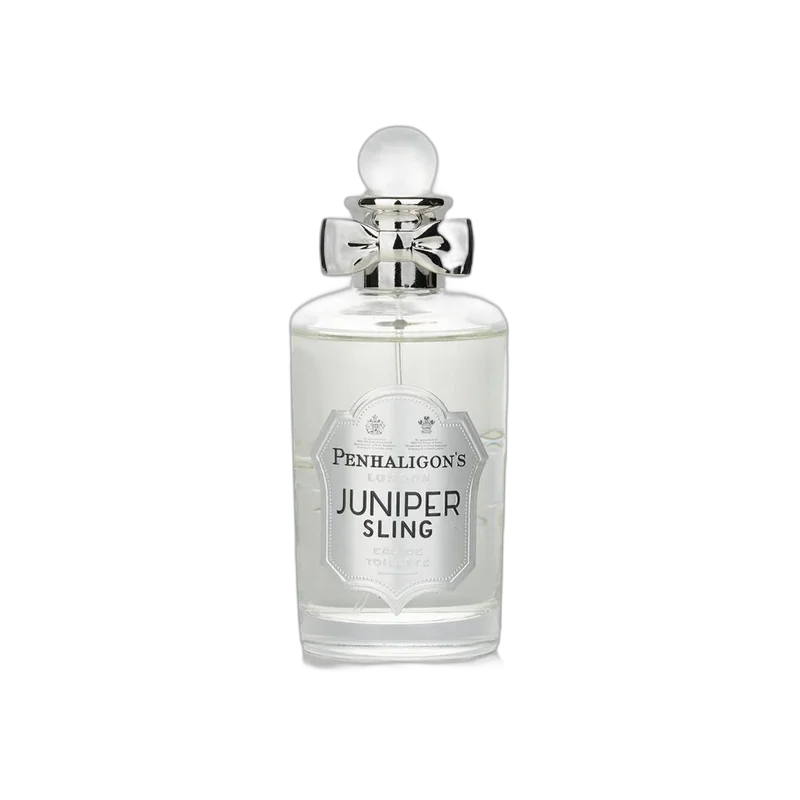
Juniper Sling
Gin culture arrived in British perfumery properly with Penhaligon's Juniper Sling in 2011, a composition that translates the anatomy of a cocktail into dry-goods format without reaching for anything so obvious as an aquatic. The opening is bright and botanically bracing, juniper and a cluster of herbal accords reading unmistakably as gin botanicals without smelling of a poured glass. Citrus keeps it clean through the top, then the composition relaxes into a warmer heart of violet, orris and a touch of pepper that steers it away from air freshener and back towards serious perfumery. The base is woody and a little powdery, sandalwood and musk making a quiet exit. Penhaligon's has been dressing London since 1870, and Juniper Sling sits comfortably in that lineage, adding a chapter about the city's pub-and-cocktail-bar culture without condescending to it. Performance is solid rather than spectacular, a few hours of clean projection and reasonable longevity without ambitions to dominate a room. It is the most immediately wearable release the house has produced in recent memory, and an easy answer when someone asks for a single bottle that captures contemporary British perfumery.
Materials First: Ormonde Jayne
Linda Pilkington opened her Hyde Park shop with a clear philosophy: source the best available raw materials and build compositions around them rather than around a marketing concept. The house remains independent and operates on a scale that allows it to maintain that focus without commercial pressure to chase trends, which shows in the finished work.
Damask is the cleanest expression of the Ormonde Jayne approach applied to the rose, a study in restraint that asks whether a single exceptional material is enough. The answer is yes, decisively. It does not need syrup or fruit or a gimmick to hold attention; the Damascena rose does the work and the rest of the composition clears a path for it. It is not the loudest rose in the niche market, nor the most complex, but it may be the most honest, which is exactly what the house is trying to argue.
For the full picture of what Pilkington has built over more than two decades, the full Ormonde Jayne guide maps the range from Orris Noir to the Osmanthus and beyond. Damask stands as a useful introduction to the house's sensibility for anyone new to it.
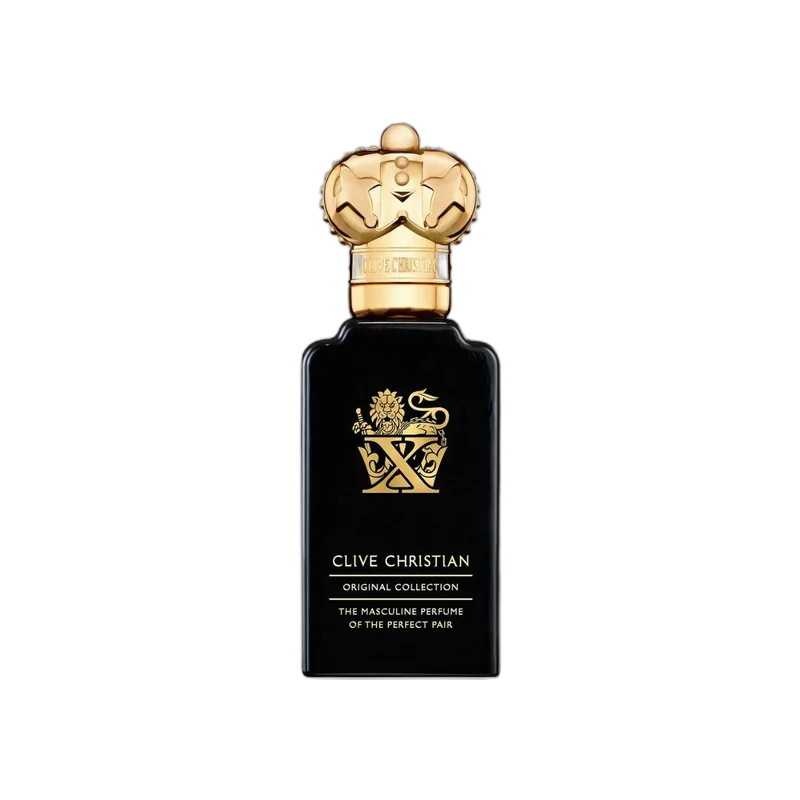
X Man
Clive Christian traces its lineage to the Crown Perfumery, a Victorian-era house that once held a royal warrant, and X for Men, from 2001, is where that inheritance is most legible. The composition is a masculine of the classical school: a bergamot and clove brightness opens it, giving way to a heart of floral and tobacco, then settling into a warm, resinous base of sandalwood, musk and amber that carries through the day without effort. It is not a fragrance that chases trends or gestures towards contemporary minimalism. It is a declaration of a specific kind of British confidence, assured and unhurried in equal measure. The bottle is part of the statement, heavy crystal with a crown stopper that makes clear how the house positions itself in the market. Clive Christian has built an identity around the idea that a perfume can carry the weight of a luxury object, and X for Men is the founding argument for that thesis. Performance is in keeping with the ambition, projecting with authority and lasting well through the day and into the evening. For a house that explicitly connects itself to Britain's perfumery past, this is the clearest articulation of what that lineage can produce at its most confident.
Institution and Identity: Penhaligon's
1870 is a long time to be in business, and Penhaligon's carries its history with more confidence than nostalgia. The house has spent the past decade producing contemporary compositions alongside its heritage range, and Juniper Sling is the best example of that approach: a fragrance that is completely of its moment — the London gin revival, the craft cocktail culture — but built with the house's characteristic seriousness of purpose rather than as a novelty.
It succeeds because the perfumery is doing the work rather than the concept. A fragrance that merely smells of gin would be a curiosity for about ten minutes. Juniper Sling takes the botanical vocabulary of a spirit and translates it into a daytime-wearable composition with genuine longevity and a properly considered dry-down. That is a harder task than it sounds.
For the broader Penhaligon's range, the full Penhaligon's guide is the complete map, from the Victorian-era Blenheim Bouquet through to the more recent house releases. Juniper Sling stands as the most distinctly London-flavoured bottle the house has produced.
Luxury as Statement: Clive Christian
Clive Christian's particular argument is that a perfume can be positioned as a luxury object in the same way a fine watch or a piece of bespoke furniture is, with the materials, the craftsmanship and the physical object all carrying equal weight. X for Men is the founding text for that thesis and remains the clearest articulation of it.
The Crown Perfumery lineage matters here more than it might with a newer house. Clive Christian acquired the house and its Victorian history, and the compositions take that inheritance seriously rather than wearing it as a badge. X for Men is a perfume that knows exactly what it is and presents itself accordingly, without apology and without the kind of ironic self-awareness that tends to dilute a luxury positioning.
The house has since built an extensive range around the No. collection and beyond, with price points that represent the upper end of the fine-fragrance market. X for Men remains the founding statement and the most direct line back to the Crown Perfumery tradition.
Where to Start
The five fragrances above represent five distinct arguments about what British perfumery is and does. Boadicea goes for drama and theatrical ambition; Ormonde Jayne strips everything back to ingredients; Penhaligon's works within its institutional identity to stay contemporary; Clive Christian treats the bottle as seriously as the juice.
If you are new to British niche, the most legible entry points are Juniper Sling, which is immediately London-flavoured and easy to wear across most occasions, and Ardent, for something with more presence and a stronger character. Ormonde Jayne Damask is the connoisseur's pick: a rose that earns every cent through ingredient quality rather than marketing weight. Complex and X for Men both reward a certain commitment, the former to the Boadicea aesthetic and its particular version of grandeur, the latter to the idea of British luxury perfumery as a serious category in its own right.
On price, there is meaningful variation across all five among the retailers we track. The live lowest and average prices on each are worth checking before buying direct from the house, since retailer competition typically brings these well under full shelf price at any given point.
Compare British fragrance prices across every retailer on Aurexum