
Best Jean Paul Gaultier Fragrances
The House That Dressed a Torso in Tin
Jean Paul Gaultier is not a fragrance house that crept up quietly. The designer's first launch, Classique in 1993, arrived in a tin-clad hourglass torso. Le Male followed in 1995, same idea mirrored for the masculine, and the image stuck so hard that the bottles are more famous than most perfumes twice their age. Puig, who hold the licence, have kept the visual identity intact across three decades and a sprawling range of flankers, which is either admirable consistency or a sign that no one wants to tamper with something that sells in that quantity.
The house occupies a specific and unusual position in the fragrance market: it is not a niche house, not a quiet-luxury player, and not a celebrity fragrance operation. It exists squarely in the designer tier, competing on shelf with Dior and Yves Saint Laurent, but with a visual and olfactory personality loud enough to feel sui generis. The sailor-and-corset imagery is not incidental; it is the brand strategy, and every new flanker arrives in a bottle that references the same torso silhouette.
The perfumery behind the house is more interesting than the marketing suggests. Le Male was composed by Francis Kurkdjian at twenty-six, his first major commercial brief, long before Maison Francis Kurkdjian existed. Classique was built by Jacques Cavallier, who would later move to Louis Vuitton and build that house's fragrance programme from scratch. The current crop of flankers comes largely from Quentin Bisch at Givaudan, who has quietly become the house's go-to nose, with his fingerprints on Le Male Le Parfum, Le Male Elixir, Scandal Pour Homme and Le Beau. That through-line of credible perfumers working serious materials is why JPG's range holds up better than the sailor-torso iconography might imply.
Provocation has always been baked into the brief. The corset bottle was a fashion statement as much as a packaging decision, and the fragrances themselves have generally delivered on it: big projection, warm sweet materials, and a willingness to go gourmand or honeyed when the rest of the market was retreating to aquatics and clean musks.
This guide maps the eight bottles we track across the full range, from the 1993 original to the 2023 flanker, grouped by pillar. The focus is the house as a whole: for a direct comparison of the EDT versus the Parfum, and for the Le Male versus Le Beau versus Ultra Male question, those head-to-heads have their own dedicated pages.
The Le Male Dynasty
Three decades of the original formula and two significant flankers tell you most of what you need to know about how JPG develops its leading masculine. The EDT stays classic and understated. The Parfum pushes into iris and depth. The Elixir goes full gourmand beast.
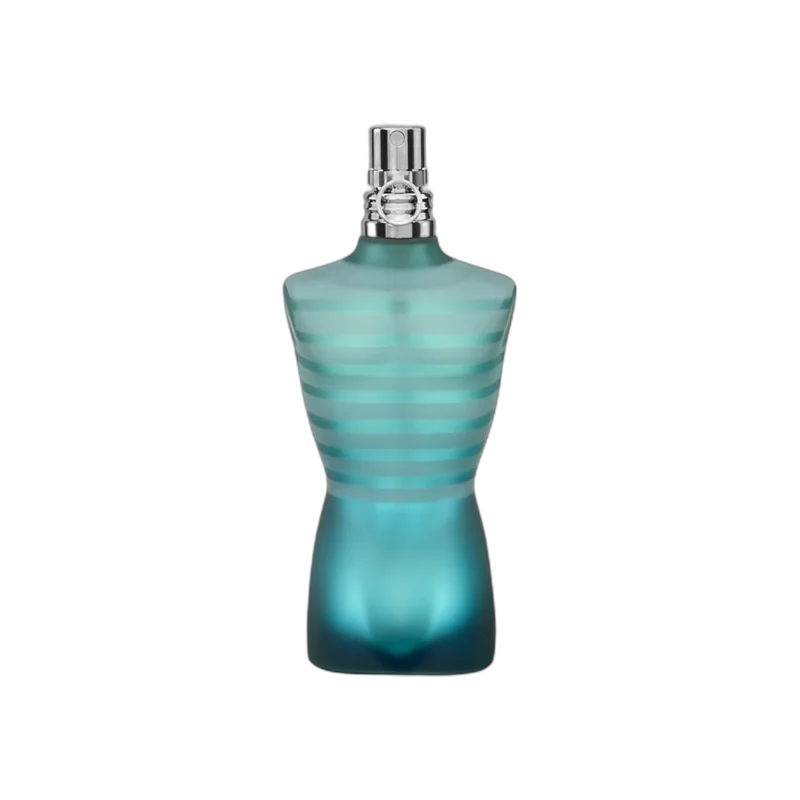
Le Male Eau De Toilette
The original sailor-torso bottle, released in 1995 and composed by Francis Kurkdjian at the age of twenty-six — his breakout commission before he had a name of his own. Le Male is a fougère built on lavender, mint and a barbershop orange blossom in the top, then a heart of warm cardamom and cinnamon, all landing on a vanilla-sandalwood-and-tonka base that tips the whole thing towards gourmand without fully going there. That push-pull between classic fougère structure and warm sweetness is the trick, and it is why the formula has held for three decades without needing a serious overhaul. Puig, who own the licence, have kept the original largely intact, though the concentration of some materials has shifted across batches. Performance on the EDT is moderate, projecting for two to four hours before becoming a close, warm skin scent. The aluminium-capped torso flacon, art-directed by Gaultier himself, remains one of the most copied bottle shapes in fragrance history. It is easy to dismiss because it is everywhere, but the composition itself is tighter than its reputation gives it credit for. For a lavender-vanilla fougère with a genuine hit rate in cooler weather and real perfumery behind it, this is the house's signature and still the one to start with.
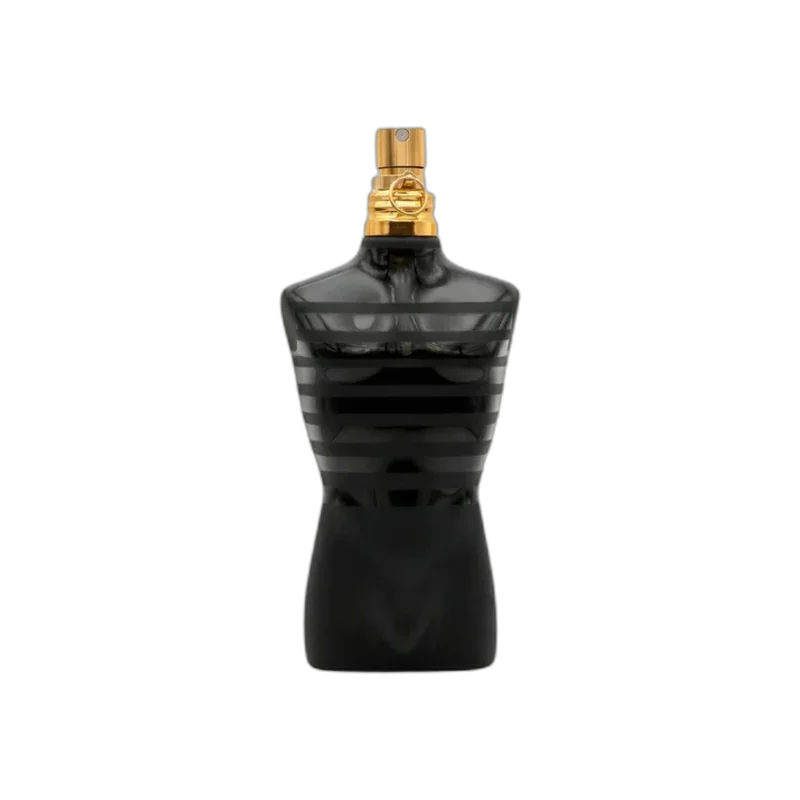
Le Male Le Parfum
The 2020 Parfum concentration of the Le Male line, positioned as the grown-up alternative to the original EDT. Where Kurkdjian's 1995 formula leads with lavender and barbershop freshness, Le Male Le Parfum pulls the iris forward and deepens the vanilla and amber base, giving the whole thing a warmer, rounder quality that wears more like a modern woody amber than a fougère. Composed by Quentin Bisch at Givaudan, it keeps the DNA legible while steering away from the clean mint-and-lavender opening of the original. The concentration is higher, the projection is stronger on application and it lasts considerably longer on skin, most of a day rather than a few hours, which is the main practical argument for stepping up from the EDT. It shares the same torso flacon, here in a deeper navy with a gold-and-black cap that reads noticeably more formal. It sits at a meaningful price premium over the EDT, so whether the upgrade is worth it comes down to how you feel about iris and whether you want something that stays loud longer. The full split between the two is covered in a dedicated head-to-head, which is the better place to settle that comparison than here.
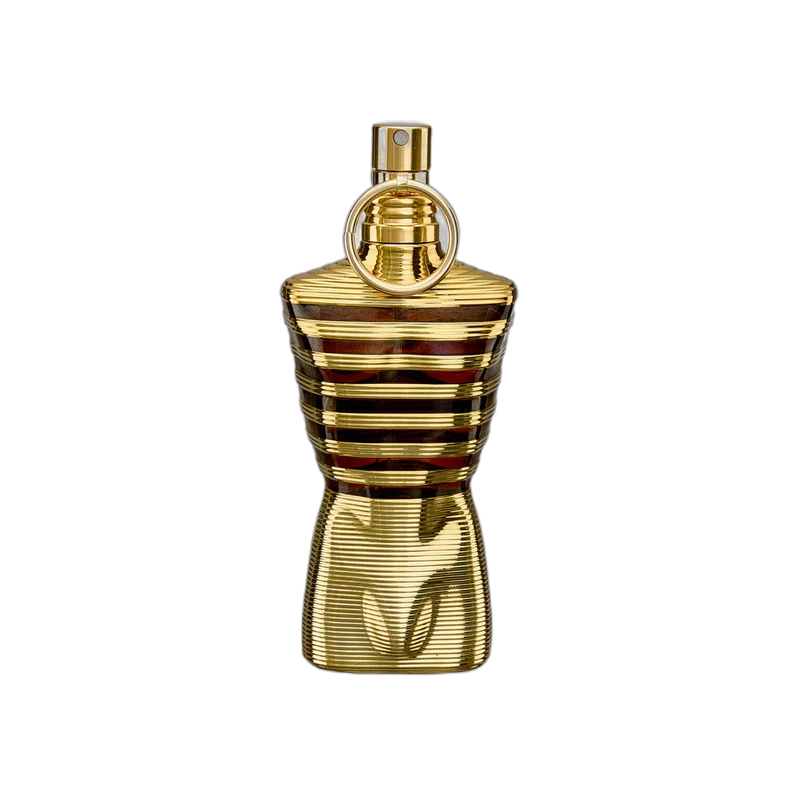
Le Male Elixir
Launched in 2023, Le Male Elixir is the most intense and sweetest entry in the Le Male dynasty to date, composed by Quentin Bisch as a honeyed, almost gourmand flanker that pushes the vanilla-amber base to its logical extreme. The lavender is still present but it is buried deep, surrounded by a thick honey accord, tonka and a rich amber that reads almost like caramel in the first hour of wear. It is described by JPG as an Elixir concentration rather than a standard EDP, and the formula bears that out: this projects hard, wears close, and lasts most of a day with ease. It is not a subtle scent and it is not trying to be. The torso bottle here comes in black and gold, the darkest and most theatrical of the three, matching the heaviness of the juice inside. If the original EDT felt light or too cool-weather-fresh for your taste, and Le Male Le Parfum's iris-led refinement felt too restrained, the Elixir is the version that removes the ambiguity. For those who want maximum sweetness and maximum projection from the line, it delivers both. It is the beast-mode flanker, and it earns that framing.
The original EDT is the logical starting point for anyone new to the house — affordable, widely stocked and genuinely well-composed for its era. Le Male Le Parfum is the version for those who found the EDT too light or too barbershop, and for anyone caught between the two, the Le Male EDT vs Le Parfum comparison covers the split in detail. Le Male Elixir is the third option and the least ambiguous: if your taste runs to honeyed ambers and you want something that announces itself, it is the clear pick from the three.
One thing worth noting across the dynasty: Ultra Male, the sweet gourmand flanker from 2015, is not on this list because it belongs to a separate comparison. It sits in a different olfactory register to these three, and whether it or Le Beau makes more sense for a warm-weather rotation is something the Le Male vs Ultra Male vs Le Beau breakdown covers properly.
The Newer Masculines
JPG expanded its masculine range in 2019 with Le Beau, which shares a surname with the Le Male line but not its lavender-fougère DNA. Scandal Pour Homme, released in 2021, goes further still, borrowing the honey chypre angle of the women's Scandal and adapting it for a caramel-fougère masculine. Both represent the house broadening beyond the fougère template that defined it for the first twenty-five years.
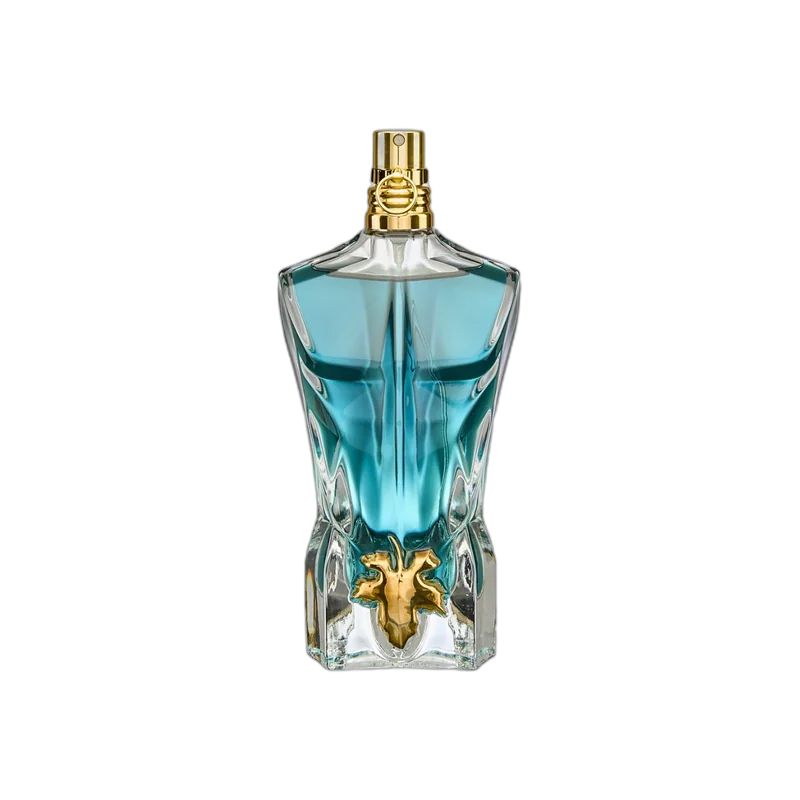
Le Beau
Released in 2019 and sitting outside the Le Male DNA despite sharing a surname, Le Beau is an aquatic-gourmand freshie built around coconut, tonka and a bergamot-and-vetiver structure. Composed by Quentin Bisch, it reads closer to the sun-and-sand category than the fougère pillar, with the coconut accord providing a tropical warmth that the main line never touches. It is distinctly lighter and more summery than any of the Le Male bottles, positioned as a daytime and warm-weather option for the same consumer who might reach for the original EDT in winter. The wave-shaped bottle, in translucent blue with a moulded masculine torso visible inside, is among the more inventive flacons JPG has put out in recent years. Projection is moderate, longevity decent for a fresh scent, and it competes comfortably in a crowded warm-aquatic category. Where it sits against Ultra Male in the coconut-tonka sweet-fresh niche is a separate head-to-head question, but as a standalone daytime option in the JPG masculine range it earns its place without needing that comparison. It is also the most explicit gender-framing departure the house has made in its masculine line: marketed squarely as a men's scent, it wears unisex in practice, which opens it to a broader audience than the lavender-and-fougère original ever reached.
Scandal Pour Homme
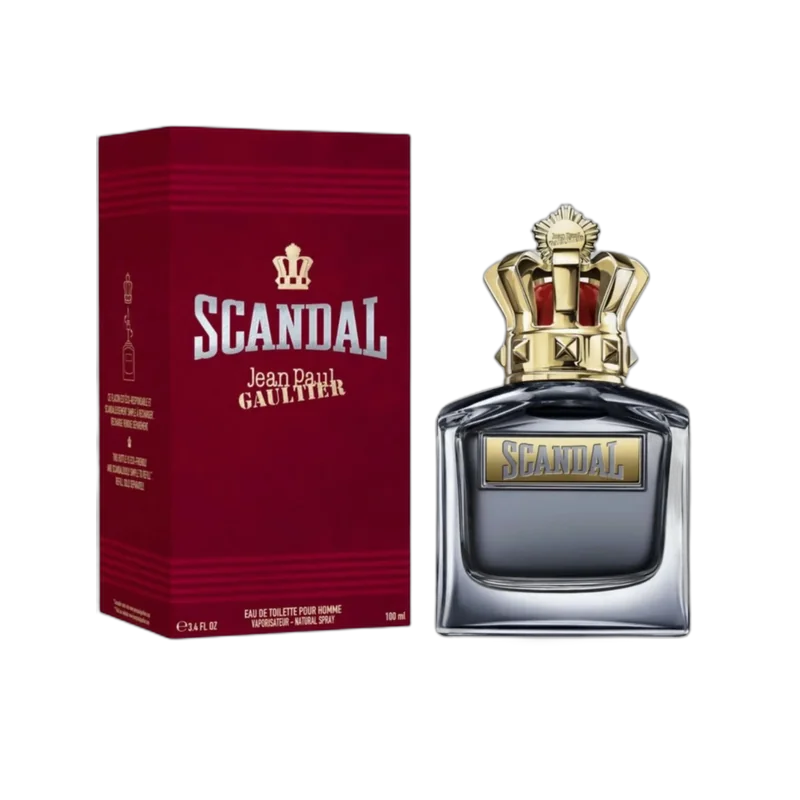
Released in 2021 as Scandal's masculine counterpart, Scandal Pour Homme takes the honey-chypre angle of the original and routes it through a caramel-fougère structure, swapping the feminine's gardenia and blood orange for bergamot and cardamom. Composed by Quentin Bisch and Antoine Maisondieu, it opens citrusy-fresh before the caramel and tonka base arrives, warmer and sweeter than a traditional fougère but with a woody amber backbone that grounds it. The honey note running through both Scandal bottles is the connective tissue between them, but Pour Homme handles it with slightly more structure, the caramel and benzoin adding a depth the women's version does not need to reach for. It projects moderately well and performs solidly across the day, an evening-to-night masculine that suits cooler months. The bottle mirrors the stiletto silhouette of the original in a darker, more angular form. At its price point it competes in a genuinely crowded sweet-masculine category alongside the likes of YSL Y EDP and Paco Rabanne 1 Million, and it holds its ground without needing to be compared to either. For the JPG aesthetic without the full Le Male fougère commitment, this is a credible alternative.
Le Beau is the warm-weather pick of these two, a coconut-and-tonka freshie that works on a summer afternoon where the Le Male bottles feel heavy. The aquatic and tropical registers it works in are a genuine departure for the house, and Bisch handles them without letting the formula go watery or generic. Scandal Pour Homme is the more versatile evening option, sweet enough to be approachable but grounded by an amber-woody base that gives it genuine longevity. Together they fill gaps in the range that the original Le Male dynasty does not cover: one for the beach months, one for the evening rotation when you want something other than lavender and vanilla.
The price gap between these two and the core Le Male trio is worth noting. Both tend to sit at a lower retail point than Le Male Le Parfum or Le Male Elixir, which makes them practical daily drivers even if the Le Male bottles get the headline placement. Live price data from our trackers shows the spread between cheapest and most expensive sources is meaningful on both.
The Feminine Pillars
The women's side of the house is anchored by three bottles that span thirty years of JPG's approach to feminine perfumery: Classique from 1993, Scandal from 2017 and La Belle from 2019. They are stylistically different from each other and from the masculines, which reflects how the house's aesthetic has shifted across those three decades.
Classique arrived at the same time as the early nineties fashion-house fragrance boom, when brands were building Oriental and powdery feminines with heavy bases and strong projection. It landed firmly in that tradition. Scandal, more than twenty years later, represents a different set of priorities: a honey chypre built for longevity and social performance rather than classical structure. La Belle is lighter still, a nod to the sweet-pear florals that dominated the mid-to-late 2010s.
Scandal
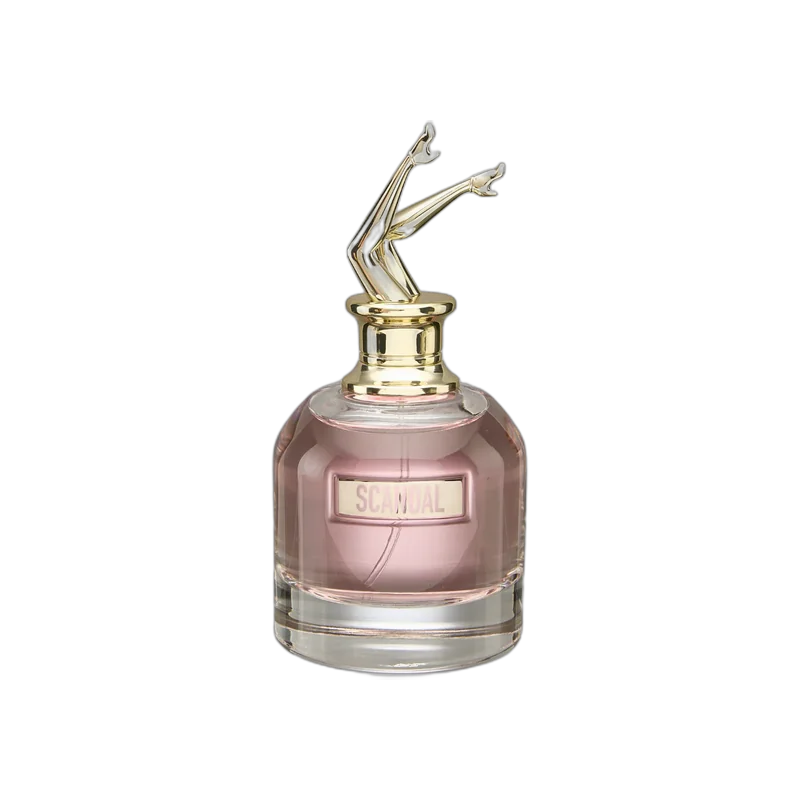
Scandal was released in 2017 as JPG's main feminine pillar launch of the decade, composed by Honorine Blanc and Marie Salamagne at Givaudan. It is a honey chypre, which makes it a small category anomaly: chypres fell out of fashion with IFRA restrictions, but Scandal builds its character around a prominent honey accord over patchouli and white musk rather than the oakmoss-bergamot structure of the classics, which sidestepped most of the regulatory problems. The top opens with a fresh blood orange and tiaré, and the heart is where the honey and gardenia take over, landing on that patchouli and cashmere base. It is sweet but there is a dark, slightly earthy undertone from the patchouli that keeps it from reading as a gourmand. It wears feminine but not archly so, projecting boldly for an EDP and lasting well into the evening, which is the primary appeal. The stiletto-shaped bottle is a signature piece of Gaultier's camp fashion iconography, which is part of why it landed hard in the style press. Its proven social performance in the wild is reflected in its placement on the most-complimented women's perfumes list, which is the better context for that comparison.
La Belle
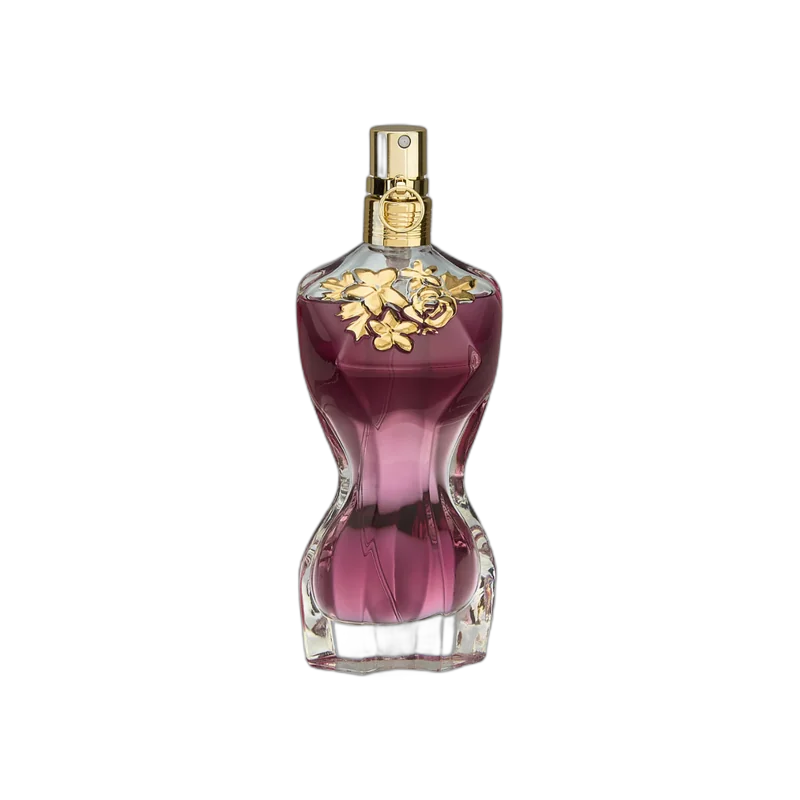
La Belle launched in 2019 as a direct counterpart to Le Beau, the two bottles designed and released as a pair with complementary colour and structure. Where Le Beau is coconut-aquatic, La Belle is a pear-vanilla floral, opening with a juicy Williams pear accord before settling into a vanilla and amber base with a little sandalwood and white musk. It was composed by Honorine Blanc, the same nose behind Scandal, though the register here is lighter and airier, closer to a sweet daytime floral than the evening honey-chypre of its stablemate. The round-hipped flacon comes in a warm yellow, a deliberate visual pairing with Le Beau's blue, and the two were marketed as lovers, a nod to Gaultier's long tradition of gendered double releases. Performance is on the lighter side, projecting gently and lasting a few hours, which makes it a warm-weather and daytime scent rather than a night-out bottle. The pear-vanilla combination is well-trodden territory in the sweet-floral category, sharing a neighbourhood with YSL Mon Paris and Viktor and Rolf Flowerbomb Nectar, but La Belle does it cleanly and at a price that makes it easier to wear daily without guilt.
Classique Eau De Toilette
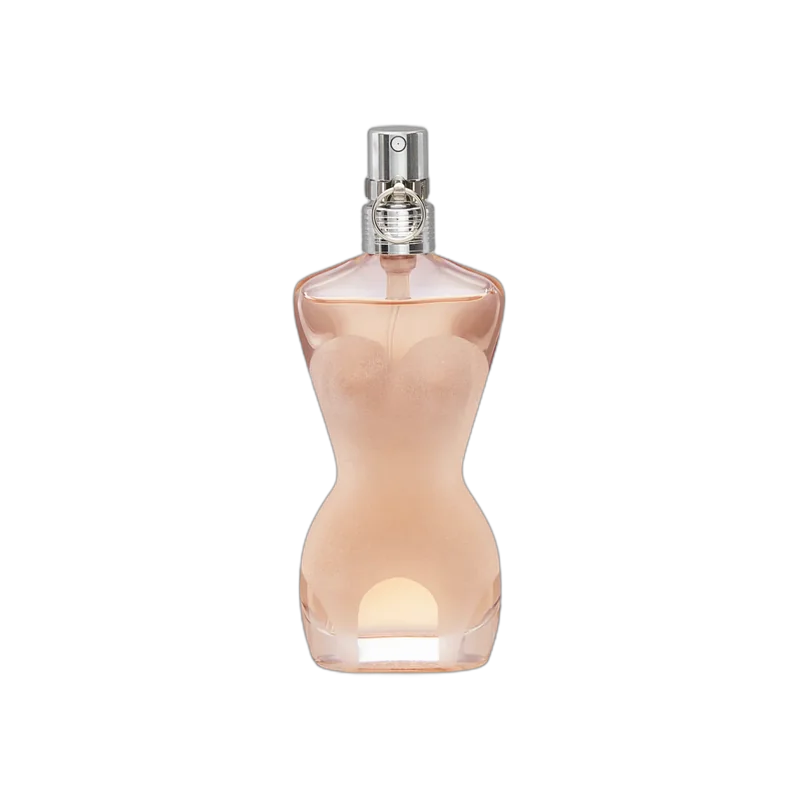
Classique is the one that started the house's fragrance story in 1993, two years before Le Male, and it remains the most explicit distillation of Gaultier's corset-and-sailor aesthetic in perfume form. Composed by Jacques Cavallier at Firmenich, who would later move to Louis Vuitton to build that house's fragrance programme from scratch, it is an Oriental floral built on a heart of rose, iris and orange blossom over a rich base of vanilla, benzoin and amber, with musk throughout. The effect is powdery, warm and unmistakably feminine in the classical sense, a nod to the heavily oriental department-store women's fragrances of the late eighties pulled into the nineties with a fashion-house edge. The torso-shaped bottle here is a feminine hourglass in a blue tin, now almost as recognisable as the male equivalent. Classique has been reformulated several times across its three decades and the current EDT wears noticeably lighter than vintage batches, a common complaint among enthusiasts who remember the heavier Cavallier version. It is the most historically significant bottle on this list and the starting point for understanding where the house's visual and olfactory language comes from. For a powdery rose-vanilla Oriental with genuine fashion-house provenance, it earns its place.
Classique is the oldest and most historically significant bottle here, a powdery rose-vanilla Oriental that tells you where the house started. Scandal is the modern hit, a honey chypre that projects loudly and performs consistently in the compliment-earning category — it features on our most-complimented women's perfumes list for that reason. La Belle is the lightest of the three, a pear-vanilla floral that works in the daytime where Scandal is firmly an evening scent.
Divine, JPG's unisex floral launched in 2022, sits outside this grouping but is worth knowing if you are interested in where the house's feminine range is heading. The bottle takes the corset silhouette in a different direction, and the juice is airier than either Classique or Scandal, but it is a separate conversation from what is on this list. What matters across the three pinned here is that each one occupies a different register: heavy powdery Oriental, dark sweet chypre, and light fruity floral. There is not a lot of overlap between them, which makes the choice relatively straightforward once you know what you are after.
How to Navigate the Range
JPG's range is bigger than most people realise, and it is easy to end up with two bottles that do the same job. A few practical splits:
If you want the house's signature masculine and only one bottle, the Le Male EDT remains the reference. It is the most versatile, the most stocked and the one with the longest track record. If you wear it regularly and want to go deeper into the line, Le Male Le Parfum is the natural step up rather than a reinvention.
If warmth and sweetness are the priority over classical fougère structure, Le Male Elixir is the more direct route there. If you want something for warmer months or that reads less formally, Le Beau is the logical alternative.
On the feminine side, Scandal is the strongest performer for evening wear and social situations. Classique earns its place on the shelf for historical and olfactory reasons, though it wears noticeably lighter in current batches than vintage versions did. La Belle is the daytime option if the others feel too heavy.
Prices across the range vary considerably between retailers. Live lowest and average prices from our data are tracked for all eight bottles, and the gap between the cheapest and most expensive source is wide enough to make a comparison worthwhile before buying.
Compare Jean Paul Gaultier fragrance prices across every retailer on Aurexum