
Best Rasasi Fragrances
The House Dubai Built on Craft and Volume
Rasasi was founded in Dubai in 1979, a year when the Gulf perfume trade ran almost entirely on attars, mukhallats and Eastern-style compositions sold without the European marketing apparatus that was shaping the rest of the global market. The family-run house grew steadily over four decades into one of the largest fragrance businesses in the UAE, building an unusually broad catalogue spanning fine fragrance, body and home scenting. That scale could easily produce a catalogue of filler, but Rasasi avoided the trap by investing in genuine construction, which is why their reputation in enthusiast communities has grown far more quickly than their marketing spend might suggest.
The comparison to Lattafa comes up constantly, and it is a fair one on price grounds, but the two houses have meaningfully different personalities. Lattafa moves fast, leans hard into trend and operates as a disruptor house, cycling through concepts quickly and chasing whatever the current wave looks like. Rasasi is the establishment name, older, slower and more focused on building flagship lines that hold their ground across years rather than chasing quarterly novelty. The Hawas trilogy is the clearest evidence of that patience: a single aquatic-amber concept developed in three distinct directions across a decade, each flanker doing something the original does not, none of them cannibalising the one before.
Why Middle Eastern Houses Punch Above Their Price
The reason Rasasi consistently over-delivers on performance comes down to formulation habits that trace back to Gulf perfumery's origins. Attars and traditional Arabian compositions were never sold thin. The climate demands lasting materials, the culture values sillage and longevity, and the expectation that a fragrance should project and persist runs through the whole tradition. Even in their modern crossover range, Rasasi carry that habit, using more fixative base materials than European and American houses typically put in comparable price brackets. The result is that their fragrances last and project at a level that makes side-by-side comparisons with designer alternatives uncomfortable for the competition.
This performance premium is especially relevant in hot weather, where light European aquatics tend to evaporate within an hour and leave nothing behind. For more on that specific problem and which fragrances survive it best, our best hot-weather fragrances guide covers the broader field. Hawas specifically comes up in that conversation often, and not by accident.
The five fragrances on this list are drawn from two distinct chapters of the Rasasi catalogue. Three of them are from the Hawas line, the house's modern crossover flagship. Two are from the older, more traditional side of the catalogue, where Rasasi build for an audience that already knows its way around leather and oriental perfumery. They are grouped below to reflect those two very different briefs.
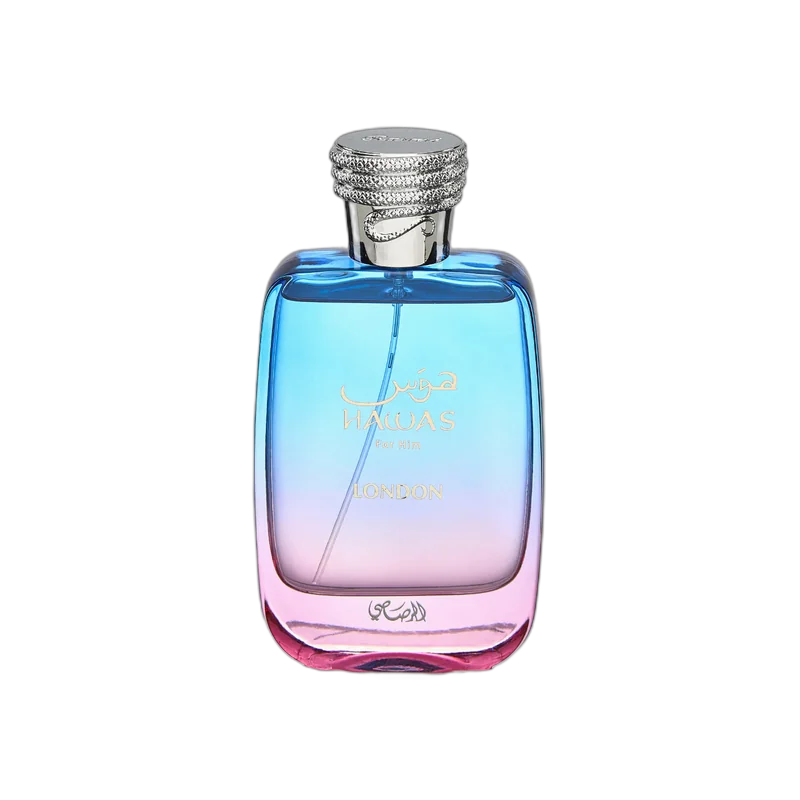
Hawas Man
When Rasasi launched Hawas in 2015, they gave the international market exactly what it had been overpaying for from European houses: a glossy aquatic-amber with projection to match. The opening is clean and ozonic, salt air and citrus sharpened by a hit of mint, before a transparent amberwood and musk base takes over and keeps the whole thing glowing for hours. What made it a word-of-mouth hit is the balance. It is fresh enough for warm weather and humid days but with just enough amber warmth underneath that it does not disappear the way many aquatics do. Performance sits well above its price, projecting clearly in the first few hours and lasting through most of the day without needing a reapplication. The bottle, a dark-tinted flacon with metallic detailing, has the visual confidence the price would not suggest. Hawas went on to become the house's flagship product and the entry point most newcomers reach first, spawning two flankers and establishing a line that now covers three distinct thermal moods. The original still holds its ground as the crowd-pleaser of the range, and its word-of-mouth run across fragrance communities has made it arguably the most-cited Middle Eastern aquatic outside of a niche context.
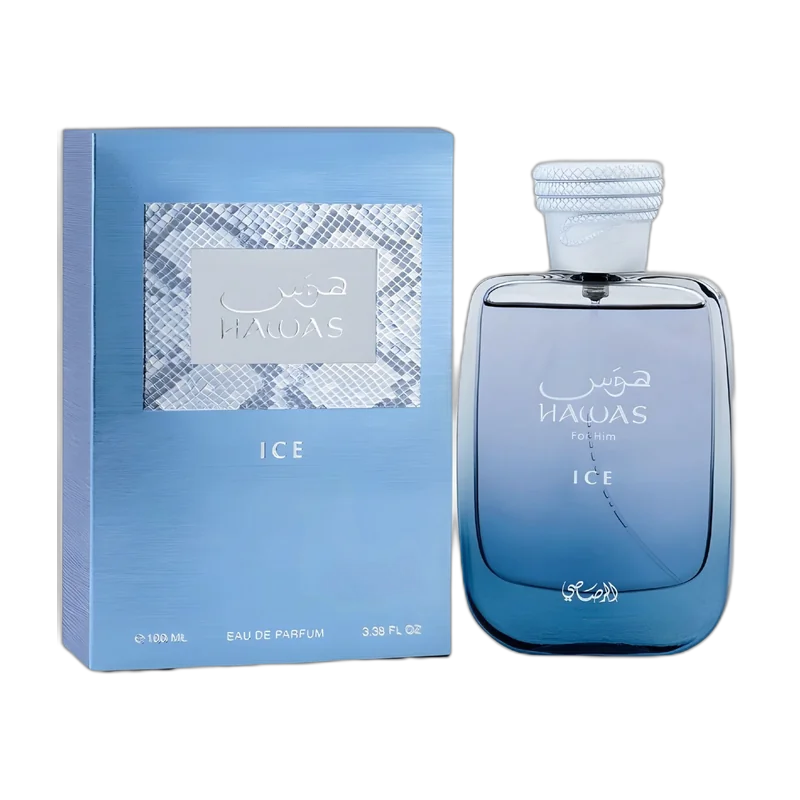
Hawas Ice
Where the original Hawas settles warm and ambered, Ice — the 2023 flanker — pulls the concept in a colder, sharper direction, and it makes a sensible argument for existing. It opens with icy mint and a crystalline citrus before landing on a clean white-musk and woods base that stays brisk rather than warm. The shift between the two is subtle but real, enough that anyone who found the original slightly too amber-heavy will find Ice easier to wear on the hottest days of the year. Performance is solid for a fresh flanker, projecting moderately for the first couple of hours then wearing as a clean, close skin scent through the afternoon. It wears genuinely unisex, and the cooler direction gives it reach into seasons the original does not quite cover. At Rasasi's price point it costs almost nothing to own both, and the two complement rather than duplicate each other. Cross-shoppers in the fresh-aquatic space who compare it against European alternatives at twice or three times the price tend to come away surprised. Hawas Ice is the version to reach for on days when the temperature leaves no room for warmth.
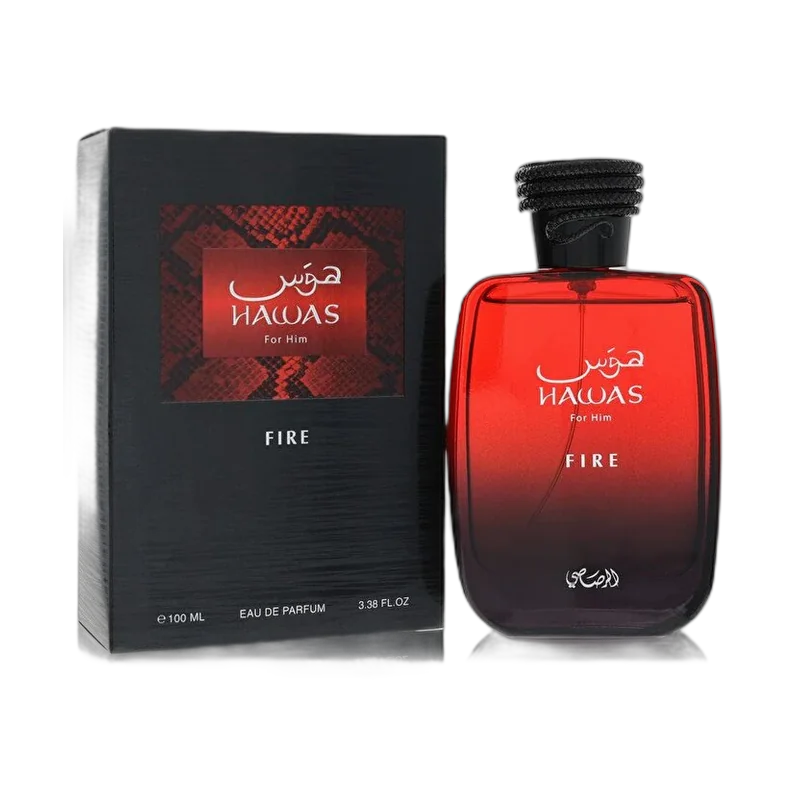
Hawas Fire
Hawas Fire arrived in 2025 as the amber-warm end of the trilogy, and it is the most distinctive of the three. The aquatic cleanliness of the original is largely traded for a richer, resinous amber direction, with a cardamom and spice opening that signals the shift straight away. The heart and base push into woody amber and warm musks, giving the whole thing a slightly incense-adjacent depth that the fresher siblings do not attempt. It is the pick for anyone who found the original a little too sporty or Ice a little too cold, settling somewhere closer to a mainstream designer amber, and it carries that warmth well into cooler evenings where the other two would feel out of place. Performance is the equal of the original, strong projection in the early hours and good longevity on skin and clothing. At the same price bracket as the rest of the line, it is priced well under anything with comparable warmth and resonance from a European house. The bottle echoes the Hawas family aesthetic with a fiery tinted glass. For the third entry in a line, Fire does something genuinely different, and the trilogy is stronger for having it.
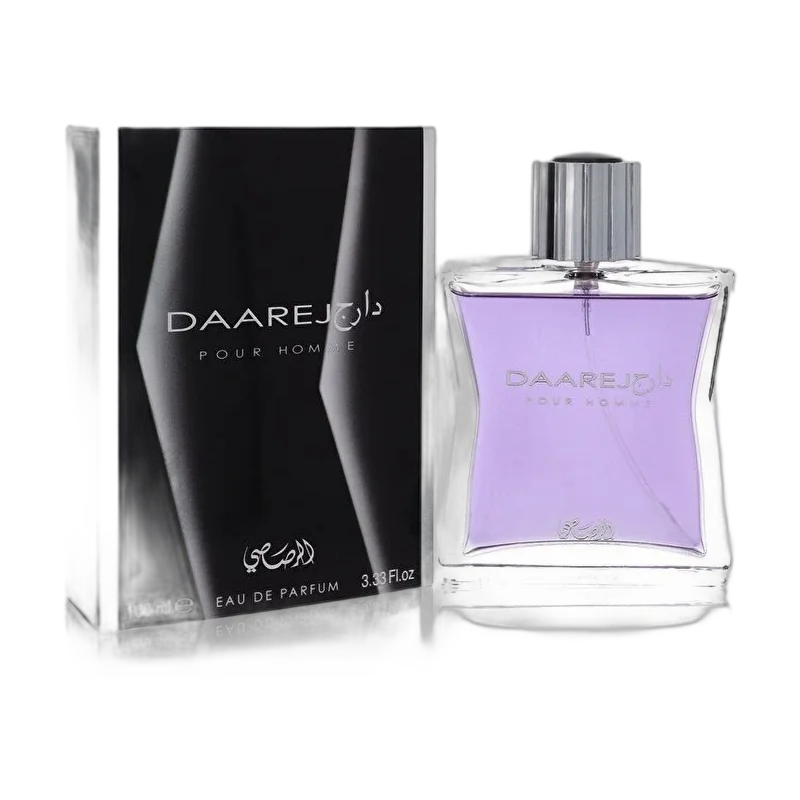
Daarej Pour Homme
Daarej Pour Homme is the old-school spiced oriental in the Rasasi stable, the scent that predates the Hawas era and still draws a loyal following from anyone who prefers their Middle Eastern perfumery rich and resolutely traditional. The opening leans warm and citrus-spiced, bergamot and saffron tracking into a heart built around rose, oud and patchouli, materials that show up in roughly every classic Gulf oriental but which Rasasi handle here with a care that prevents the accord from tipping into the generic. The base is all amber, sandalwood and warm resin, long and slightly powdery, the kind of dry-down that clings to fabric well into the next day. It is not a subtle fragrance, projecting confidently in the first hours and settling into a rich skin-level warmth that suits cold evenings and formal occasions rather than casual heat. The oud is not the aggressive barn-note variety that puts newcomers off but rather a smoothed, resinous take that blends behind the amber. For anyone familiar with traditional Emirati and Gulf perfumery, Daarej sits squarely in that lineage, and for newcomers to the genre it is a thorough introduction to what a classic Arabic house does when it is not chasing a crossover crowd.
The Hawas Trilogy: Three Directions, One Line
The three Hawas fragrances are best understood as a range rather than as competitors with each other. The original is the aquatic-amber crowd-pleaser that made the house internationally known, and it remains the obvious entry point for anyone new to Rasasi. Hawas Ice is the cooling flanker, crisper and fresher, built for the hottest days when the amber warmth of the original would feel like too much. Hawas Fire, the newest of the three, pulls the line in the opposite direction toward warm resin and spice, the pick for cooler evenings and anyone who finds the aquatic DNA of the first two too sporty or too casual for where they need to wear it.
Owning all three is not redundant. They genuinely cover different temperatures and moods without meaningfully duplicating each other, and the house prices them so that owning the set costs less than a single bottle of a mid-tier European designer. Which one you reach for first depends on your climate and your existing collection. If you want the benchmark aquatic-amber with proven broad appeal, the original Hawas is the place to begin. If you want the freshest and most daytime-viable option, Ice. If you want the warmest and most evening-appropriate of the three, Fire makes the case clearly from the opening spray.
One note on side-by-side testing: the differences between the three are real but not enormous, and the base DNA of all three — amberwood, musks, clean woods — is recognisably shared. Cross-shoppers who land on this list looking for just one bottle from the trilogy should take the temperature into account. In warm climates, Ice or the original. In cooler ones, Fire earns its keep.
The Heritage Shelf: Leather, Tobacco and Oriental Spice
La Yuqawam Pour Homme and Daarej Pour Homme represent an older strand of the Rasasi catalogue, one that predates the house's international crossover and sits more squarely in the Gulf fine-fragrance tradition. La Yuqawam is the prestige piece: a dry leather and tobacco composition that has circulated in enthusiast discussions for years alongside references to much more expensive European leathers from houses that have been making that particular style for generations. It does not announce itself the way the Hawas fragrances do. It is a slow-building, moderate-projection scent built for people who already know what they want from leather and who care more about the dry-down than the opening minutes.
Daarej is the most traditionally oriental fragrance on this list, a spiced oud-and-amber construction with the kind of projection and longevity that makes the price feel slightly absurd. It belongs in the company of classic Gulf fragrances and sits well on anyone who wants their Middle Eastern perfumery rich and unapologetically warm, rather than softened and thinned for a crossover audience. Both fragrances carry the formulation depth the house is known for, and both are available from the retailers we track at live prices that tend to sit well below full retail.
The contrast between the Hawas trilogy and these two is worth flagging for new buyers. La Yuqawam and Daarej are not beginner fragrances in the way the Hawas line is. They assume some comfort with leathers, oud and warm orientals. If those categories are already part of your rotation, both over-deliver on price. If they are new territory, the Hawas original is the more forgiving first step into the catalogue.
How to Choose
Match the fragrance to your climate, your occasion and what you already own. If you are new to Rasasi, the original Hawas is the safest and most universally wearable introduction. It is the most heavily stocked, the most cited in cross-house comparisons and the one with the widest range of occasions. If you already own an aquatic or two and want something more distinctive, La Yuqawam is the pick for anyone who shops seriously in the leather space. Daarej suits buyers who are already comfortable with spiced orientals and want a well-made version at an honest price that does not compromise on projection or longevity.
The Hawas Ice and Fire flankers make the most sense as additions once you know the original, either filling gaps in your warm-weather or cold-weather rotation respectively. Fire in particular is worth considering from anyone who owns the original and finds themselves wishing it ran warmer after dark or in winter.
On longevity and projection, all five fragrances here are strong for their price bracket. None of them need evening reapplication in normal conditions. The small premium you pay moving from the Hawas line into La Yuqawam buys you a more complex composition and a more formal character, not more performance. Sampling before committing to the leather and oriental end is worth doing if possible, since both sit closer to skin in their middle and base phases than the opening suggests. The Hawas fragrances are more immediately readable, which is part of why they converted so many shoppers who arrived from European designer houses.
Compare Rasasi fragrance prices across every retailer on Aurexum