
Best Salvatore Ferragamo Fragrances
The Shoemaker Who Made a Rose Franchise
Salvatore Ferragamo built one of the twentieth century's great fashion houses on footwear: the platform shoe, the cork wedge, the cage heel, bespoke shoes for Greta Garbo and Audrey Hepburn and a long roster of Hollywood during the golden era. He became the "shoemaker to the stars" in Florence, and after his death his wife Wanda took the house into ready-to-wear, accessories and eventually fragrance. The scent division came considerably later than the clothes and the bags, and it has always operated at a different register to the leather-and-metal glamour of the original craft.
That gap between the footwear prestige and the fragrance profile is precisely why Ferragamo gets overlooked in perfume conversations dominated by Armani, Prada and Valentino. Those houses have spent decades and considerable money building fragrance identities. Ferragamo's approach has been quieter and more commercial, producing well-made, wearable bottles without the kind of blockbuster positioning that earns column space. The upside is pricing. Because the house is not paying for the same level of hype infrastructure, the fragrances tend to undercut comparable designer bottles at the retailers we track, often substantially.
The six fragrances on this list define what Ferragamo fragrance is actually worth knowing in 2026. They span three corners of the range: the Signorina rose franchise that built the house's feminine identity, a men's evening suit scent that consistently earns more attention from enthusiasts than from marketing budgets, and two bottles — one leather, one aperitivo-bright — that sit outside both clusters and reflect different readings of the Florentine character the house trades on.
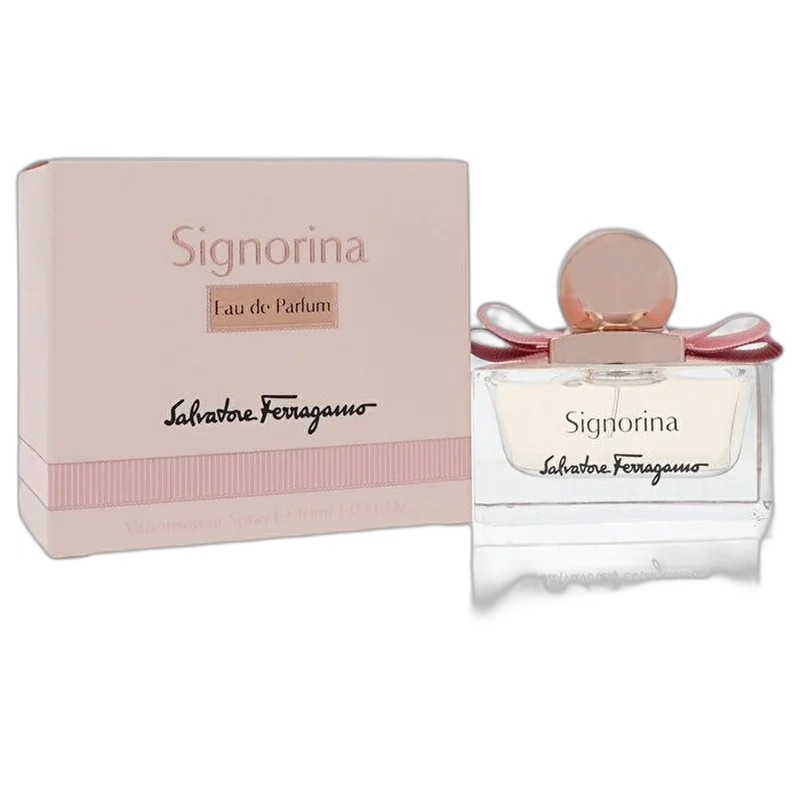
Signorina Eau De Parfum
Launched in 2012, Signorina is the fragrance that gave Salvatore Ferragamo its identity in the designer aisle, and it earns that status honestly. The brief was straightforward: a feminine that carries the house's Florentine polish without the weight of a traditional Italian floral. The result opens on a soft, citrus-dusted peony and pear accord, then settles into the heart note the whole bottle is named for, a rose with a pannacotta-cream quality, smooth and slightly yielding, without the sharp green of a British rose or the darkness of a Turkish one. Patchouli and musk anchor the dry-down quietly, adding just enough shadow to stop the whole thing reading as a department-store girly. The silhouette is slim and office-safe, projecting at a polite distance and wearing close by mid-afternoon; it is a skin scent by nature rather than a crowd-filler. The bow-topped bottle, white and blush-pink with a grosgrain ribbon, mirrors the Ferragamo shoe-counter aesthetic and has helped make it one of the house's most photographed flacons. As the lead entry of a now-familiar rose franchise, Signorina set the template that its darker and bolder siblings have been riffing on ever since. The price sits well under most comparable feminines.
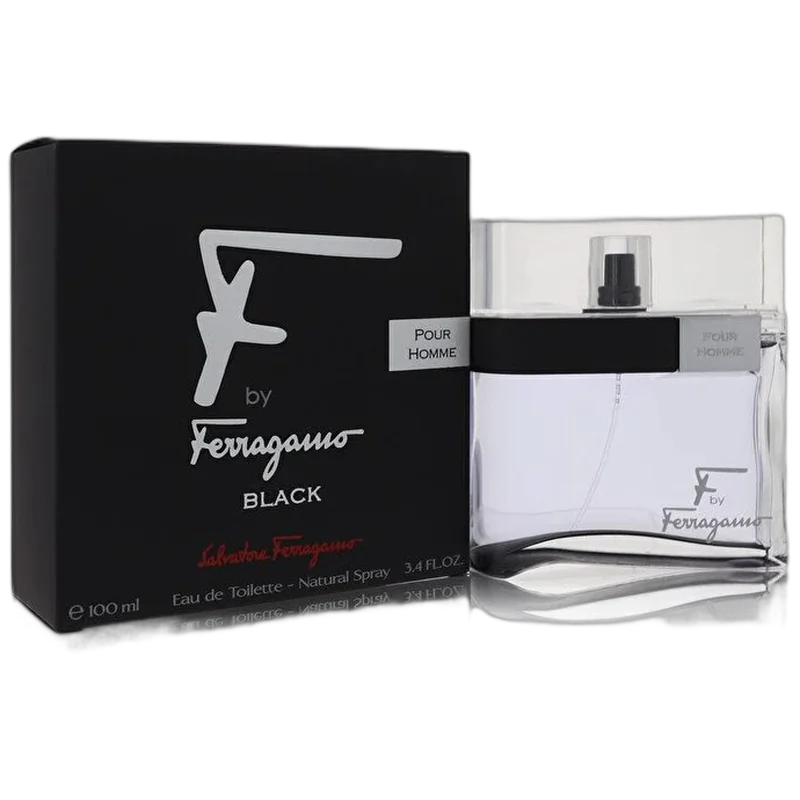
F By Ferragamo Pour Homme Black Eau De Toilette
F by Ferragamo Pour Homme Black slipped onto counters in 2009 with little fanfare, the kind of fragrance that gets passed over in department stores and discovered later as a small revelation. It is a fougère-leaning suit scent structured around a clean lavender-and-bergamot opening that gives way to a warm tonka and vetiver base, with a sliver of amber keeping the dry-down from going flat. The lavender here is the herbal, slightly bitter variety rather than a sweet cleaned-up version, which means it wears with more texture than the crowd-pleasers it shelves near. There is something quietly evening-appropriate about it, a little too dressed for casual wear but ideally suited to anything from an after-work dinner to a formal occasion where a heavier oud would be intrusive. Performance is measured rather than spectacular, moderate projection for the first couple of hours pulling back to a close skin scent by evening. Men's Ferragamo often get overlooked in favour of noisier competition, and this one probably deserves more attention than it gets. As a value proposition in the lavender-tonka space, the live price at the retailers we track makes it genuinely hard to argue against.
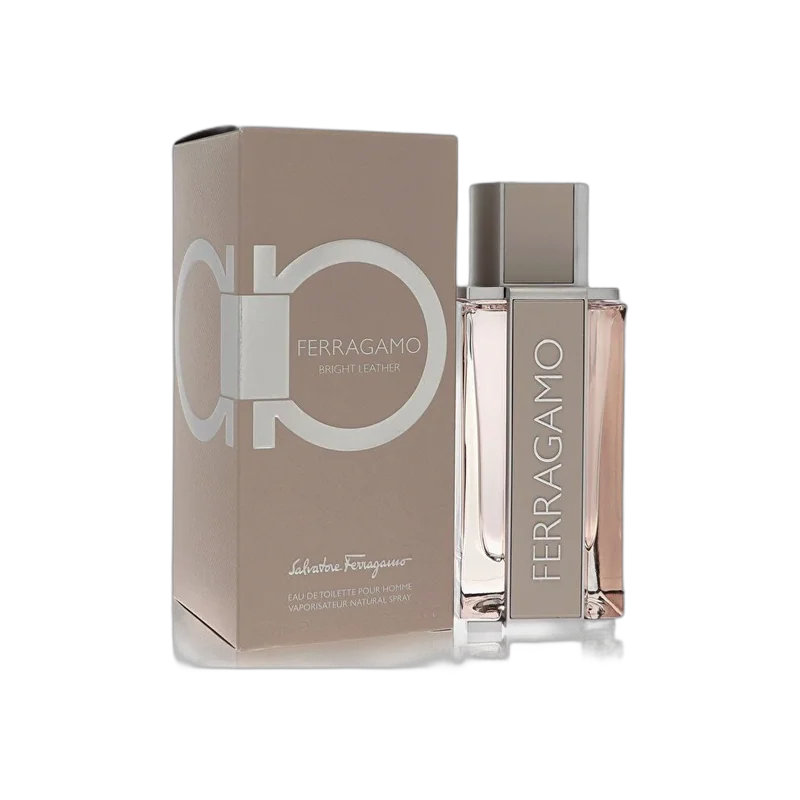
Ferragamo Bright Leather
Ferragamo Bright Leather arrived in 2022 as a modern reinterpretation of the material the house has been synonymous with since its origins on the Via Tornabuoni. The approach is fresh rather than animalic: a citrus-bright opening of bergamot and mandarin, a clean iris and violet heart, and a base built around a white-leather accord that reads more like polished suede than raw hide. The effect is cool and sharp at first, warming slowly into something more rounded and wearable as the musk settles in. There is none of the tobacco or birch-tar darkness you associate with vintage leather chypres, which is partly a concession to modern regulatory restrictions and partly a deliberate stylistic choice to make something the house's customer might actually wear daily. It sits closer to a fresh aromatic than a leather in the traditional sense, though the material is genuinely present rather than decorative. This is the obvious entry point for anyone curious about the leather family at the approachable end of the market, and it wears equally well across seasons, which is harder to pull off in this family than it sounds.
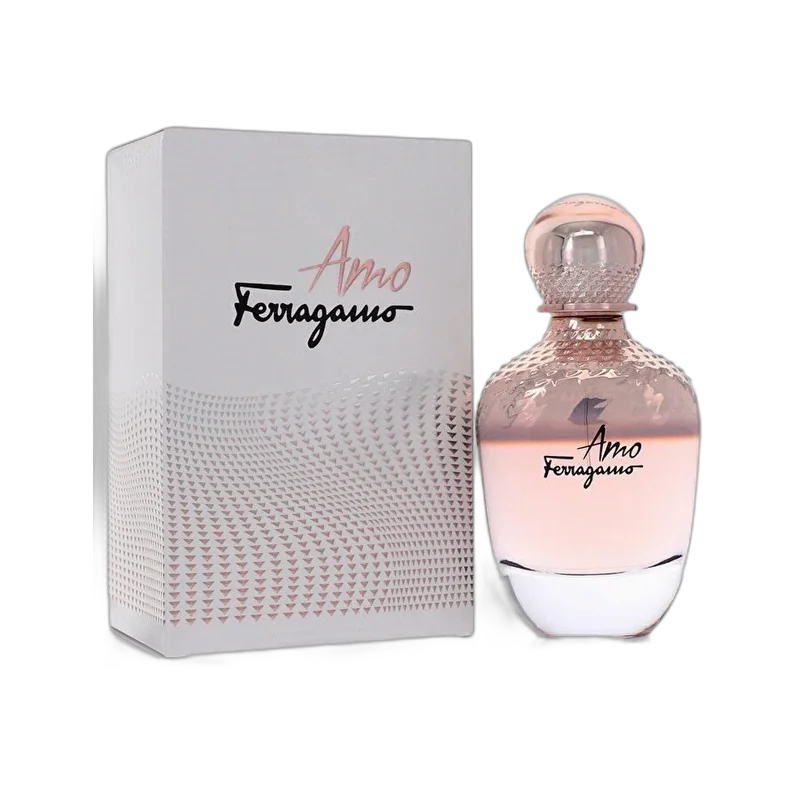
Amo Ferragamo Eau De Parfum
Imagine the house bottling an Amalfi aperitivo and you have Amo Ferragamo, which arrived in 2018 as a bright, sparkling feminine built on citrus, raspberry and orange blossom, with a tuberose and peony heart giving it a little body before a clean woody-musk base dries it down to something light and skin-close. The opening is the best part, genuinely effervescent rather than the artificial fizz you get from badly balanced synthetics, and the transition into the floral heart is smooth rather than sudden. It leans closer to a fresh floral than a gourmand despite the fruit, which makes it more versatile than it might first appear. Performance is on the lighter side, as you would expect from something this breezy, and it suits warm weather and daytime wear far better than any of the Signorina line does. The coral-red bottle with its distinctive heel-shaped cap is one of the more distinctive Ferragamo flacons, a clear nod to the footwear origins without being heavy-handed about it. For occasions that call for something bright and uncomplicated, Amo earns its place in the rotation as the aperitivo counterpoint to Signorina's more considered rose.
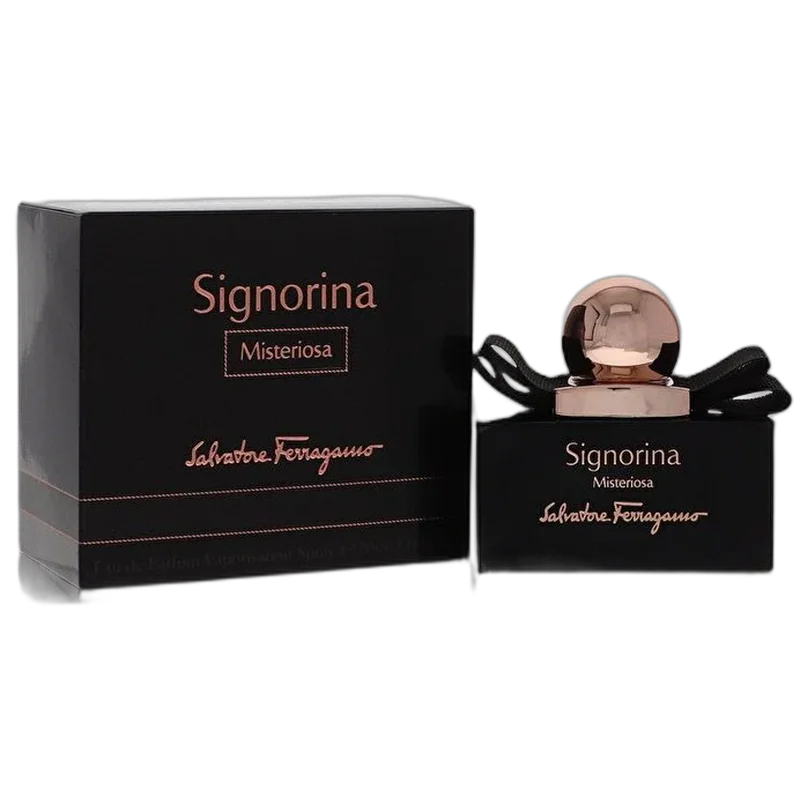
Signorina Misteriosa
Where Signorina keeps the rose cream-soft and polished, Signorina Misteriosa, from 2016, takes a sharp left into darker territory. Blackcurrant and violet open with a tart, slightly jammy quality, then a blackberry heart deepens things considerably before vanilla, amber and musks bring it back to familiar Signorina warmth in the base. The effect is noticeably more dramatic than the original, the fruit giving it a fruity-chypre lean that suits autumn and evening wearing better than the year-round versatility of its sibling. The cream note is still there, holding the centre together, but it is veiled now rather than the lead, which is where the "mysterious" name does its honest work. Longevity is good without being exceptional, projecting confidently for three or four hours before pulling back to a soft skin-close warmth. It occupies the sweet spot between the light Signorina original and the amber-heavy Ribelle, making it the middle-ground option in the trio for anyone who wants the rose legacy but finds the original slightly too gentle. The dark-bottled flacon makes the stylistic contrast with its blush-pink sibling explicit from across the room.
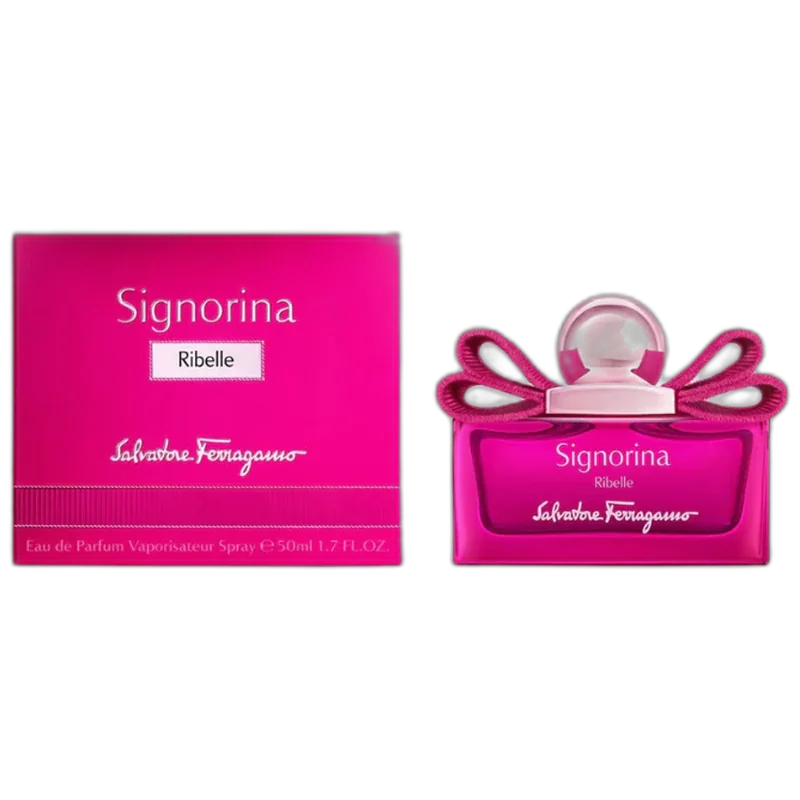
Signorina Ribelle Eau De Parfum
Signorina Ribelle, released in 2019, is the franchise's most structural departure: amber and honey where the others lean rose and cream. A warm, slightly resinous opening of ginger and mandarin gives way to a rose-and-jasmine heart, but unlike Signorina proper the florals here serve the amber rather than the reverse. The base is where Ribelle earns its name, a thick tonka, honey and patchouli accord that anchors the whole scent in a golden, slightly animalic warmth. It is the heaviest of the three by some distance and the most unisex in practice, the amber structure removing a lot of the overt femininity of the pannacotta rose below it. Cold-weather evenings are where it makes the most sense, and it pairs naturally with anything in the wool-and-cashmere wardrobe rather than the lighter Signorina occasions. Projection is moderate to confident and longevity is the best of the trio, an area where the amber base does useful work by anchoring the other materials. If the original reads as the well-mannered Ferragamo daughter, Ribelle reads as the one who stayed out past midnight and smells considerably warmer for it.
The Signorina Trio: One Franchise, Three Moods
No other Ferragamo range has done what Signorina has done. Launched in 2012 with the original, the line has produced a string of flankers that each genuinely differ from the one before rather than offering the usual slight-reformulation-with-a-new-colour approach that most designer flanker programmes use to extract another season from a single formula.
The original Signorina is the archetype and the entry point. A soft, cream-rose over patchouli and musk, it is office-safe and genuinely year-round, the kind of feminine that disappears into a wardrobe without troubling anyone and yet gets noticed when you go without it. The bow-topped blush bottle is as recognisable as the scent itself. At the price it sits at here, it is one of the cleaner value propositions in the designer floral space.
Signorina Misteriosa, from 2016, is the darker reading of the brief. Blackcurrant and blackberry pull the rose into fruitier, more autumnal territory, and the cream note that defines the original recedes into the background rather than leading. The result suits evenings and cooler months better than the original does, and appeals to wearers who find the pannacotta rose slightly too gentle. There is a fruity-chypre quality to it that the other two in the trio lack.
Signorina Ribelle, from 2019, departs furthest from the founding brief. Amber, tonka and honey do most of the structural work here, with the rose and jasmine present but subordinate to the resinous base. It is the heaviest and most unisex of the three and the one that suits deep winter and evening wear to the exclusion of almost everything else. In longevity terms it also outperforms its siblings, the amber base holding everything in place for longer than the lighter cream-and-rose formula can.
Taken as a trio, they give Ferragamo something genuinely useful: three bottles that share a brand space but smell different enough to justify owning separately. For anyone building a feminine wardrobe around a single house, the original and Misteriosa together cover most of the year between them. For those who lean toward best women's office fragrances, the original Signorina is the obvious daily anchor with Misteriosa coming in for evening rotation.
The Men's Corner: A Lavender-Tonka Suit Scent Worth Finding
F by Ferragamo Pour Homme Black, from 2009, is the men's fragrance the house probably should have promoted harder and, for whatever reason, did not. It is a fougère-leaning suit scent in a well-worn template: bergamot and lavender open, vetiver and tonka anchor the base, amber warms the dry-down. The execution is a level above what the price bracket suggests. The lavender has genuine herbal bitterness rather than the sweet, slightly synthetic freshness that many designer fougères use to chase easy inoffensiveness, and the vetiver in the base adds a dry, earthy quality that keeps the whole thing from smelling anonymous.
It is not a statement fragrance. Nobody is going to notice it across the room and demand to know what you are wearing. What it does is wear well for four or five hours, suit everything from business dress to a dinner jacket, and do so at a live price that most of its direct competition cannot match. The men's Ferragamo category is the least discussed corner of the house's fragrance output, which is partly a function of the marketing spend and partly because the original F pour Homme launched the line in a fresh-sporty register and the house never entirely shook that positioning. The Black edition, with its darker structure, is the one that rewards actually wearing it rather than assuming.
Leather Heritage and the Aperitivo Outlier
Ferragamo Bright Leather sits in a specific and interesting position in the range: it is the fragrance that most directly references the material the house was built on, and yet it approaches that material from a contemporary rather than archival direction. Rather than the tarry, animalic depth of a classic leather chypre, it builds around a polished suede accord over citrus and iris, arriving at something clean and modern that a genuine leather enthusiast might find too soft but that everyone else will find surprisingly wearable. As an introduction to the best leather fragrances for someone not yet committed to the family, it is about as accessible an entry point as the genre offers.
Amo Ferragamo, the 2018 release, reads as the house's summer character: all citrus, raspberry and effervescence, a bright aperitivo femme that has nothing in common with the Signorina rose line or the leather heritage. Its heel-shaped cap and coral-red bottle make the footwear reference visible without being literal, and the scent itself — fresh, sparkling, light — suits the kind of warm afternoon occasion that the rest of the Ferragamo range is slightly too dressed for.
Together they map the edges of the house's range: one grounded in heritage, one looking ahead at a more casual, summer-tilted customer. Neither is the most distinctive fragrance on the market in its family, but both are priced to compete and wear better than the price suggests.
How to Choose
Start with the original Signorina if this house is new to you. It is the widest-appeal bottle on the list, the cleanest introduction to the Ferragamo aesthetic, and the price relative to comparable designer florals is hard to argue with. If you already know it and want to go darker, Misteriosa adds fruit and depth without departing too far from the rose framework; Ribelle is the choice if you want something that will work properly in winter and leans amber rather than floral.
For men, F Black is the one to sample. The lavender-tonka fougère format may not be novel, but the execution is specific enough to justify the slot alongside pricier competition in the same genre.
Bright Leather is the niche pick: best suited to someone already interested in the leather family who wants an accessible, modern take rather than a vintage-leaning one. Amo is the warm-weather wildcard, the bottle to reach for when everything else on the list feels too heavy for the occasion.
Performance across all six is honest rather than spectacular. Ferragamo is not the house to reach for when you want fragrance that announces you from across a room. These are well-made, mid-projection scents that wear close by late afternoon and suit the Italian preference for restraint over spectacle. Sampling before committing to larger sizes is especially worthwhile at the prestige end, where the darker Signorina flankers and Amo can read differently on skin depending on body chemistry.
Compare Salvatore Ferragamo prices across every retailer on Aurexum