
Best Skin Scents
What a Skin Scent Actually Is
The term gets used loosely, so it is worth being exact. A skin scent is a fragrance that projects within your personal space rather than across a room. It is not a synonym for clean, not a synonym for light, and not simply a low-sillage version of a regular perfume. The defining quality is intimacy: the scent operates inside the radius of arm's length, readable to someone close to you and almost invisible to anyone who is not.
The phrase "your skin but better" captures the effect more precisely than any technical language. Worn well, a skin scent does not announce itself as perfume. It reads as a more interesting version of whoever is wearing it — a small, personal radiance rather than a statement. That is precisely why the enthusiast community has treated the category with such seriousness over the last two decades, and why the handful of fragrances that do it properly have developed followings that outlast most louder releases.
How close is close, exactly? The generally accepted description is that a skin scent is detectable at wrist-to-nose distance and at the warmth of a hug, but not from a handshake, not from across a table, and certainly not when you walk past someone in a corridor. That radius puts it well below what most fragrances are engineered for. For a longer explanation of how projection and sillage behave and why they vary so much between wearers, the projection and sillage explained guide covers the mechanics clearly.
Clean Skin Versus Warm Skin — An Important Distinction
This list has a sibling. The post on scents that smell like clean skin covers the soap-clean and laundry-musk register: fragrances that read as freshly showered, bright and familiar in a domestic way. That is a distinct category from what this list is doing, and conflating the two is one of the most common mistakes in buying advice about skin scents.
The three picks here are not clean-skin fragrances. Another 13 is faintly animalic. Escentric 01 is subtly spiced and woody. Nudiflorum is dark and floral in an abstract, almost austere register. None of them smell like soap or a fresh shirt. What they share is low projection and an intimate quality — not cleanliness. Some of the most compelling skin scents are quite warm, musky or even slightly animalic, and pretending otherwise gives shoppers the wrong impression of what they are buying.
The distinction matters when you are choosing. If you want something that smells like a good shower product amplified and brightened, the clean-skin post is the right starting point. If you want something that smells like a more interesting version of your own skin — warmer, muskier, with some complexity — you are in the right place now.
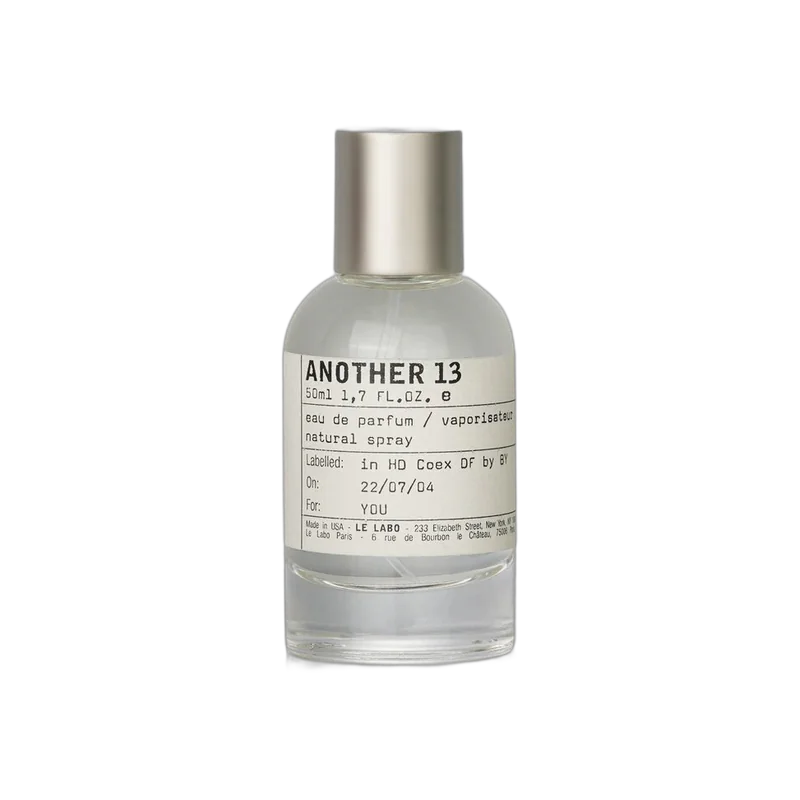
Another 13 Eau De Parfum
Another 13 spent years as a passed bottle before Le Labo's New York editors could keep it in stock, its cult status built on almost no marketing. The house launched it in 2010 as a collaboration with i-D magazine, building around ambroxan and ambrette seed — the first warm and radiant, the second faintly animalic and close to skin — over a musky base of cetalox and hawthorn. The result is a study in what ambroxan can do when not buried under heavier materials. Here it reads translucent, slightly glassy, radiating barely beyond your own forearm and smelling, without any obvious floral or citrus anchor, like the place where your wrist meets your pulse point after a warm day. Projection is low by design, which is either the point or the problem depending on what you are after. It wears unisex without equivocation, with no gendered framing and no particular season, and at the price it asks the performance is generous: moderate hours on skin, longer on fabric. The plain label and amber glass bottle are exactly what you would expect from the house. More than any single ingredient, what Another 13 demonstrates is how a skin scent earns its name by merging with the wearer rather than announcing itself.
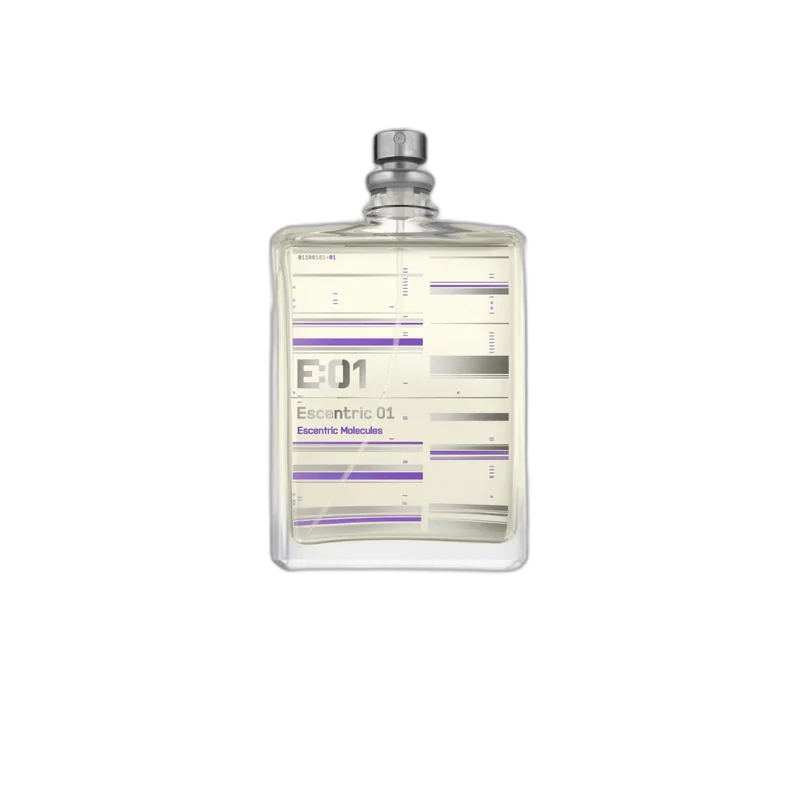
Escentric 01
Geza Schoen built Escentric 01 in 2006 as the first release from Escentric Molecules, the Berlin house he founded to explore single-material compositions and their asymmetric pairings. Where the companion Molecule 01 contains iso e super alone, this one builds a full composition around it, adding pink pepper, orris, woody amber, sage and lime to give the synthetic a frame to anchor and amplify rather than simply float. Iso e super is the material that behaves like sound rather than smell: it resonates more than it reads, amplifying the wearer's warmth until the fragrance stops feeling like something applied and starts feeling like an improved version of your own skin. It projects only slightly, radiates at close range, and varies noticeably between wearers because iso e super bonds to skin chemistry in ways most synthetics do not. Longevity is long given the projection radius, typically outlasting much louder fragrances. The composition reads gently spiced and slightly woody but never dominant, always hovering just at the edge of detectability. What Schoen was exploring with this line is still, twenty years on, the clearest answer to how far a single molecule can carry a perfume — and how fully it can merge with the person wearing it.
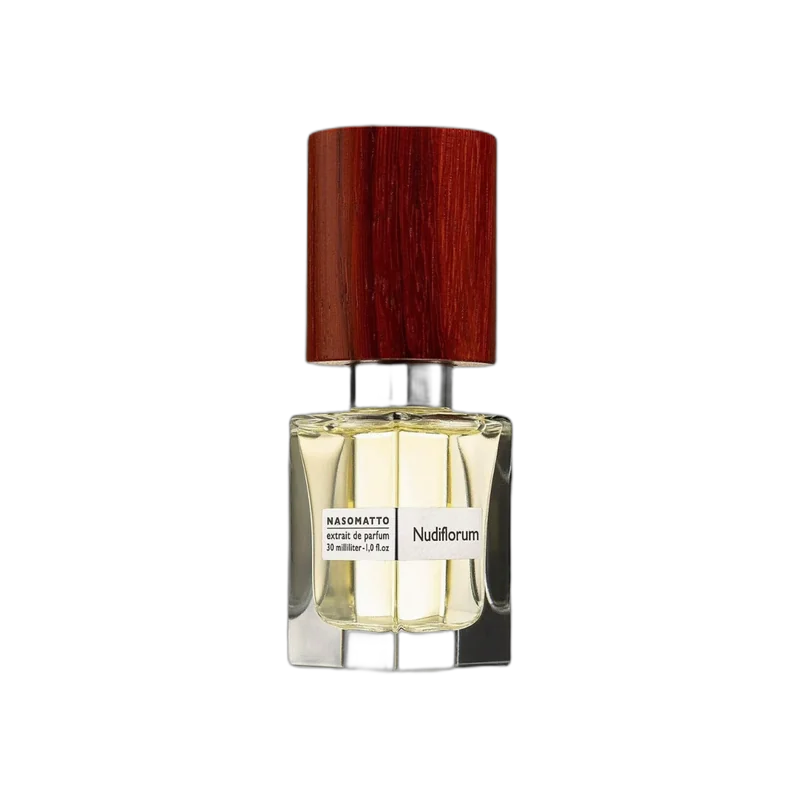
Nudiflorum Extrait De Parfum
Nasomatto's 2018 release Nudiflorum comes from a house that tends to withhold as much information as it offers. The name points to the winter jasmine, Jasminum nudiflorum, which flowers on bare branches before its leaves arrive, and there is something of that in the fragrance itself: a floral presence you sense rather than identify, stripped of any green stem or watery freshness. What sits underneath is musk and a faint, almost chalky darkness, with a dry floral impression that reads closer to skin than to any named flower. It is neither clean nor particularly warm; it occupies the territory between the two, the intimate and slightly animalic register skin scents can reach when they are not trying to smell pleasant so much as close. Projection is very low, longevity quietly long. It wears unisex and reads without obvious season, though its darkness suits the cooler months better. The Nasomatto bottle — squat, heavy, nearly label-free — suits the approach well. This is the most unsettling of the three picks here in the best sense. It earns the adjective intimate without any softening flourish, which makes it the most interesting skin scent of the group for anyone who finds the other two too comfortable or too transparent.
The Three Anchors of the Category
These three fragrances are the picks most often named when enthusiasts discuss skin scents — not because they are the only ones that qualify, but because each maps a different corner of the territory and demonstrates a different way of arriving at the same intimacy.
Another 13 is the ambroxan-and-ambrette skin scent, the one that established what modern close-wearing perfumery could achieve at scale. The material at its centre, ambroxan, is a synthetic that mimics the warm, radiant quality of ambergris. Used heavily, it reads as almost metallic and very linear; used the way it is here, it becomes transparent and skin-like. For a closer look at what ambroxan actually is and why it became so central to contemporary perfumery, the what is ambroxan guide explains it well.
Another 13 is also the reference point for projection in this category. It is the benchmark against which enthusiasts measure other skin scents, and its consistency across wearers makes it the most reliable of the three to sample from a testing strip rather than needing to wear it on skin for a day first.
Escentric 01 is the iso e super version of the same idea: a composition built around a synthetic that bonds to individual skin chemistry and resonates more than it projects. Where Another 13 is consistent across wearers, Escentric 01 genuinely varies in how it reads, which makes it harder to sample properly but more personal once you know how it behaves on you. The German house's commitment to foregrounding a single synthetic material and examining what it can do when treated as the hero rather than a supporting actor is still one of the more interesting lines of inquiry in contemporary perfumery.
Nudiflorum is the dark outlier. It sits furthest from the clean end of the skin-scent spectrum and is the pick for anyone who finds the other two too polished or too approachable. It smells like something worn rather than applied, intimate in a way that requires wearing it for a full day before you fully understand what you are dealing with. The Nasomatto house rarely provides detailed ingredient breakdowns or marketing narratives, which suits the fragrance: the less you are told, the more you pay attention to what is actually on your skin.
Why Low Projection Does Not Mean Low Effort
A common misreading of skin scents is that they are somehow less technically ambitious than room-filling fragrances. The opposite tends to be true. Constructing a fragrance that operates at low projection without losing its character, depth or structure over the course of a day is harder than making one that simply projects loudly and lingers on every surface.
The materials involved in skin-scent construction — ambroxan, iso e super, skin musks, ambrette, cetalox — are all chemically complex synthetics that took decades of fragrance chemistry to develop. They behave differently from the materials in traditional perfumery, interacting with body heat, skin chemistry and natural skin oils in ways that shift the wearing experience from moment to moment. A fragrance built around these materials needs to be calibrated carefully to avoid either disappearing entirely or tipping into something that reads synthetic and cold rather than warm and close.
The result, when it works, is a fragrance that people near the wearer notice and find appealing without being able to identify where it is coming from. That is the skin-scent ideal, and it is genuinely difficult to achieve.
How to Choose
The selection comes down to two questions: how warm do you want your skin scent, and how much variability between wearers are you comfortable with?
If you want the most versatile, universally flattering interpretation — something closest to the category's defining centre — Another 13 is the logical starting point. It is the most consistent of the three across skin types and seasons, and the easiest to sample with confidence from a decant or a testing card before buying a full bottle.
If you want something that varies with your chemistry and rewards patience over repeated wearings, Escentric 01 is the more interesting buy. It is not consistent across people; that variability is the whole design intent. Sample it on your own skin for a full day, not on paper, and give it three or four hours before you decide. The price is more accessible than the other two, which makes the sampling process less costly.
If you want a skin scent that is genuinely dark and operates in a more unsettling, animalic register — more interested in closeness than in pleasantness — Nudiflorum is the pick. It is the most polarising of the three and the most rewarding for those who find the others too comfortable or too transparent. The Nasomatto bottle is small and the price reflects that positioning.
All three are well stocked across the retailers we track, and the live prices shown are regularly competitive with boutique pricing. Skin scents do not announce themselves in the first spray; they develop over an hour and are usually at their best when they have fully merged with the wearer's skin. Give each of them time.