
Best Swiss Arabian Fragrances
Dubai, 1974: Before the Fragrance Boom
Most of the Middle Eastern perfume houses that caught international attention in the last decade were founded well after the region's oil wealth had already transformed the Gulf. Swiss Arabian predates almost all of them. The house was established in Dubai in 1974, before the Emirati fragrance industry existed in its current form, and its founding premise was simple and slightly odd: combine European perfumery technique and raw materials sourced from the West with the oud, amber, rose and musk tradition that defined Gulf taste. The name reflects exactly that, Swiss for the European method, Arabian for the materials and the market.
What the founders were attempting was a kind of bridge product, professional-grade blending applied to the rich oriental palette that Gulf consumers wanted but that was at the time made by smaller attar merchants rather than structured perfume houses. It worked, and the house has been operating out of Dubai ever since. That longevity matters because Swiss Arabian is not a recent brand catching a trend: the attars-and-oud aesthetic it built on is the one it was always producing, not a pivot toward what the market currently wants.
The international discovery of Gulf fragrances happened much later, accelerated by online communities and the broader appetite for niche and non-Western houses. By the time shoppers outside the Gulf started looking seriously at Emirati perfumery, Swiss Arabian had already been refining its catalogue for decades. The house does not carry the heritage mythology of a European maison, but it carries something arguably more useful: a long, uninterrupted practice of making the specific category of scent it has always been in.
What "Swiss Arabian" Actually Means
The Swiss part of the name can mislead. This is not a Swiss house with Gulf aspirations; it is a UAE house that imported European blending expertise and continues to use that combination as its core method. The practical result is a catalogue that sits somewhere between classical Gulf attar tradition and the more structured, longer-lasting format of Western orientals. The blends are denser and richer than most designer houses but better integrated and more consistent than many smaller attar merchants.
For a shopper new to the house, the most useful frame is value. Swiss Arabian operates at what the fragrance world would call the affordable end, well below designer flagship pricing, and that has been consistent across its catalogue. For that price tier, the concentration and quality of materials is notably high, which is why the house built a following outside the Gulf market well before that market was fashionable.
Understanding what is oud helps here, because oud is the material the house leans on most. It appears in the flagship Shaghaf line and across much of the range, usually in a smoother, more accessible form than the raw, barnyard-edged ouds that appeal to serious collectors. Swiss Arabian's oud tends to be polished and sweet-adjacent rather than raw and challenging, which is why the house travels well beyond audiences who grew up with oud.
The other thing to understand about the catalogue is its range. Swiss Arabian produces a very large number of releases across very different registers, from simple, single-note attars to more complex blended orientals, from budget daily-wear options to higher-concentration pieces. The five products on this list represent the range that is currently stocked with the retailers we track and most relevant to the shopper doing a first sweep of the house: the flagship oud family and the traditional oriental feminine line that existed before the Shaghaf releases made the house internationally known.
The Shaghaf Family
The Shaghaf line is the house's modern face internationally. Shaghaf Oud is the rose-oud that made the name, and Shaghaf Oud Abyad is its cooler, lighter counterpart, built for those who wanted the same oud architecture with less sweetness and more air. Shaghaf Man takes the family into masculine territory with a spiced, woody angle and considerably less rose. The three sit together as a coherent group rather than loose flankers: same smooth oud base, different facets foregrounded.
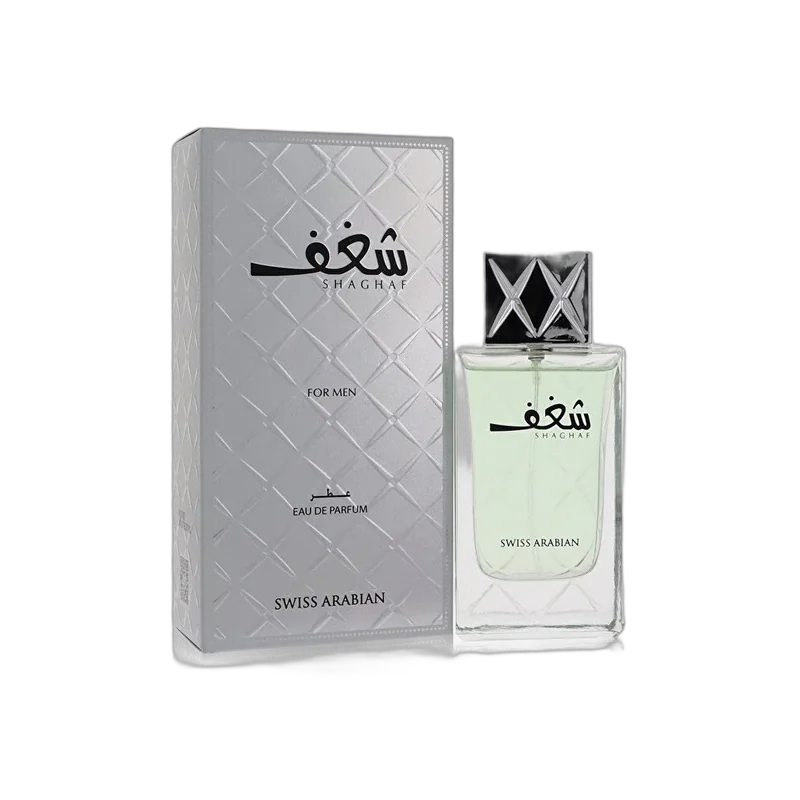
Shaghaf Oud Eau De Parfum
Released in 2016, Shaghaf Oud is the scent that put Swiss Arabian on international wishlists and remains the house's clearest statement of intent. It is a rose-oud oriental built around a generous synthetic oud accord, layered with Bulgarian rose, saffron and a thick ambery base of benzoin and sandalwood. The rose is lush and a touch jammy, the oud is smooth and sweetened rather than medicinal, and together they produce something that reads as a confident, accessible take on the Gulf rose-oud tradition rather than anything intimidating. The saffron adds a golden, metallic warmth rather than spice, and the base settles into a slow-drying amber that stays close to skin without disappearing. Performance is generous: good projection for several hours, then a comfortable close skin scent well into the evening, and a base that clings to fabric overnight. It is sweet-leaning and clearly oriental, more a crowd-pleasing rose-oud than a purist oud, which is part of why it travelled so well beyond the Gulf market. The house has put out many flankers and variations, but at a price point that makes sampling genuinely low-risk, this is the one the name is built on and the obvious first Swiss Arabian to buy.
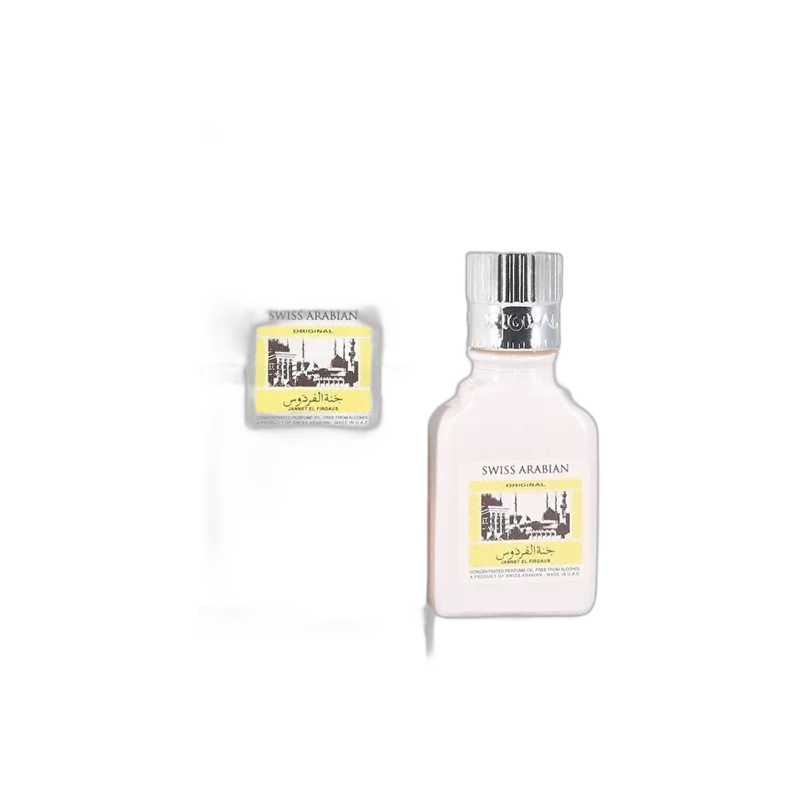
Jannet El Firdaus Eau De Parfum
The name translates roughly to the garden of paradise, and the composition lives up to the reference in the Gulf attar tradition rather than in any Western floral sense. A dry, powdery floral oriental, it sits firmly in the style of composition the house was built on: a rose and jasmine heart over a heavy musk and sandalwood base, with a touch of incense grounding it further. Where the Shaghaf line is built around smooth synthetic accords, this one has a drier, more traditional texture, less polished and more worn-in, closer to a solid mukhallat-style composition than a Western-format oriental. The florals are lush but the base does the real work — a deep, warm musk that carries the composition for hours and anchors it to skin in a way the lighter modern releases do not. It leans feminine in marketing but the musk-and-incense base reads unisex in practice, and it is a natural pick for anyone interested in Gulf-style florals beyond the commercial mainstream. The bottle is simple and practical, consistent with the house's lower-priced traditional range. Stocked with the retailers we track, and among the more affordable options here. It is the obvious pick for a shopper who wants Gulf-tradition florals rather than the oud-led commercial direction the house took later.
Of the three, Shaghaf Oud is the obvious place to start if you have never tried the house. Abyad makes sense as a second purchase for warm months or office wear. Shaghaf Man is the pick if you want the Swiss Arabian oud experience without the sweet florals. None of them are difficult or polarising in the way some deep ouds can be, which is a feature for some shoppers and a limitation for purists.
It is worth noting what the Shaghaf ouds are not. They are not raw, animalic ouds aimed at collectors who want the full barnyard-and-resin experience. The oud accord in this family is smooth, synthetic and sweetened, built for wearability and longevity rather than authenticity in the narrow sense. That puts them firmly in the accessible oud category, alongside houses like Afnan and Armaf, rather than next to the higher-priced Hindi and Cambodian oud compositions you would find at specialist Gulf retailers. If that sounds like a criticism it is not meant to be: the Shaghaf line is precisely calibrated for what most shoppers actually want from an oud fragrance, and it delivers reliably.
For more context on the broader oud landscape, the best oud fragrances list covers options from across the market, including some of the pricier pure ouds for shoppers who want to compare.
The Traditional Oriental Line
Jannet el Firdaus and Amaali represent an older, quieter part of the catalogue, closer to the mukhallat-style compositions the house was founded on and further from the polished commercial format of the Shaghaf line. They are floral orientals with deep musk bases, built for wearing close to skin over long hours rather than announcing presence across a room.
These two are less conspicuous than the Shaghaf releases and reward a different kind of wearing. Jannet el Firdaus has a dry, incense-edged quality that connects directly to the Gulf attar tradition; Amaali is softer and more honeyed, the warmer and more immediately likeable of the two. Together they show the range of the house beyond the oud category: there is a long history of oriental florals here that predates the Shaghaf line and has its own audience.
Shoppers coming from Western oriental houses, Guerlain's Shalimar, Yves Saint Laurent's Opium or any of the heavy amber-florals from the late twentieth century, will find both of these familiar in structure even if the materials palette is distinctly different. The Gulf oriental tradition emphasises musk, rose and sandalwood in ways that Western orientals often don't, and both Jannet el Firdaus and Amaali carry that emphasis. The musk bases on both are noticeably deeper and more body-forward than most contemporary Western florals, which is part of what makes them feel rooted in a different tradition.
These are also among the most affordable bottles here, and their price reflects the simpler format rather than any compromise in materials quality. For a shopper interested in Gulf-style orientals on a budget, they are genuinely worth trying before spending more on something higher-concept.
How to Choose
Start with Shaghaf Oud if you want the house's signature: the rose-oud combination that made Swiss Arabian internationally known, at a price that makes sampling low-risk. Move to Abyad if you run warm or prefer your oud without the rose weight. Shaghaf Man is the choice if you want something markedly masculine rather than floral.
If you are drawn to the older, more traditional orientals rather than the commercial oud direction, Jannet el Firdaus is the drier and more austere pick, Amaali the sweeter and more approachable. Both are built for long wear rather than projection, which suits some occasions better than the Shaghaf line.
The one caveat worth keeping: stock on this house runs thinner than most we cover. The retailers we track carry it, but availability shifts, and sizes and variants can come and go. Check the live data before you commit to a specific bottle, and consider the available size options given how well these wear on fabric and in the wardrobe across cooler months.
Compare Swiss Arabian prices across every retailer on Aurexum