
What Is Oud? The Most Expensive Note in Perfumery Explained
What Oud Actually Is
Oud is agarwood, the dark, resin-soaked heartwood that forms inside Aquilaria trees when they are infected by a particular mould. It is one of the most expensive raw materials in all of perfumery, and the plain truth most guides skip is that the vast majority of "oud" on shelves is a synthetic or blended reconstruction rather than the real distilled oil.
That is the whole answer, but the interesting part is why. A healthy Aquilaria tree is pale, unremarkable and smells of almost nothing. Only when the wood is wounded and then colonised by mould does the tree fight back, flooding the injury with a dark aromatic resin to seal it off. That resin-saturated wood is agarwood, and the distilled oil pressed from it is oud. The material has been burned as incense across the Middle East and Southeast Asia for over a thousand years, long before any French house bottled it.
Why It Costs What It Costs
Real oud is expensive because almost everything about producing it works against scale. Only a fraction of wild Aquilaria trees ever become infected, and of those only some produce resin worth distilling. The infection takes years to mature, the yield per tree is tiny, and the best material comes from old-growth wild trees that harvesting has pushed close to extinction. Aquilaria is now a protected genus, which adds legal friction on top of the biological bottleneck.
Put that together and top-grade wild oud oil can cost more per gram than gold. Even farmed plantation oud, which now supplies most of the legitimate market, is dear by any perfumery standard. So when you see oud in a mid-priced designer bottle, basic arithmetic tells you it is not full of the distilled oil. It is almost always a synthetic accord, or a reconstruction that blends a little real material with lab-made molecules that mimic the wood's smoky, leathery, faintly medicinal profile. That is not a scam, and this is the point most people miss. The accord is the product, a legitimate creative choice rather than a cheaper counterfeit of something you were owed.
What Oud Actually Smells Like
Ask ten people to describe oud and you will get ten answers, because real oud is genuinely strange. At its core it is a dark, resinous wood, but around that sits a set of notes that read as animalic, smoky, leathery and often frankly medicinal, the "band-aid" quality newcomers always notice first. Some batches carry a barnyard funk before they settle. It is not a pretty note the way rose or vanilla are pretty, and part of learning to love it is reading that funk as depth rather than a fault.
Region matters too. Hindi oud, from India, is the animalic, barnyard, uncompromising end of the spectrum, the material that gives oud its fearsome reputation. Cambodi oud is sweeter, softer and more approachable, with a honeyed woodiness that flatters a Western palate. Hindi-animalic versus Cambodi-sweet is the axis worth knowing before you shop, and most Western reconstructions lean deliberately toward the cleaner Cambodi side because that is what sells outside the Gulf.
West Versus Middle East
Oud is treated very differently depending on who composes with it. In the Middle East, where the material carries centuries of cultural weight, oud is often the whole point of a fragrance, worn strong and animalic and layered over rose or amber in the traditional attar style. Western houses treat oud as an accent rather than the star, sanding off the funk and building something sleek and projection-forward around a clean synthetic accord. Neither approach is more authentic, they answer to different noses.
The four fragrances below are worked examples of that spectrum, each a different treatment of the same note. Read them as a map rather than a ranking.
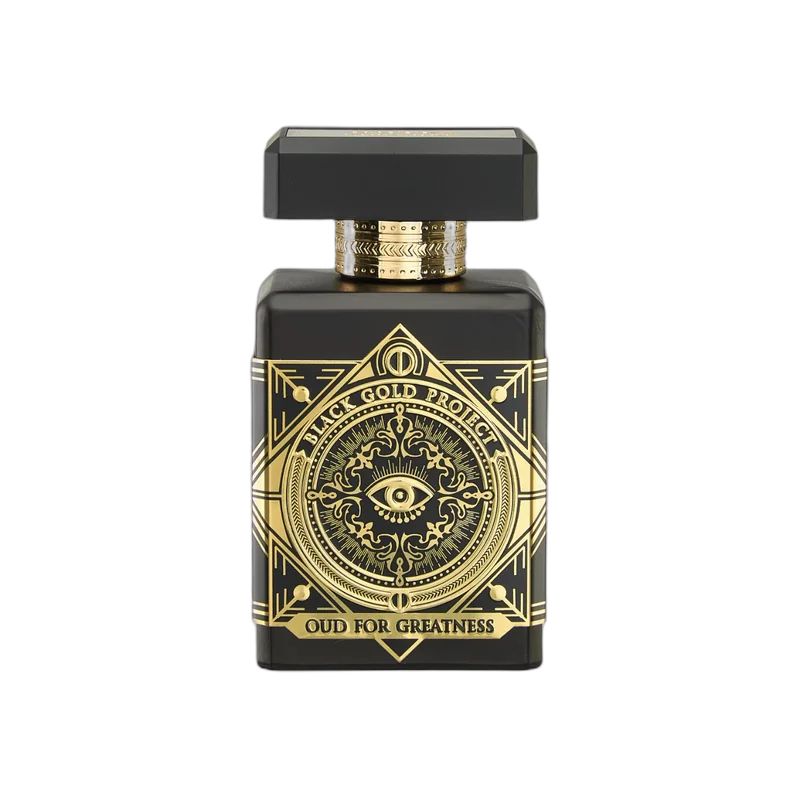
Oud For Greatness Eau De Parfum
Initio's 2018 statement oud and the bottle that taught a Western audience to wear the note loud. The Parisian house's flagship oud, it front-loads a huge dose of woody amber and clean synthetic oud, cut with nutmeg and saffron up top and a lick of medicinal freshness that keeps the wood from turning too dense. This is oud as a Western house handles it, sanded of the barnyard funk that scares people off the real thing and rebuilt around ambroxan and cedar so it reads sleek rather than animalic. Performance is the selling point and the reason it went viral, projecting hard for the first few hours and lasting the better part of a day on skin and longer on fabric, the kind of output that empties a room. It wears cold-weather and evening more than daytime, and skews masculine though plenty take it as unisex. The heavy smoked-glass flacon matches the intent. As a first oud for anyone raised on designer woods, this is the obvious entry, and it remains the benchmark for the modern, projection-forward take on the note.
Initio's Oud for Greatness is the modern Western take at full volume. The oud here is clean, loud and rebuilt around woody amber and ambroxan, with the animalic side scrubbed out so it reads sleek rather than challenging. It is oud engineered for projection, and it is why a whole generation now associates the word with a huge, room-filling wood scent rather than a smoky attar. To understand where the aroma-molecule side comes from, our explainer on what is ambroxan covers the exact material doing half the work here.
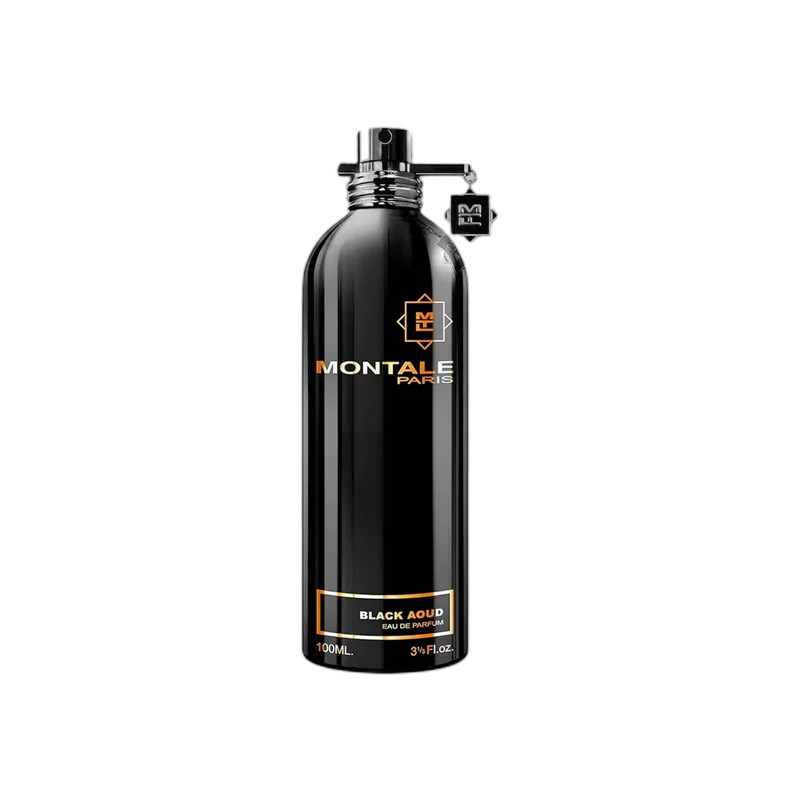
Black Aoud
Montale's 2006 rose-oud and the fragrance that put the Paris house on the map for a whole generation of Western wearers. Pierre Montale spent years in Saudi Arabia before founding the house, and Black Aoud is his bridge between Middle Eastern taste and a European one, a bruised, jammy Turkish rose laid over a dark, almost leathery oud accord with patchouli and musk pulling the base down. The rose here is not pretty, it is overripe and slightly rotten in the best way, and the oud beneath it carries a medicinal, band-aid edge that reads as the real thing to newcomers even though it is a reconstruction. It projects loudly and lasts all day, very much a cold-weather and evening wear, and it splits opinion hard on first sniff. Bottled in the house's signature matte-black aluminium tube, it sits at the affordable-niche end and undercuts most of what it competes with. Countless rose-ouds have followed it, but this is the reference point most of them answer to. For anyone curious where the rose-and-oud pairing comes from, Black Aoud is the honest place to start.
Montale's Black Aoud is the bridge to the Middle Eastern tradition. Pierre Montale spent years in Saudi Arabia before founding his Paris house, and Black Aoud pairs a bruised, overripe rose with a dark, medicinal oud in the rose-oud style the Gulf perfected. It is louder and funkier than the Initio, and it splits opinion on first sniff, which is why it is the honest place to meet the pairing. If you like this axis, the Amouage guide covers the house that arguably does prestige rose-oud best.
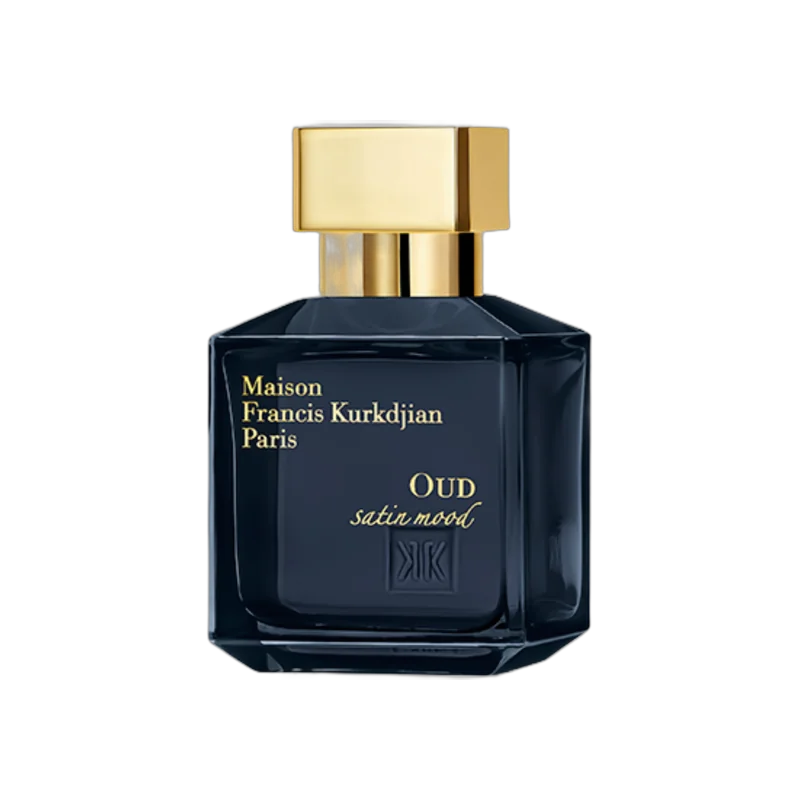
Oud Satin Mood Eau De Parfum
Maison Francis Kurkdjian's 2015 oud and the house's smoothest handling of the note, composed by Francis Kurkdjian as part of the house's Oud Mood line. Oud Satin Mood does exactly what the name says, taking a dark oud accord and sanding it to a satin finish with a plush Bulgarian rose, sweet violet and a generous pour of vanilla and benzoin over the top. The oud never dominates here, it sits underneath as a warm woody spine while the rose and vanilla do the talking, which is what makes it the easiest of the serious ouds to wear for a Western nose. It reads rich and slightly powdery rather than medicinal or animalic, closer to a rose-vanilla with depth than a raw agarwood scent. Performance is strong, projecting well for hours and lasting most of a day, and it wears unisex despite the plush framing. It sits mid-range in the MFK line, above Grand Soir and below the crystal editions, and often gets pitched as the oud for people who think they dislike oud. For a polished, rounded introduction to the note, this is the considered pick.
Maison Francis Kurkdjian's Oud Satin Mood is oud for people who think they dislike oud. Kurkdjian sits the wood underneath a plush rose and a pour of vanilla and benzoin, so it reads as a warm spine rather than a medicinal slap. It is the smoothest treatment of the four and the one most likely to convert a sceptic, and it is worth noting how little actual oud the wearer perceives here. The note is a texture and a shadow under the rose, not the headline, which is exactly the Western strategy at its most polished.
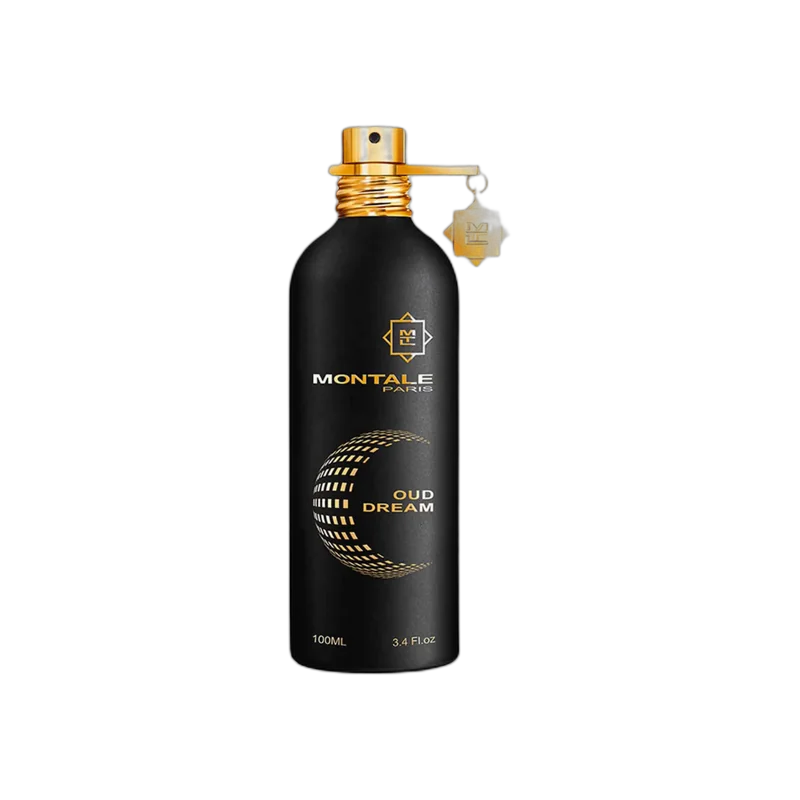
Oud Dream
Montale's 2019 oud and the gentlest way into the house's dense back catalogue, built as a softer, sweeter counterpoint to its louder ouds. Oud Dream keeps the woody agarwood accord the house is known for but wraps it in a milky, almost creamy sweetness, with soft spice and a touch of floral rounding the edges so the oud reads warm rather than sharp or medicinal. Where Black Aoud is a slap of rotten rose and band-aid wood, Oud Dream is the accessible cousin, closer to a cosy oud-vanilla than a challenging Middle Eastern wear, which makes it the low-risk starting point for anyone testing the note. It projects moderately and lasts most of a day on skin, less of a room-filler than its stablemates and easier to wear day to day as a result. It sits at the same affordable-niche price as the rest of the Montale line and undercuts almost everything it competes with on cost. Bottled in the familiar aluminium tube, it is the one to reach for if the harder ouds have put you off. For a soft, wearable first oud without the funk, this is the friendly option.
Montale's Oud Dream is the accessible entry point, a soft, milky oud-vanilla that keeps the house's signature wood but wraps it in creamy sweetness. It is the low-risk way to test whether oud is for you at all, without the funk of Black Aoud or the volume of the Initio. If it grabs you, the harder ouds above will make sense next. If it does not, you have learned the note is not for you without spending prestige money to find out.
How to Know What You Are Buying
Start with price and honesty. If a fragrance is priced like a normal designer or affordable-niche release, assume its oud is a synthetic accord or a reconstruction, and judge it on whether that accord smells good rather than on whether it is "real." Genuine distilled oud oil lives in the rarefied end of niche and in Middle Eastern attar houses, priced accordingly, so designer-priced oud that claims to be the real thing is the only actual red flag here. Beyond that, read the character rather than the marketing. A clean, ambroxan-heavy wood aimed at projection is the Western reconstruction school. A funky, medicinal wood, or a rose-oud with a rotten-rose edge, is chasing the traditional Middle Eastern profile. Neither is better, but knowing which you are smelling tells you what you are buying.
How to Start
Go soft first. Oud Dream or Oud Satin Mood are the gentle on-ramps, rounded enough that the note's harder edges never show. From there, Oud for Greatness shows you the loud, clean Western version and Black Aoud the funkier, rose-laced Middle Eastern side. Only once those make sense is it worth chasing genuine distilled oud, a rabbit hole of its own. Sample at every step, because oud reads differently on skin than on paper. For a wider shortlist across price tiers, our roundup of the best oud fragrances picks up where this explainer leaves off. All four bottles above are well stocked with the retailers we track, so the live price is usually well under full retail.
Compare oud fragrance prices across every retailer on Aurexum