
Best Woody Fragrances
Wood Is the Skeleton, Not the Skin
Most fragrances are woody. Cedar, vetiver and sandalwood show up in the base of so many bottles that the family label risks meaning nothing at all. What separates a genuinely wood-forward fragrance from something that merely has a woody drydown is commitment: the perfumer making the wood the point, not the platform.
This post maps the real materials — cedar, sandalwood, vetiver, oud, and the synthetics that do a lot of the heavy lifting in modern woody releases — and walks from the driest, most austere cedar studies through to rich oud-woods and on to where the major houses have taken the family in the last few years. There are seven picks here, spanning affordable designer to serious prestige, masculine-leaning to genuinely unisex. The grouping runs from rich and heavy oud-woods, through dry-material studies, to where modern designer houses took the family.
One honest note before we go further: "woody" on a designer bottle often signals a synthetic amber-wood drydown built from molecules like Iso E Super, Norlimbanol or Cashmeran rather than the distilled naturals. That is not a scam. These materials were developed specifically because they are stable, consistent and often more convincingly woodsy than the naturals they evoke. Understanding the difference between a synthetic woody and a resinous oud or a sharp pencil-cedar is most of what separates a confident fragrance buyer from someone going by bottle shape.
The key naturals are worth knowing by smell before you shop. Cedarwood tends sharp and dry, pencil-shaving rather than forested. Sandalwood is the creamy, milky counterpoint, warmer and rounder. Vetiver is earthy and smoky, sometimes almost roasted. Oud is the most complex, ranging from barnyard-animalic to medicinal to quietly woody depending on the source. All four show up across these seven picks in different proportions and combinations, and understanding where each one sits on that spectrum gives you much better grounds for choosing than reading marketing copy does.
Oud-Woods and Rich Resins
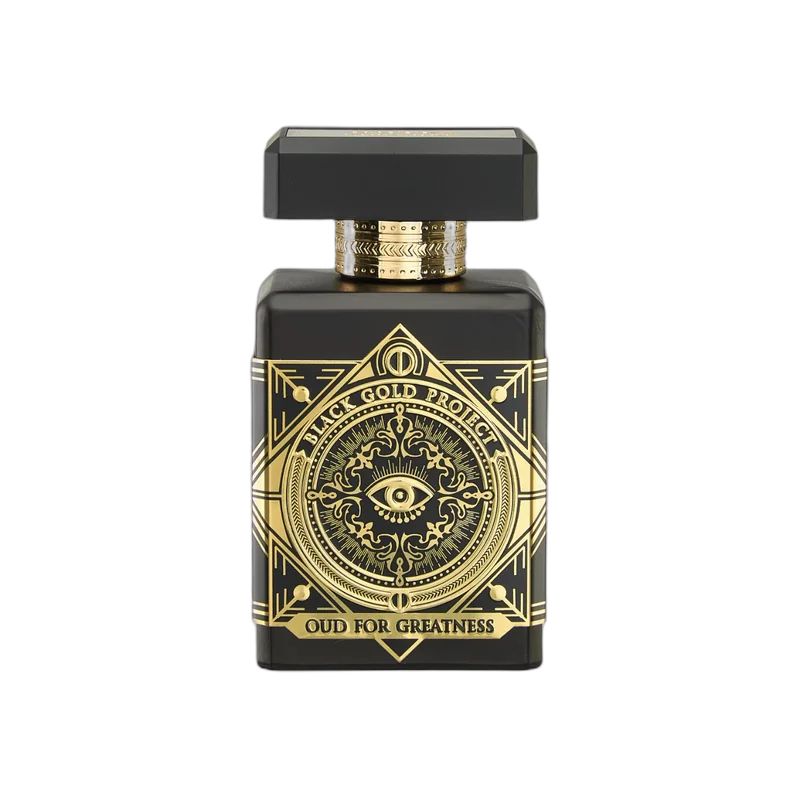
Oud For Greatness Eau De Parfum
Initio Parfums Privés launched Oud for Greatness in 2018 as a deliberate statement of excess, and it delivers on that promise without apology. The centrepiece is oud, real oud, supported by a muscular base of cedarwood, sandalwood and a dark, animalic musk that keeps the whole thing grounded and a little feral. Saffron and incense add a Middle Eastern register to the open, then the wood takes over and stays: a thick, roasted oud that reads smoky and medicinal before the cedar pulls it toward something drier and more mineral. This is not the safe, synthetic amber-oud found on most designer flankers. It wears loud and projects hard for several hours before settling into a rich close-skin scent that can last most of two days on fabric. The house built Initio around a concept of physical desire, and Oud for Greatness sits at the extreme end of that philosophy. It is unisex in principle and genuinely polarising in practice, with the oud's barnyard edge dividing rooms as much as it commands them. Heavily stocked across the retailers we track, with live prices generally sitting well below the boutique rate. The entry point to the serious oud-wood tier.
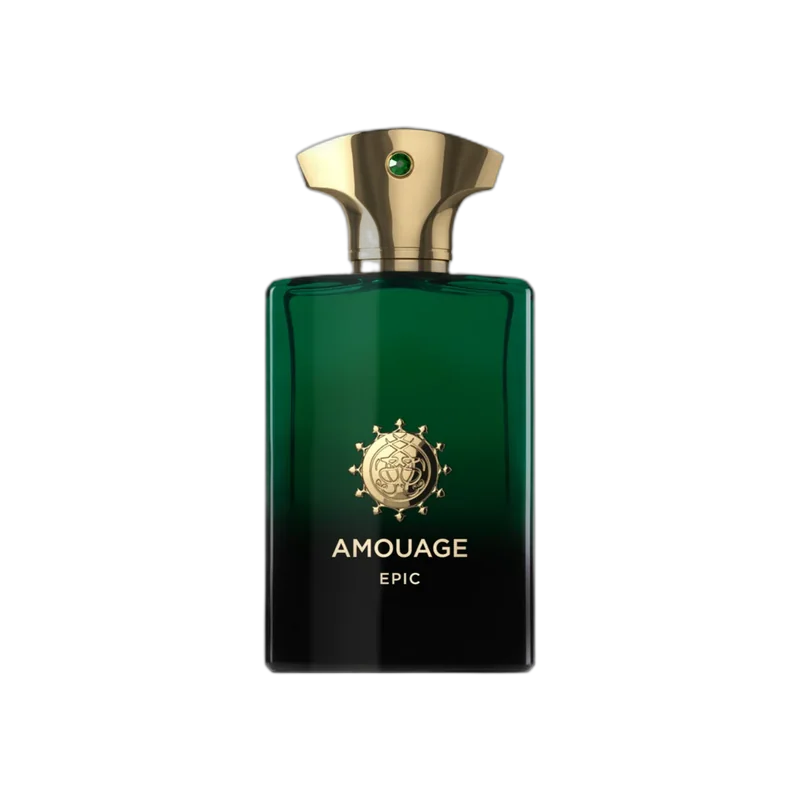
Epic Man
Amouage built Epic Man in 2009 as one of the house's earlier western-facing masculines, and it sits at the richest and most complex end of this list. It opens with a spiced amber, pepper and smoky incense accord that gives way to a dense heart of rose, orris and a slightly animalic edge before settling into the base that makes it memorable, a layering of woods, labdanum, leather and oud that turns deep and resinous and lasts through the day and into the next. The Muscat inspiration is evident in the frankincense and sandalwood, materials that anchor it to a Middle Eastern tradition even as the overall structure reads western. This is the fragrance on this list that sits closest to the leather and oud corners of the catalogue, though the woods hold as much weight as the oud does rather than being buried beneath it. Performance is outstanding, with a long projection and multi-day longevity on fabric, which is what you expect at the prestige price. It wears masculine and formal, suits cold weather emphatically, and rewards patience, taking a good few hours to fully open up on skin.
The two picks above sit at opposite ends of richness, but both treat wood as something heavy and resinous rather than light and dry. Initio Oud for Greatness is the more extreme of the pair: a loud, dark oud underpinned by cedar and musk that makes no concessions to wearability. It is the fragrance on this list most likely to prompt a strong reaction in a room, and the one that earns the niche prestige price most visibly. It also sits closest to the territory covered in the oud fragrances post, though the cedar and sandalwood here hold their own against the oud rather than disappearing behind it.
Amouage Epic Man is the more considered prestige pick, slower and spicier, built from incense, labdanum and sandalwood in the Omani house's signature layered style. It wears more formally and rewards patience in a way the Initio does not. Both sit at the prestige end of the price range; check the live lowest prices via our data before buying at full retail, because the gap is often meaningful.
Dry Studies: Cedar, Vetiver and the Smell of Actual Wood
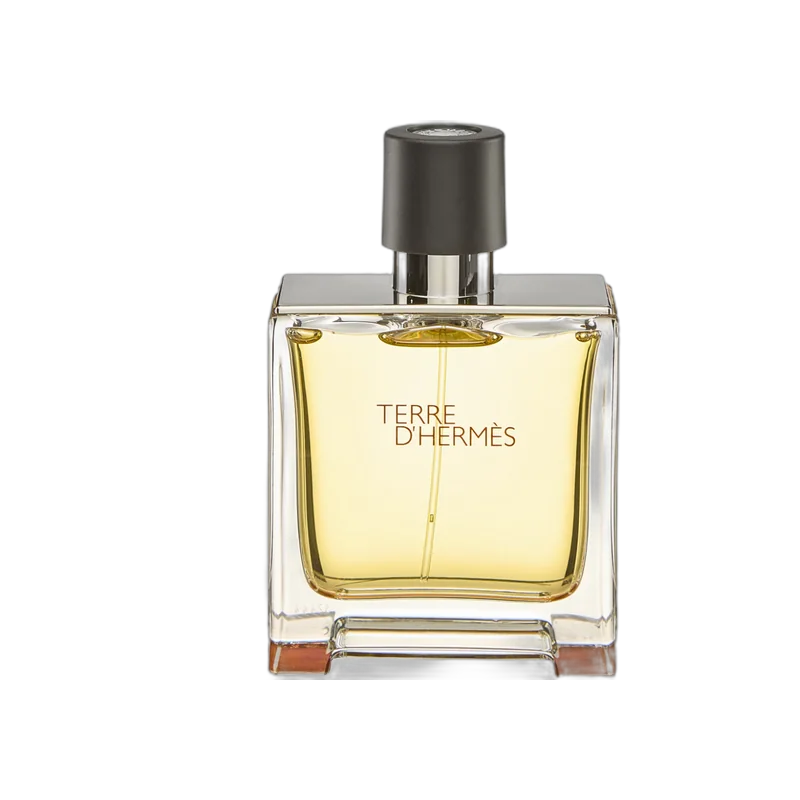
Terre Dhermesparfum Parfum
Jean-Claude Ellena composed the original Terre d'Hermès EDT in 2006 as a study in the relationship between earth and sky, flint and orange. The Parfum that arrived in 2009 is a different proposition: darker, slower and much more emphatically woody. The citrus still opens it, but it retreats faster and what replaces it is a dense accord of vetiver, cedar and a chalk-like minerality that Ellena built using a specific flint note sourced from Anjou. The effect is geological — dry rock, bark and earth without any sweetness to cushion it. There is almost no animalic material here, no musk in the conventional sense, just minerals and dry woods laid over one another with deliberate restraint. Performance is strong, projection measured rather than aggressive, lasting a full day with that mineral-cedar drydown clinging to skin throughout. The EDT sits on the citrus post in this series; this concentration earns its place here because it is where Hermès took the formula into proper woody territory. It remains one of the most technically accomplished masculine perfumes made by a major house in the last two decades, and one of the cleaner entry points to understanding what real vetiver-cedar smells like.
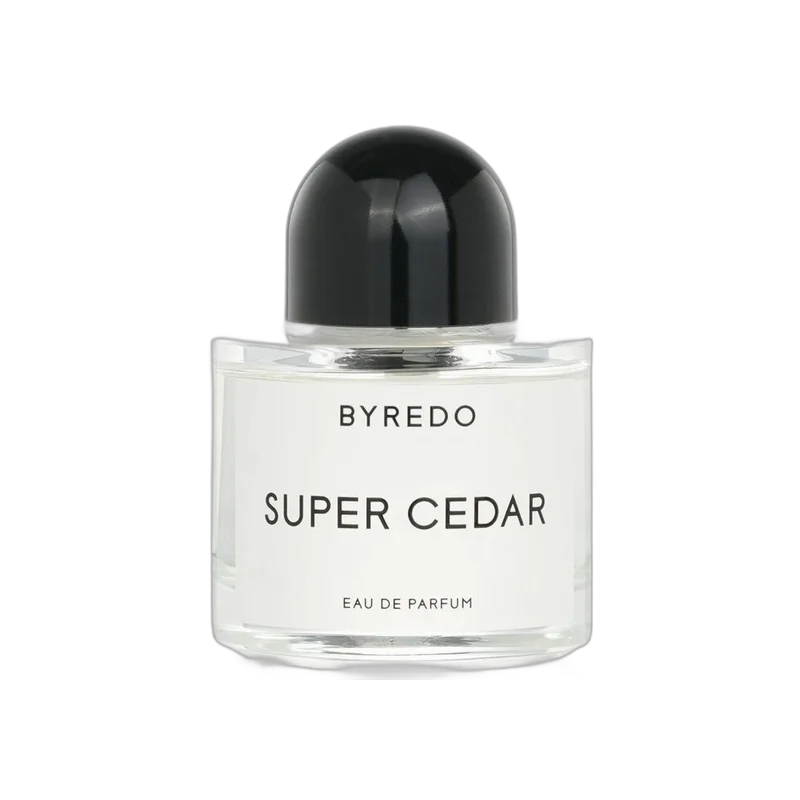
Super Cedar
Byredo launched Super Cedar in 2016 as a near-literal exercise in wood: what does cedarwood smell like if you push it to the foreground and remove almost everything else? The answer is sharp, pencil-shaving cedar with a light rose background that softens the edges without really competing, all sitting on a clean musk that keeps it from going papery. There are no heavy base notes, no oud or patchouli pulling it dark, and very little sweetness. It is about as minimalist as a cedar can be while still being wearable, which makes it slightly challenging and entirely unisex in a way that most houses hesitate to commit to. The performance is moderate rather than massive, projecting close and lasting a solid six hours, enough for an office day but not a two-day trip. Byredo built it for the Stockholm design crowd and the brief is evident throughout — stripped back, confident in its restraint, and not attempting to please everyone. It is the sharpest-angled fragrance on this list, a dry cedar that earns the label rather than borrowing it. If you want to understand what a cedar-focused wood study smells like at the affordable niche level, this is the obvious choice.
Wonderwood
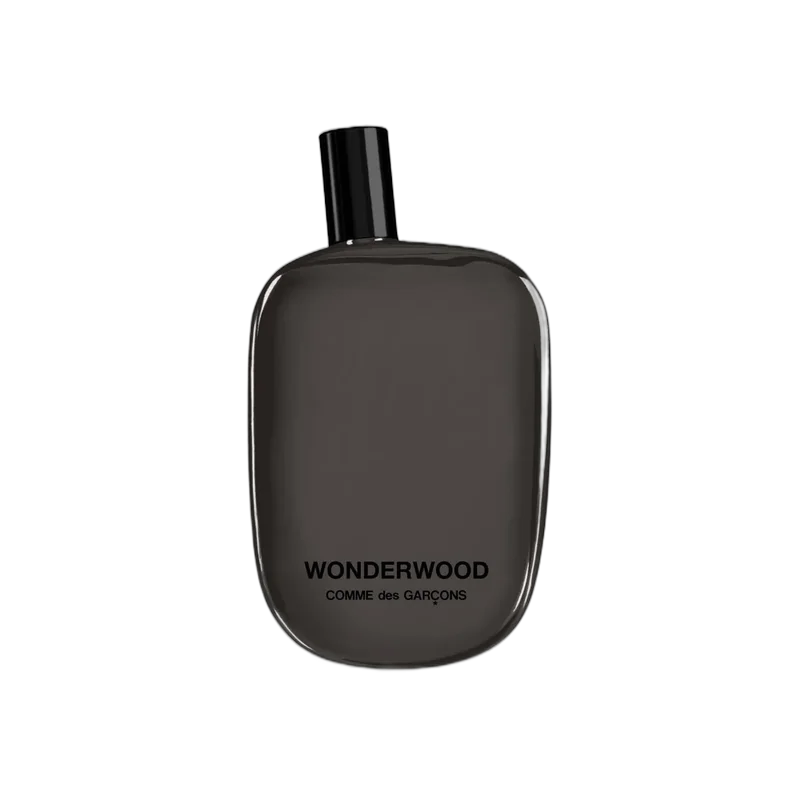
Comme des Garçons released Wonderwood in 2010 as an all-woods experiment that goes much further than most houses dare. Where Byredo Super Cedar uses cedarwood as a focal point, Wonderwood uses woods as a medium, a dense multi-layered accord built from a dozen different wood materials, gaïac, cedar, sandalwood, Iso E Super and a handful of woody synthetics that together create something abstract and collectively resinous. It opens dry and splintery, almost like sawdust in a carpentry workshop, then deepens into something warmer and more complex as the resinous base notes settle. Iso E Super, the woody-aroma molecule that also drives Escentric Molecules 01, is clearly audible, delivering that cedar-like diffusion that seems to come from the skin rather than off it. The overall character is maximalist in materials while remaining quite austere in feel, which is a Comme des Garçons signature. It wears androgynous and confident, projects moderately, and lasts a respectable day. The house's design pedigree means the bottle is as considered as the formula. This sits squarely in the dry-woods group rather than the smoky register, so if smoke is as important to you as the wood, the smoky fragrances post covers that overlap.
These three are the heart of the post, and the most instructive if you are trying to understand what different wood materials actually smell like.
Jean-Claude Ellena's Terre d'Hermès Parfum is the reference point for vetiver-cedar done at a luxury house level. The EDT version — the version that made Hermès's name in woody masculines — lives on the citrus post in this series because the orange is what you notice first. The Parfum is different: darker, more mineral, and unambiguously about the vetiver and flint accord rather than the bergamot. It is one of the most technically precise masculines a major house has released in the last twenty years, and the natural starting point if you want to understand what stripped-back, earthy-dry wood smells like done with genuine craft.
Byredo Super Cedar takes the minimalist brief even further. This is a pencil-cedar study at the niche level — sharp, clean, close to the raw material — with a light rose keeping it from going purely abstract. It projects modestly and wears unisex, which makes it useful as a reference: if you smell it and want more warmth and depth underneath, you are a candidate for sandalwood or oud blends. If you find it completely satisfying, you probably have a cedar-leaning nose.
Wonderwood sits between the two in terms of abstraction. Comme des Garçons loaded it with a full palette of wood materials and molecules rather than isolating one, and the effect is the smell of a timber yard abstracted into something wearable. Iso E Super's diffusive, almost-cedar quality gives it a peculiar skin-presence quality. It belongs on this list rather than the smoky fragrances list specifically because the smoke register is absent; this is all wood, no ash.
Two Hermès pins appear in this post by design. The house wrote two chapters of the modern woody masculine story: Ellena's mineral-vetiver framework in 2006 and 2009, and Christine Nagel's sclarene-green departure in 2021. They wear nothing alike and that contrast is the point.
Modern Designer Woods: Where the Houses Went Next
H24 Eau De Toilette
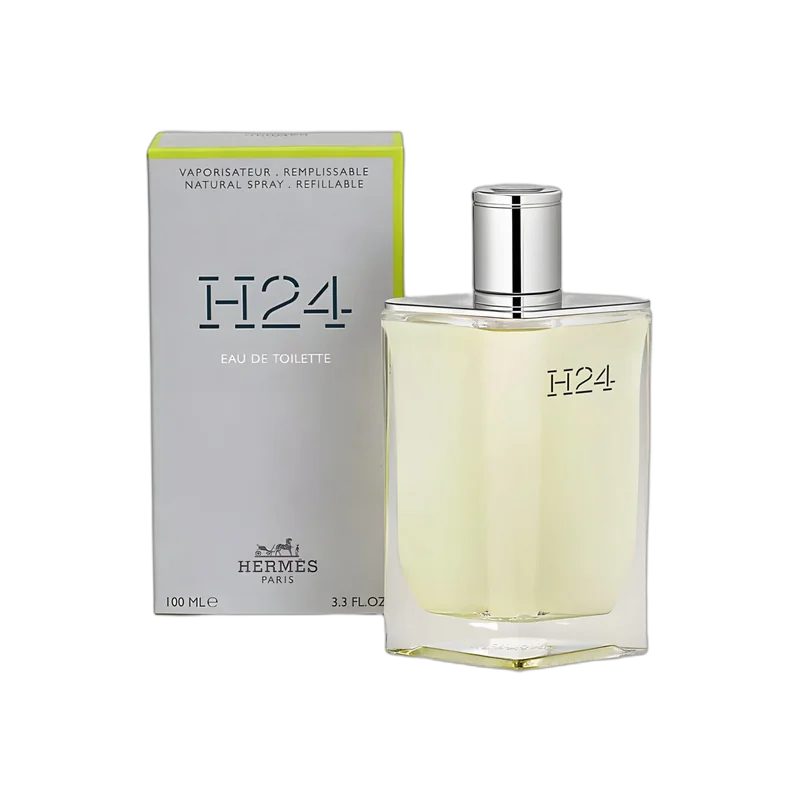
H24 arrived in 2021 as Hermès's signal of where designer woody perfumery was heading, and the answer turned out to be green and metallic rather than warm and resinous. Christine Nagel, who now leads creation at the house, built it around sclarene, a synthetic material that gives H24 a sage-like, slightly metallic green quality unlike any woody masculine of its era. The structure is otherwise restrained, with a sage and clary accord in the top, narcissus lending a subtle floralcy in the heart, then a woody-amber base where cedar plays a supporting role. The overall effect is cool, clean and quietly modern. It is the most office-appropriate and season-agnostic woody on this list, working in summer heat as readily as in cooler months. Projection is moderate and longevity decent for the EDT concentration, which is realistic given the deliberately light-handed formula. The two Hermès pins in this post are deliberate, placed to show two eras of the house's woody work: Terre d'Hermès Parfum defines where the mineral-vetiver masculine stood in the 2000s, while H24 shows where it moved next. Both are worth knowing, but they wear nothing alike. Well stocked in the retailers we track, usually available at a useful discount on the live price.
Guilty Pour Homme Eau De Toilette
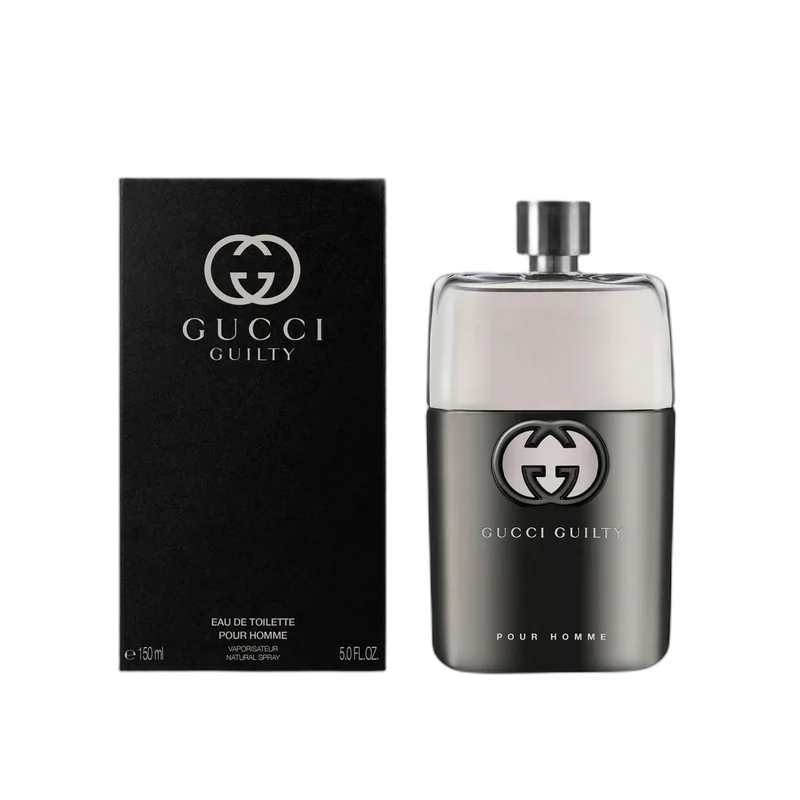
Gucci Guilty Pour Homme EDT landed in 2011 as a pink-pepper and patchouli aromatic that has spent the fifteen years since becoming a benchmark for accessible designer woody fragrance. Pink pepper and lemon open it with a familiar designer freshness, then lavender and orange blossom give the heart an aromatic quality before patchouli and cedarwood take over in the base, adding just enough woody depth to keep it from smelling generic. The woody drydown is the point: it is smooth, warm and slightly sweet in that cedarwood-patchouli register that a whole generation of designer masculines chased throughout the 2010s. Performance is measured, projection moderate in the first couple of hours, then a warm skin scent through the afternoon. It is an easy daily driver, season-flexible and undemanding, the sort of fragrance that works without requiring attention. Gucci built it for the licensed mainstream market, and it shows in the accessibility of its structure. You can find it well stocked and the live price is consistently competitive. If you want something that demands more from the wearer, the woods elsewhere on this list will push you further; Guilty Pour Homme is the low-commitment, reliably pleasant aromatic-woody.
H24 and Gucci Guilty Pour Homme EDT represent the other side of this family, where the wood is a drydown character rather than the structural material. Both are accessible, both are suited to daily wear, and both demonstrate what a synthetic woody approach can do for wearability.
H24 is the more interesting formula, built around sclarene, a synthetic that reads green and metallic in a way that had not really been done in a mainstream masculine before 2021. It is the most forward-looking fragrance on this list, and probably the one that will date least quickly because it does not lean on trends that have already peaked. Gucci Guilty Pour Homme is the older and more comfortable pick, a pink-pepper and patchouli aromatic with a cedarwood drydown that defined a certain mid-2010s designer masculine style. Both sit at mainstream designer prices, well stocked with live prices below full retail.
How to Choose Your Wood
The simplest axis is intensity. If you want wood that announces itself and carries a room, Initio Oud for Greatness and Amouage Epic Man are the picks, with the performance to justify the price. For dry, austere wood where the material does the talking, Terre d'Hermès Parfum and Byredo Super Cedar are the reference pair, with Wonderwood if you want the maximalist all-woods experiment rather than a single cedar or vetiver focal point.
For daily wear without the commitment, H24 offers a modern green-metallic approach, while Gucci Guilty Pour Homme delivers something warm and uncomplicated for those who prefer a familiar aromatic structure.
Budget matters here more than in some families because the gap between a synthetic designer woody and a genuinely natural-heavy prestige wood is large and often worth paying for. Sample before you commit at the top end. The affordable end of this list is well priced, but oud and incense-resin territory at the prestige level is genuinely different in kind, not just in degree. The woody family also overlaps with others: where smoke and wood meet, see the smoky fragrances post; where wood merges with animal notes and resin, the leather fragrances post covers that ground.
Compare woody fragrance prices across every retailer on Aurexum