
Why Do Arabian Fragrances Last So Long?
The Short Answer: Built for the Heat
Arabian fragrances last so long because they are engineered for a climate that destroys ordinary perfume. In 40-degree desert heat, delicate top notes flash off by lunchtime, so the tradition evolved around heavier concentrations of fragrance oil and base materials that survive the sun: ouds, ambers, resins and heavy musks that cling to skin for hours rather than minutes.
That is the whole thing in two sentences, but the how and the why are worth unpacking, because "Middle Eastern fragrances are strong" gets repeated far more often than it gets explained. The endurance is not an accident or marketing spin. It comes from a stack of deliberate choices, each one making sense once you picture the environment the style was forged in. Below is how the climate, the dosage, the materials and centuries of oil-perfumery habit combine into the staying power that has made houses like Lattafa and Swiss Arabian a fixture on Australian wishlists.
A Tradition Forged in Forty-Degree Heat
Start with the weather, because everything follows from it. A perfume that smells wonderful in a cool European drawing room behaves very differently in the Gulf. High heat accelerates evaporation, so the light citrus and airy florals that carry a fresh designer scent simply burn off, sometimes within the hour. A fragrance culture built in that environment learned quickly that the top of the pyramid is fleeting and the base is where longevity lives.
So the tradition leaned into the base. Instead of building around bright, volatile materials that read beautifully for twenty minutes, Arabian perfumery anchors itself in the heaviest, least volatile notes available. These are the molecules that resist heat, that sit on the skin and release slowly across a full day. The result is a style that can feel front-loaded and dense to a nose raised on European freshies, but that keeps going long after the lighter stuff has vanished. When people say a scent has "beast mode" performance, they are usually describing this base-note-heavy approach without knowing it.
The Concentration Point: More Oil, Less Money
The second reason is straightforward: Arabian fragrances often carry more fragrance oil than their price would suggest. Concentration is the single biggest lever on how long a scent lasts, and much of the modern Middle Eastern output is dosed generously, whether it is labelled an eau de parfum or sold as a pure oil attar.
The genuinely interesting part is how the price stays low while the dosage stays high. Two things make that possible. First, the heavy reliance on high-quality synthetic materials, ambroxan, synthetic oud accords, lab musks, that deliver enormous projection and tenacity for a fraction of what natural equivalents cost. Second, vertical manufacturing: the big regional houses control much of their own production, so they are not paying the margins that a licensed designer brand hands to a Coty or an Inter Parfums. You are effectively buying performance without the prestige tax. That trade is why a bottle from the region can outlast something four times the price, and why the value pins on this list punch so far above their cost.
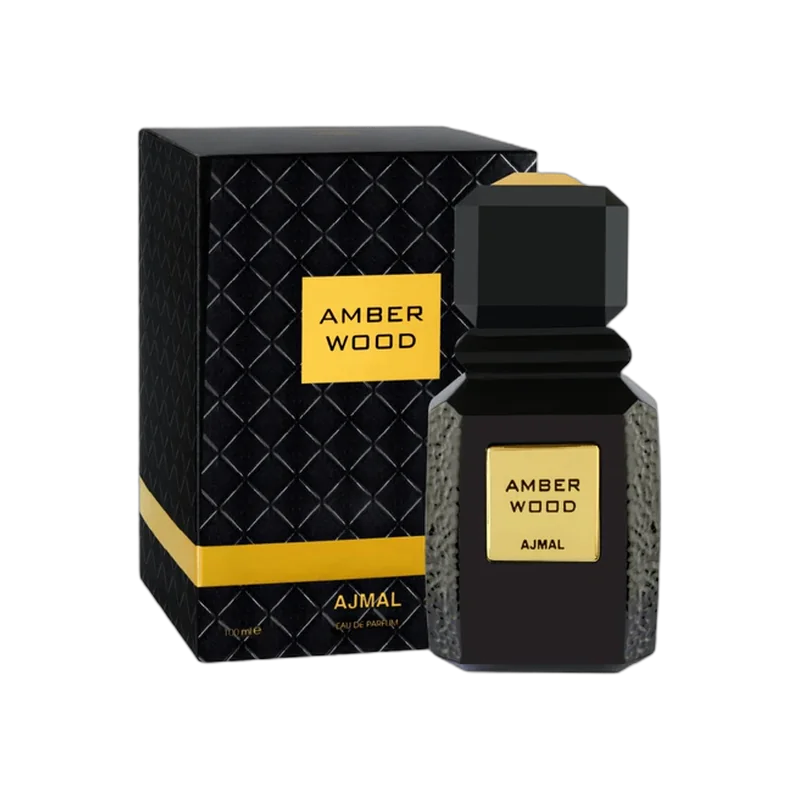
Amber Wood Eau De Parfum
Ajmal's 2014 Amber Wood is the connoisseur's proof that Emirati endurance need not be brutish, made by one of the region's oldest houses, an Emirati name that has been blending oud and amber since the middle of last century. The build is deceptively simple, a bright saffron and rose open that dries down onto a warm amber, sandalwood and creamy oud base, with a soft musk keeping the edges polished rather than sharp. What sets it apart from the cheaper crowd is restraint. The oud reads clean and woody instead of the medicinal, barnyard note that scares people off the genre, and the amber stays golden and dry rather than tipping into syrup. Performance is the point. It projects steadily for the first hours then settles into a close, radiant hum that survives a full working day and often a night on the shirt collar after. It wears unisex despite the masculine framing, and suits cool evenings far better than a humid afternoon. Among the affordable oud-ambers we track, this is the grown-up one, the bottle to reach for when you want the region's longevity without the loudness that usually comes attached to it.
Base-Note-Heavy Pyramids That Project for Hours
Concentration explains how much scent is on your skin. The material choices explain why what is there refuses to leave. Arabian pyramids are built upside down relative to a classic fresh designer scent, weighted toward the base rather than the top, and the materials living down there are the most tenacious in all of perfumery.
Oud is the headline. Real or synthetic, it is a heavy, resinous wood molecule that clings for hours and reads unmistakably of the region. Around it sit the other endurance materials: ambers and labdanum for warmth and fixative power, benzoin and other resins for a sweet, sticky depth, and dense white and animalic musks that act as fixatives, literally slowing the evaporation of everything above them. Add the sweet gourmand accords, dates, tonka, praline, that have become a signature, and you have a base that behaves less like a top layer of scent and more like a slow-release coating. If you want the deeper mechanics of how base materials translate into trail and staying power, our guide to projection, sillage and longevity breaks the three apart properly.
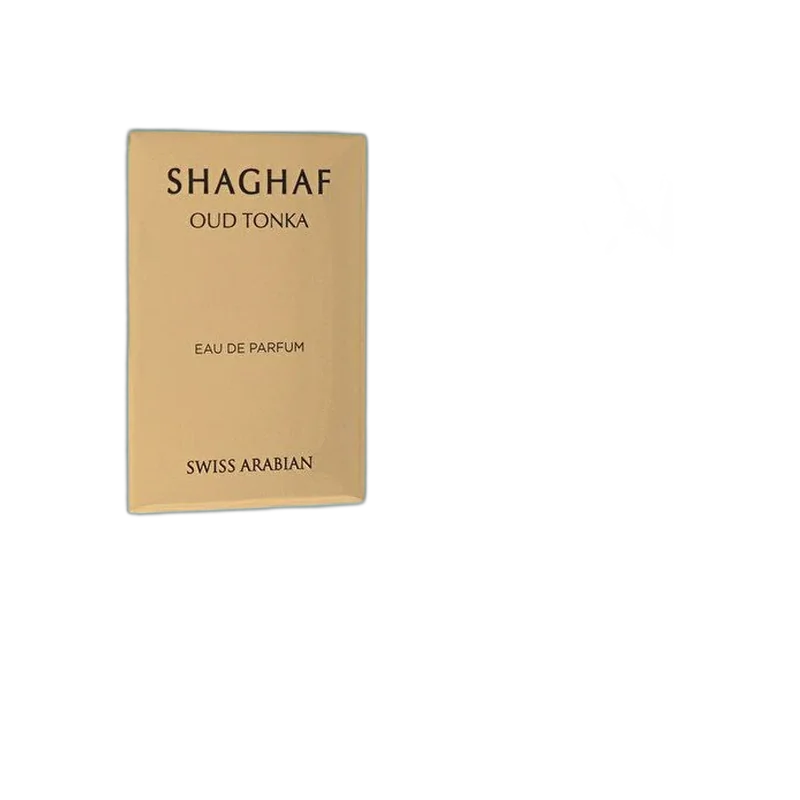
Shaghaf Oud Tonka Eau De Parfum
Swiss Arabian's 2023 Shaghaf Oud Tonka takes the house's popular Shaghaf Oud and pours sweetness over it, a dense gourmand-oud built for people who found the original too austere. The open is jammy and dark, a saffron and rose accord sitting on a thick tonka and vanilla heart, with the oud and amber underneath giving it weight instead of turning it into pure dessert. Think of it as the endurance answer to the sweeter Arabian gourmands, the same date-and-praline warmth but anchored by a woody base that stops it collapsing after an hour. That base is why it lasts. Where a designer sweet scent fades to nothing by mid-afternoon, this holds its shape well into the evening and leaves a trail on fabric the next morning. It is a cold-weather and night-out scent by temperament, too rich for a hot desk, and it wears masculine-leaning though the sweetness pulls it close to unisex. The gold-flecked bottle looks dearer than the price suggests. For anyone chasing sweet-oud staying power without the prestige spend, it undercuts almost everything in its lane among the retailers we track.
The Attar Inheritance
There is a longer history behind all this, and it is the part most explainers skip. Long before the modern spray bottle reached the Gulf, perfume in the region meant attar, concentrated fragrance oil applied directly to the skin, with no alcohol carrier at all. An oil-based perfume behaves fundamentally differently from an alcohol spray: it does not flash off, it releases slowly, and it lasts for the better part of a day from a single dab.
Those oil-perfumery habits did not disappear when spray bottles arrived. They carried straight into modern Arabian eaux de parfum, which is why even the alcohol-based sprays tend to wear denser, sweeter and longer than their European counterparts. The whole culture is calibrated around a different expectation of how long a fragrance should last, one set by the attar. If you want the full picture of oils versus sprays and why the oil format endures the way it does, our explainer on attars and perfume oils explained covers the format in depth. The short version is that the modern spray inherited the attar's ambition, and the longevity you notice is that inheritance showing through.
The Honest Caveats: Longevity Is Not Quality
Now the part the marketing skips. Longevity is not the same as quality, and it pays to keep the two separate in your head. A fragrance that lasts twelve hours is not automatically better than one that lasts six; it is just louder and more tenacious. Plenty of the region's best work is polished and well-judged precisely because it does not overdose, and plenty of cheap bottles last forever mainly because they are crammed with aggressive synthetics that read harsh up close.
Two honest points are worth stating plainly. Sweetness fatigue is real: many Arabian scents lean on dense tonka, vanilla and date accords, and a base that thick can turn sickly on you by hour eight, even when it smelled great on the strip. And a fair amount of the celebrated "beast mode" performance is simply overdose, a scent applied and formulated so heavily that its staying power is really just a cloud you cannot escape. Big performance and good taste do not always travel together. The trick is to buy the bottles that last because they are well built, not the ones that last because they shout.
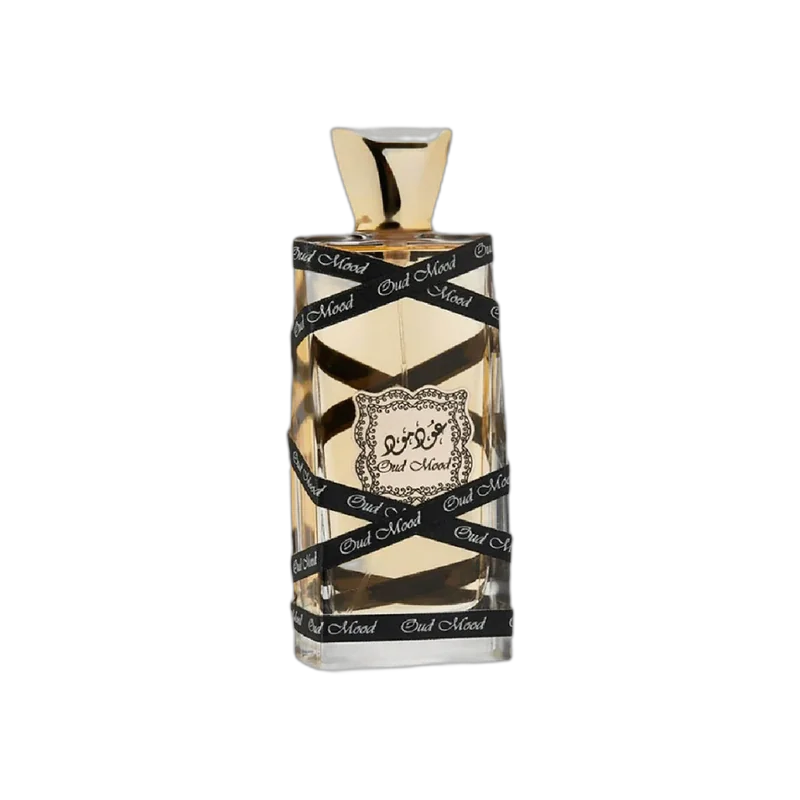
Oud Mood Eau De Parfum
Lattafa's Oud Mood opens loud and stays that way, a UAE-built oud-amber that routinely outlasts designer bottles costing several times more. The pyramid is base-note heavy by design, a smoky oud and dry amber core wrapped in a little rose and saffron up top, then a warm resinous drydown of labdanum and musk that does the real work. There is nothing delicate here to burn off, which is exactly why it endures. It opens loud, almost aggressively so, then settles across the day into a dense woody-resin cloud that clings to skin and clothing long after most fragrances have quit. That projection is the whole appeal and also the caveat, since it can read as heavy or one-note if you oversaturate, so a spray or two goes a long way. It wears masculine and suits cold weather and evenings rather than a summer commute. The dark, gold-capped flacon looks the part on a shelf. As a first step into Arabian oud on a tight budget, few bottles deliver this much wear for this little money, which is why it stays a benchmark in the tier.
How to Buy for the Long Haul
If endurance is what you are after, a few practical rules follow from all of the above. Look for oud, amber, resin or heavy musk in the base, because that is where longevity actually lives; a scent built on citrus and light florals will not last no matter what the label claims. Apply less than you think you need, especially with the value ouds, since one or two sprays of a base-heavy Arabian scent will comfortably outlast six of a fresh designer one, and oversaturating is how a good fragrance becomes a headache. And sample in warm weather if you can, because these scents were designed for heat and often bloom rather than fade in it, behaving very differently from how they read on a cool test strip in a shop.
Above all, treat longevity as one variable among several, not the whole scorecard. The three bottles here span the range: the polished Ajmal at the top, the sweet-oud Swiss Arabian in the middle, and the loud, unbeatable-value Lattafa at the floor. All three prove the same point, that the region's staying power is real and cheap to buy, just at very different levels of finish. For a wider tour of the category and where each house sits, our roundup of the best Arabian fragrances is the place to start.
Compare Arabian fragrance prices across every retailer on Aurexum