
Best Byredo Fragrances
The Minimal House With Maximum Price Tag
Byredo was founded in Stockholm in 2006 by Ben Gorham, a former professional basketball player of Swedish and Indian heritage who had no formal training in perfumery and, according to the story he has told repeatedly, was inspired by the memory of his mother's smell. That particular backstory has become part of the brand's mythology, and it informs everything about how Byredo positions itself: as a house built on personal emotional memory rather than perfumer craft or ingredient showcase. Gorham's route into the industry was unusually oblique. He met a perfumer through a mutual acquaintance, described the scents he carried in his head, and turned those descriptions into a small debut collection rather than working his way up through a lab. That origin matters, because it explains why Byredo has always read more like an art-direction project than a traditional fragrance house. The concepts come first, the compositions serve them, and the whole thing is filtered through a Scandinavian preference for less.
The design language followed immediately: plain rectangular bottles, minimal embossed text, nothing competing with the liquid inside. There is no ornate cap, no coloured glass, no crest. The bottle is deliberately anonymous, which was a genuinely contrarian move in a market that still leaned on heavy flacons and gold to signal price. The pricing itself landed firmly in designer-plus territory, above the mainstream prestige counters and below the true rarities of the niche world. For years that positioning made Byredo an awkward buy at full retail, priced like a serious niche house while smelling, to sceptics, more restrained than the sticker suggested. The grey market has changed that calculation. The retailers we track tend to carry the core line well, with live lowest and average prices from our data often sitting usefully below full retail, which is exactly where a house like this becomes easy to recommend rather than easy to admire from a distance.
What the house actually smells like is harder to summarise. The signature, if there is one, is restraint and skin-proximity. Most Byredo fragrances project quietly, dry down quickly to a close warmth, and prioritise how they smell to the person wearing them over how they announce themselves across a room. Materials tend to be clean and legible rather than dense, with a lot of white musk, ambrette, iso-e-super-style woods and transparent citrus doing the work. You rarely get the animalic depth or the resinous heft of older French niche. What you get instead is texture and clarity, a sense of a scent hovering just off the skin. That is either the appeal or the frustration depending on what you are after, and it is worth being honest about which camp you fall into before you buy, because a Byredo that underwhelms in the store often does so precisely because it is behaving as designed.
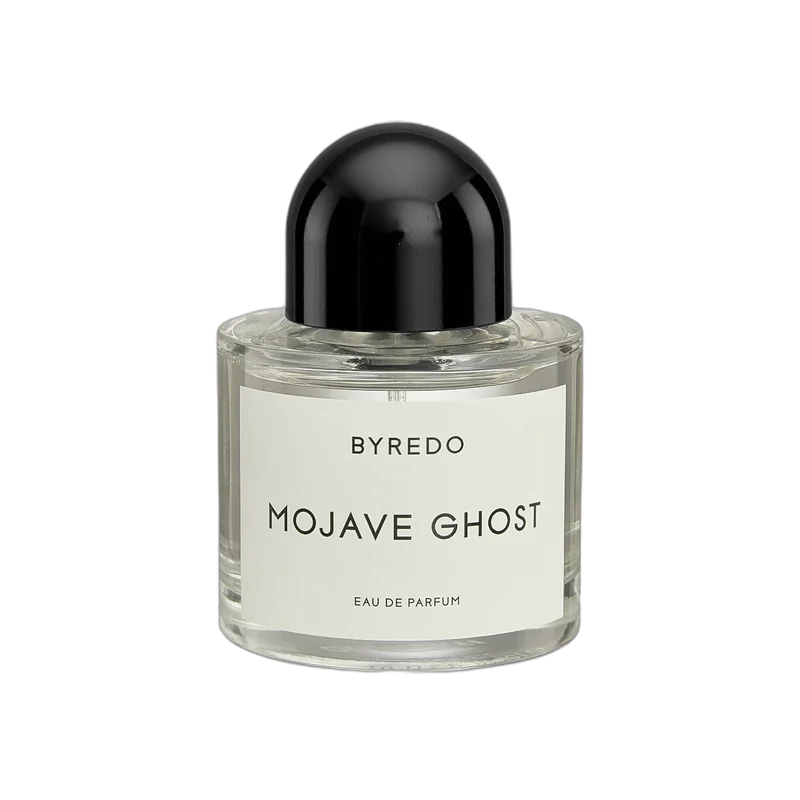
Mojave Ghost Eau De Parfum
Byredo's 2014 desert opus and the scent that turned the Stockholm house into a household name well beyond niche circles. Mojave Ghost takes the Mojave Desert as its brief — not the heat, but the strange quiet of it, the way absence becomes a smell. The opening is light and slightly watery, with magnolia and a tart skin-like ambrette giving it a freshness that feels almost edgeless. A woody sandalwood-and-violet heart emerges over time, then the base settles into a dry, powdery amber warmth that reads as skin rather than perfume. The ambrette is the hero material, that seeds-derived musk giving the whole thing its characteristically soft, almost human quality. It wears unisex without trying and projects modestly, a skin scent that announces itself to the person next to you rather than the room. Longevity is decent without being a beast, lasting comfortably through a full working day. The plain white-and-black Byredo bottle does nothing to compete with the scent, which is very much the point. Heavily stocked through the retailers we track, which keeps the grey-market price well under full retail. If you are buying one Byredo to understand the house, this is the one.
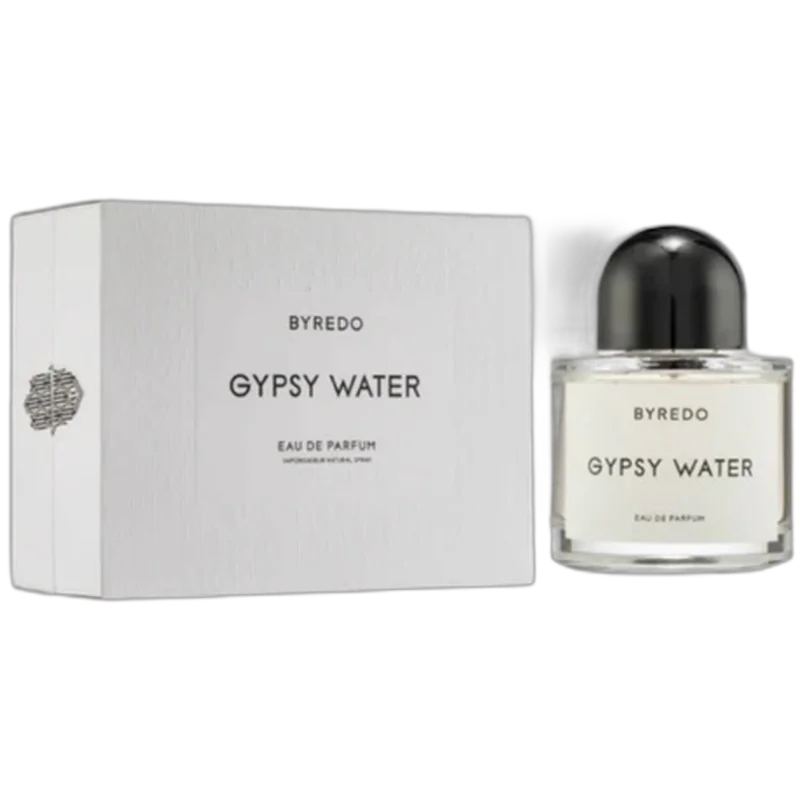
Gypsy Water Eau De Parfum
Released in 2008 and still the house's most romantic, Gypsy Water is named for the nomadic wanderers Ben Gorham romanticised as a child, a world of pine forests, campfires and bergamot-bright skin. The opening is juniper and bergamot, cool and crisp and faintly piney, before a heart of incense and pepper pushes it into darker territory. Then it closes on creamy sandalwood, vanilla and orris pulling together into something dry and softly sweet, warmer than the top suggests and considerably more settled. That pine-to-vanilla arc is what makes it unusual, a scent that starts outdoorsy and ends close and intimate. It wears unisex and works in cooler months more than summer, though the bergamot top keeps it from feeling heavy. Performance sits in the moderate range, with good projection through the first half of the day and then a skin-close warmth for hours after. The Byredo bottle is as spare as ever, an object that communicates nothing except confidence in the liquid inside. It sits close in character to Mojave Ghost, which is why the two so often come down to a straight choice, and a founding-era Byredo that remains among the house's best.
The Ghost and the Wanderer
Mojave Ghost and Gypsy Water are the two scents most people mean when they say they know Byredo. They were released six years apart — Gypsy Water in 2008, Mojave Ghost in 2014 — and they tell you different things about what the house can do.
Gypsy Water is the more romantic of the two: a pine-and-bergamot opener that closes into creamy sandalwood and vanilla, a journey from forest edge to firelit interior. It is the Byredo with the clearest storyline, and the one most likely to convert someone who thinks the house is all cold, quiet abstraction. Mojave Ghost is quieter and more abstract, built around ambrette seed and sandalwood in a way that prioritises texture over narrative. Where Gypsy Water moves through distinct chapters, Mojave Ghost mostly holds one soft, sunlit note and lets it breathe. Both are skin-close, both wear unisex without effort, and both have been cloned extensively by houses looking for a reference-point in the clean woody space. That cloning is itself a compliment: the pair have become shorthand accords, the way a handful of Creed scents did before them.
Seasonally they lean the same way, which is worth knowing before you buy both. Neither is a summer powerhouse. Gypsy Water sits best in the cooler months, when its resinous, vanilla-warm base has something to push against, though the bergamot top keeps it from ever feeling stuffy in a mild Australian winter. Mojave Ghost is the more flexible across temperature, clean enough for spring and warm enough for autumn, but it can genuinely vanish on hot, humid skin. As occasion scents both are quiet enough for the office and personal enough for a close encounter, which is much of their appeal. Neither is built to command a room, so if that is what you want from a signature, skip ahead to Eyes Closed.
They are close enough in character that shoppers often find themselves choosing between them, which is why the Gypsy Water vs Mojave Ghost head-to-head runs the direct comparison in more detail than a house guide can cover. For this list, both earn their place as the definitive Byredo entry points, and if you can only justify one, it is almost certainly one of these two.
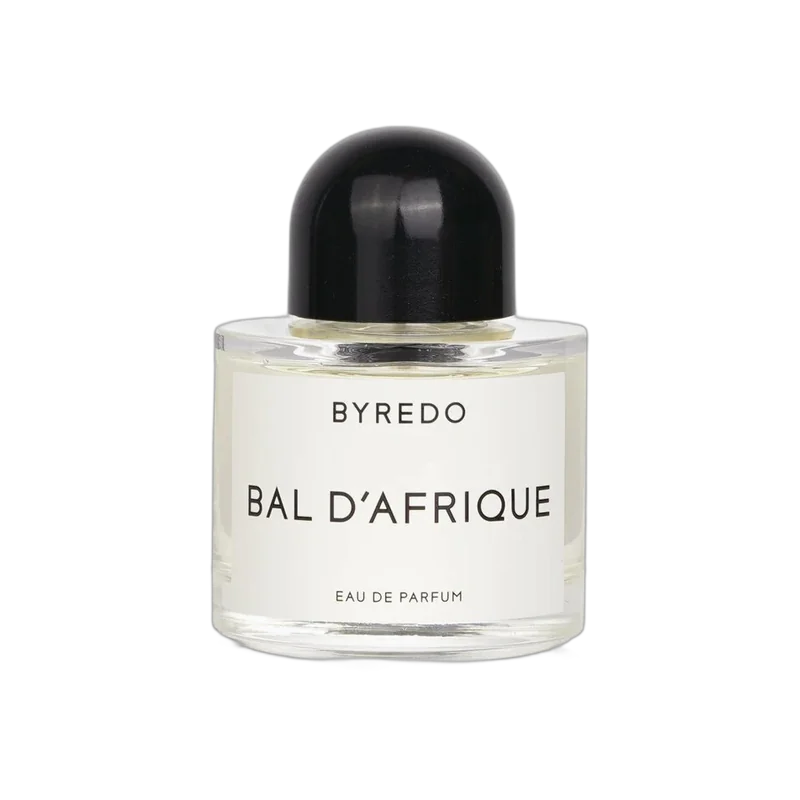
Bal Dafrique Eau De Parfum
Bal d'Afrique arrived in 2009 with an explicitly romantic brief, a jazz-age European imagination of Africa and the kind of sunlit, open-air dance that exists more in myth than geography. The concept could have tipped into pastiche but the scent holds its ground. Neroli and African marigold lead a citrus-floral opening that is bright and slightly waxy, before a green vetiver heart gives the whole thing earthy traction. The base layers amber, musk and a thin dry leather to close it into something warm but never sweet. The result is a sunny, slightly formal floral-woody that wears unisex, though it was marketed without a gender designation, and it suits warmer weather better than the more resinous Byredo releases. It projects well for the first hours then settles into a close, airy warmth. The vetiver keeps it grounded so that even in the citrus-forward early stages it reads composed rather than light. Compared to Mojave Ghost it is brighter and greener, and compared to Gypsy Water it is sunnier and less brooding. It is one of three Byredo pillars that launched in that 2008 to 2009 run and cemented the house as a serious niche player.
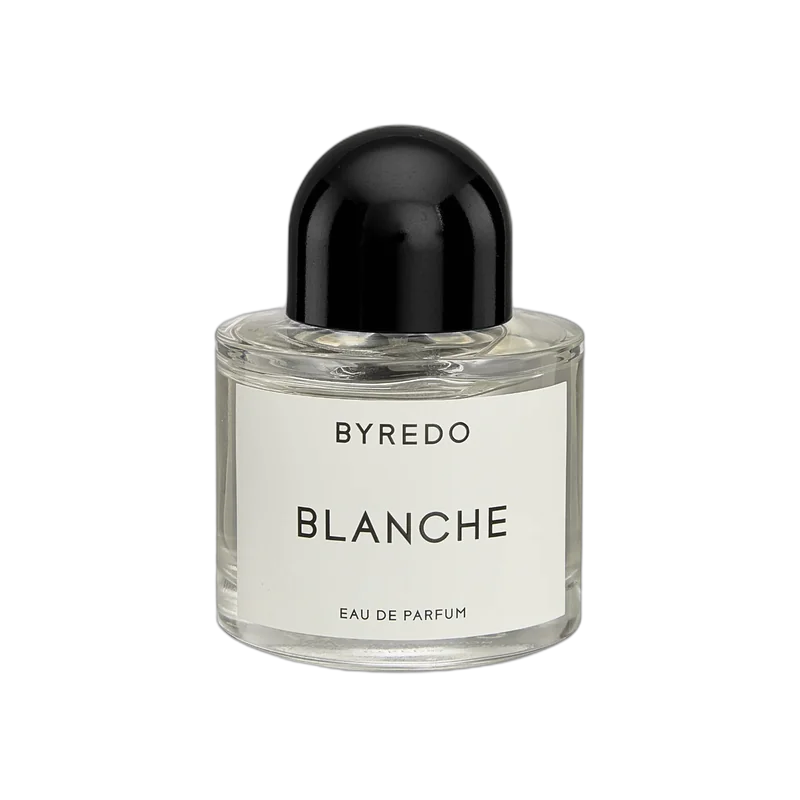
Blanche Eau De Parfum
Blanche is Byredo's 2009 study in reduction: take white musk, add rose and peony, fold in a soft aldehydic soap note, and strip everything else out. It is as close to a single-note white-musk fragrance as a multi-material composition can get, and the restraint is deliberate — the house was working out early on what it meant to do less. The opening is clean, almost laundry-adjacent, with a tiny floral sweetness from the rose that dissolves quickly. The heart is pure soapy white musk and sandalwood, smooth and warm, sitting close to the skin from the first hour. There is no real drydown surprise; it stays where it starts, which is precisely the appeal. It wears as a skin scent with modest projection, better as a personal statement than a room announcement. Longevity is average for the concentration, lasting four to six hours on most skin. In a house that prizes restraint, Blanche is the most literal application of the idea, a fragrance that asks you to forget you are wearing a fragrance. It suits any temperature and any occasion as long as the occasion calls for something quiet. The white flacon and white cap make it the only Byredo bottle that makes the minimalism visible from across a room.
The Sun-Side Picks
Bal d'Afrique and Blanche represent the house's two approaches to brightness, though they arrive at it through very different means.
Bal d'Afrique is the expansive one: neroli and African marigold in a citrus-floral opening, grounded by vetiver and carried forward by a warm amber base. It is the Byredo that travels best into warm weather and reads as the most European in its structure, something between a floral and a woody despite the African brief. It suits people who find the ghost and wanderer pair too interior and too cool. Of the five here it is the most obvious daytime scent, and the one that works hardest in an Australian summer, where its citrus-vetiver spine stays crisp in heat that flattens the softer Byredos. It is also the most conventionally attractive in a crowd, bright and clean without being generic, a safe recommendation for someone buying their first Byredo blind. If Mojave Ghost and Gypsy Water are the connoisseur's entry points, Bal d'Afrique is the one you can hand to almost anyone and expect a compliment.
Blanche takes the opposite approach to brightness: a soapy white musk stripped of almost everything, quiet and clean and warm. It is the house's most literal expression of its minimal philosophy, a fragrance designed to feel like a second skin rather than a worn object. Where Bal d'Afrique announces itself with a citrus pop, Blanche barely announces itself at all. That makes it the most situational scent on this list. It is the one to reach for when you want to smell freshly showered rather than perfumed, the fragrance equivalent of clean cotton, and it excels where anything louder would be an intrusion: a packed lift, a meeting, a hot day when you want to smell of nothing much at all. It is also the least forgiving buy, because there is genuinely not much to it, and a shopper expecting the drama of a proper white floral or a musk bomb will find it thin. Bought with the right expectations, though, it is one of the most wearable things the house makes.
The New Direction
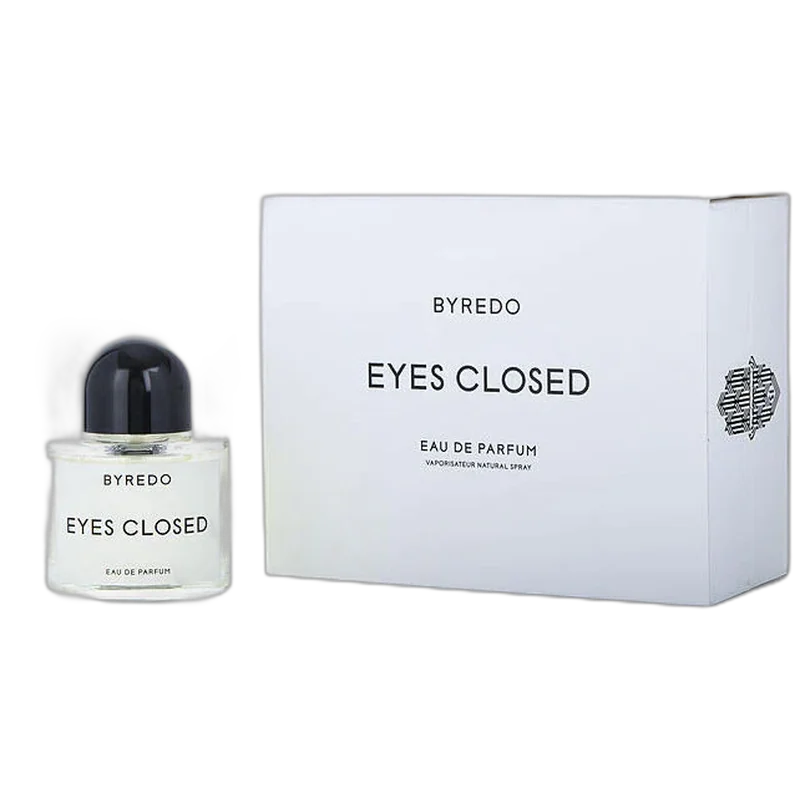
Eyes Closed
Eyes Closed arrived in 2022 and made plain the direction Ben Gorham has been steering Byredo, a turn towards richer, sweeter and more openly commercial work without losing the house's flat-bottle restraint. The brief is hedonism with eyes shut, which in practice means a warm, spiced gourmand with real ambition. The opening leans into cinnamon and black pepper, giving it a spiced preamble before a heart of rose and violet softens the edges. The base is where it declares itself: caramel, tonka and musk push it into proper gourmand territory, thick and warm without quite tipping into dessert. It reads as the house's first real concession to the gourmand crowd, and does it well enough that it does not feel like a compromise. Performance is stronger than the older Byredo pillars, projecting with more intention and lasting into the following morning on fabric. It wears feminine-leaning but unisex in practice, a cold-weather and evening scent that has little use on a summer afternoon. For anyone who finds Mojave Ghost or Blanche too quiet, Eyes Closed is the Byredo to try. It is the loudest thing in the current core line and a clear sign of where the house is headed.
Eyes Closed is the odd one out on this list, and intentionally so. Released in 2022, it is the Byredo that most openly courts the gourmand crowd: cinnamon and pepper up top, caramel and tonka at the base, with rose and violet bridging the gap. It projects harder than the older pillars and lasts longer, which reflects both a formulation choice and a commercial reality — the market Byredo is reaching into with Eyes Closed expects its fragrance to fill a room.
Whether that shift is welcome depends on what drew you to Byredo in the first place. For enthusiasts of the house's earlier work, it reads as a calibrated concession. For new buyers coming from mainstream designer gourmands, it is the most accessible point of entry the house has offered. Either way, it is the scent that marks out where Byredo is going.
How to Choose
The cleanest way to navigate this list is to ask how much you want your fragrance to do for you.
If you want something quiet, skin-adjacent and easy: Mojave Ghost is the pick for woody warmth, Blanche for pure soapy minimalism. Both project modestly and suit any season, though Mojave Ghost rewards cooler months more.
If you want something with a narrative or a clear olfactory arc: Gypsy Water gives you the forest-to-fireside journey, Bal d'Afrique the open citrus-floral warmth. Both tell a more legible story than the skin-scent pair.
If you want something that performs — projects, announces itself, lasts through the evening: Eyes Closed is the only Byredo in the core line that delivers that in any consistent way.
On value, the entire line sits in the same price bracket and the grey-market discount is relatively uniform across it. All five here are well stocked through the retailers we track. Sample the quieter bottles before committing, because a skin scent that wears beautifully on one person can disappear on another. Projection and longevity with Byredo are more personal than with most houses at this price point.
For anyone new to niche fragrance or looking to orient themselves in the category, Byredo is one of the niche houses worth knowing as much for its influence on the design language of the space as for the scents themselves.