
Best Green Fragrances
The Freshest Family Nobody Buys Enough Of
Green is perfumery's most underrated family. Not underappreciated by the people who know it, but chronically underbought relative to how good its best representatives are and how well they wear. The category that gives you galbanum's bitter snap, fresh-cut violet leaf, the cool milky drip of a broken fig stem, the damp rootedness of vetiver in soil — and most shoppers walk past all of it on their way to another amber or wood.
Part of the reason is that green is hard to describe. It is the family that is not citrus and not aquatic, though it is sometimes mistaken for both: shoppers after something fresh and non-sweet reach for citrus fragrances by default, and the light or marine-leaning greens get filed under aquatic fragrances even when the water is barely there. Green is its own thing, sharper and more bitter than most citrus, more botanical and textured than most aquatics, and more varied than either once you get into it.
There is also the problem of associations. Green notes in mass-market perfumery spent a few decades being either invisible filler — the vague lift beneath a floral or a sport fougère — or overdone in ways that dated badly. The synthetic grassy accords of late-nineties masculines and the sharp violet-leaf bombs of early-noughties feminines gave the family a bad reputation it has never quite shaken with the general public. What that reputation obscures is that the best green fragrances are among the most wearable, most intelligent and most year-round useful fragrances made. They tend to read as outdoorsy and assured rather than loud, and they age well on the skin in a way that big ambers and sweet musks do not always manage.
This list covers six fragrances that map the range: one masculine icon, two fig studies at different price points, an earthen vetiver, a garden study from a French house, and a conceptual outlier that asks what green actually is. They are grouped below into the styles they represent.
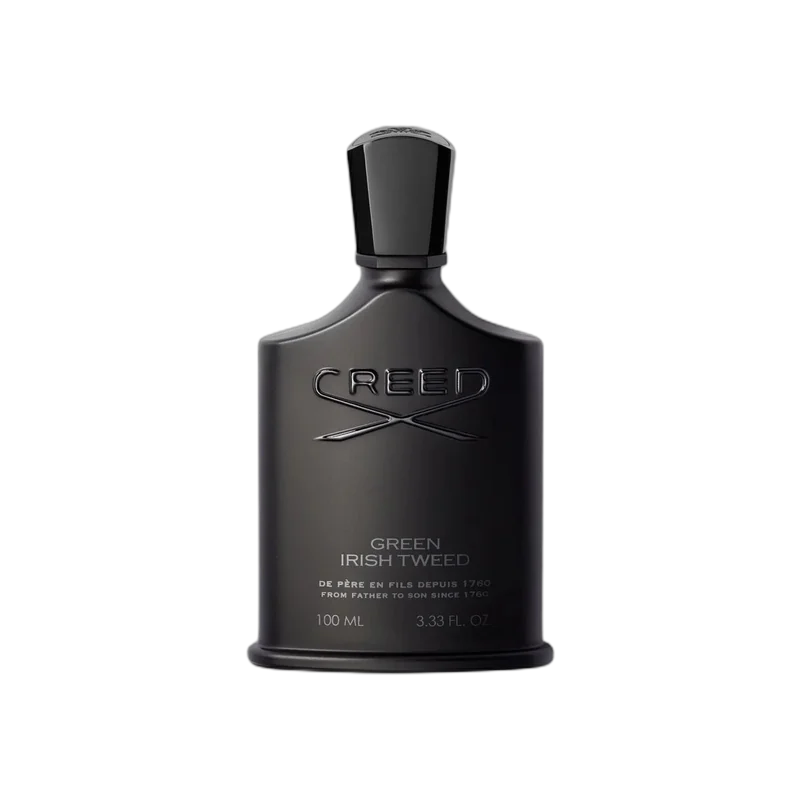
Green Irish Tweed
Creed's 1985 green fougère and the one that set the template every designer house spent the next two decades trying to copy. Green Irish Tweed was built by Pierre Bourdon as a cold-weather masculine with a specifically outdoorsy brief — the feel of damp Irish grassland, not a garden showroom — and it delivers that with unusual precision. Violet leaf and lemon open it cool and a touch bitter, then a green iris-and-ambrette heart develops into the soft, grassy-clean drydown that made it famous. The base is sandalwood and ambergris, warm enough to last but never pulling the scent away from its green register. Performance is notable for how it was made: moderate projection, good longevity, wears closer as it ages on skin. It was reformulated over the years and the current batches are a shade lighter than the vintage, though still among the best green masculines at any price. Bourdon went on to compose Cool Water for Davidoff, which borrowed heavily from this, and the lineage is traceable in every clean-green masculine that followed. For anyone who wants a green fragrance with a genuine pedigree and a specific sense of place, Green Irish Tweed is the obvious starting point.
The Icon That Started It
Creed Green Irish Tweed from 1985 is the reference masculine green, the one that gave the entire clean-grass category its vocabulary. Pierre Bourdon composed it with that violet-leaf-over-ambergris structure that Cool Water later borrowed wholesale, and the original has been gently reformulated over the years without losing what made it worth copying. It is not complicated — it does a very specific thing, cold, damp, Irish-pastoral, and it does it with more precision than almost anything that came after.
Its staying power says something about what it got right. Dozens of designer houses have taken the violet-leaf-and-ambergris formula and run with it, and most of them produce something pleasant enough for everyday wear. Very few manage the specific quality of damp-grassland restraint that distinguishes the original, and none of them have the story behind it. If you come to it expecting complexity, it will disappoint. What it delivers instead is a single green idea executed as well as that idea has ever been executed, which is its own kind of achievement. The live price from the retailers we track sits at the high designer end rather than niche, and it is well stocked with the stores we follow, so the live lowest price is usually well under full retail.
The Figs
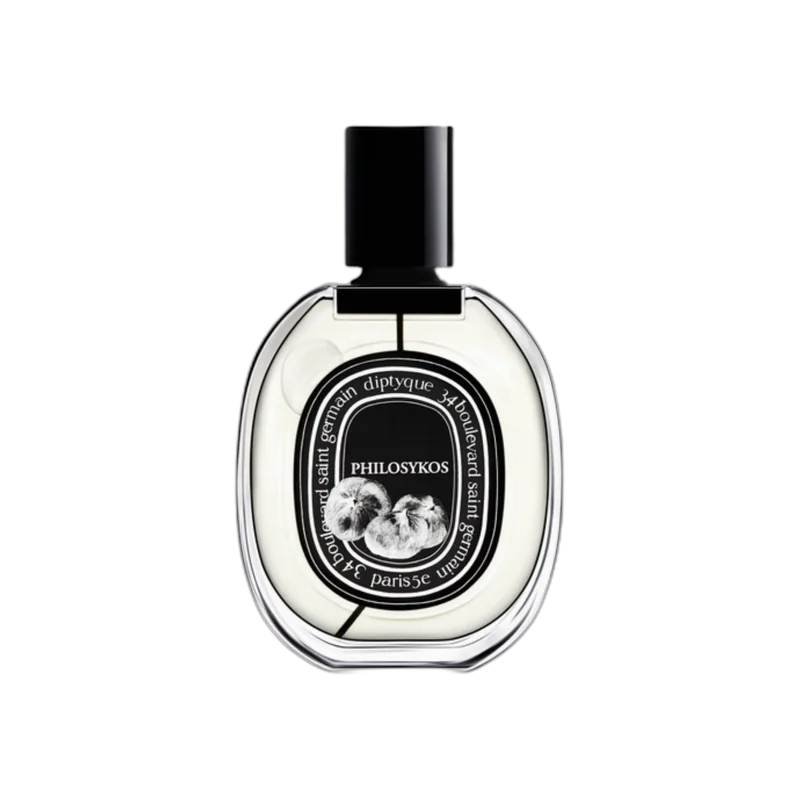
Philosykos Eau De Parfum
The 2012 eau de parfum concentration of Diptyque's cult nineties fig, and the fragrance that made the whole fig-tree accord a genre unto itself. Philosykos was composed by Olivia Giacobetti as a study of the fig in its entirety — not just the sweet fruit but the sap, the leaf, the rough bark, the white milky resin that leaks from a fresh-cut stem. The fig tree on a hot day is what you get: a green, almost bitter fig-leaf opening, then the creamy, slightly coconut-laced flesh of the fruit, then a dry, woody fig-bark base that keeps it from tipping into gourmand or dessert territory. The EDP version is fuller and warmer than the EDT, which is how it most rewards the concept. It wears unisex with no fuss, the bitterness keeping it from reading feminine and the creaminess stopping it going herbal and odd. Performance is modest rather than loud; this is a close-wearing, meditative skin scent that suits summer and office over nights out. It has spawned a wave of fig fragrances since, few of which improve on the original. For the fig done once, properly, Philosykos is still the reference.
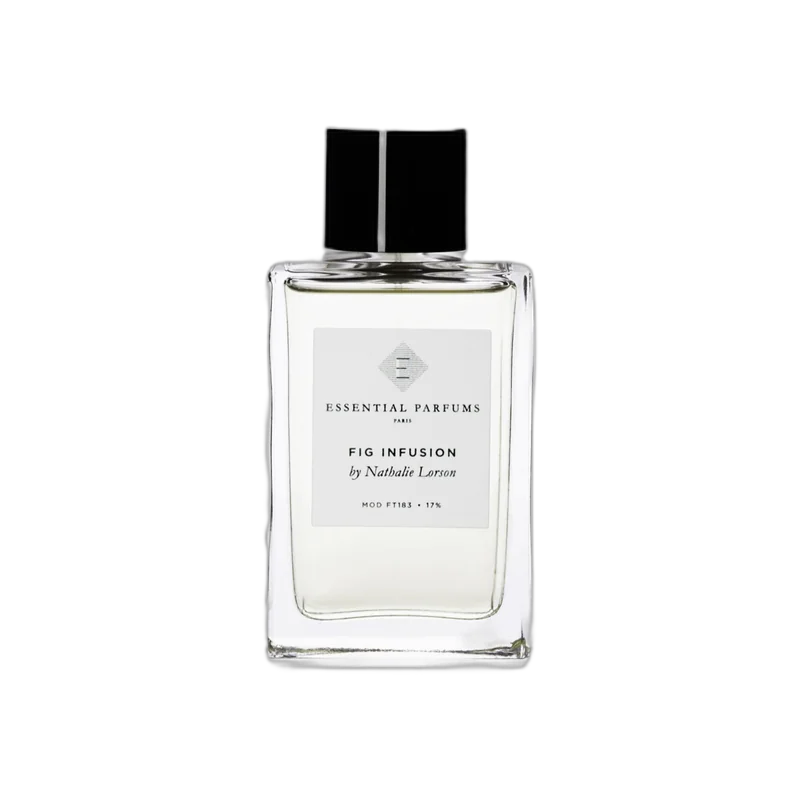
Fig Infusion
Essential Parfums' 2022 fig and the sharpest value proposition in the modern fig genre, composed by Quentin Bisch for the Paris direct-to-consumer house that cuts distributor costs in half. Fig Infusion opens with a burst of green, slightly tart fig leaf — brighter and more piercing than the Diptyque — over a clean cedar base that stays resolutely modern. There is less of the milky creaminess that defines Philosykos, more of the cool, airy quality of a fig branch on a mild day, which makes it the lighter and more versatile of the two. The scent is transparent rather than rich, a linear green-woody fig that works through a full day at the office or in heat that would sink a denser composition. Bisch, who has composed for several niche houses, built it with good materials for the price and the result shows. Performance is moderate, projecting softly for a few hours then wearing as a skin scent, which is appropriate for the style. It wears unisex, is easy to layer, and retails at a price that makes it genuinely accessible. For anyone who wants the fig-leaf angle rather than the milky-fig-flesh angle, and wants it without spending prestige money, Fig Infusion is the current best bet.
The fig is the green family's signature fruit, and it makes for a very different kind of fragrance than the grassy or galbanum greens. The fig tree smells of several things at once — milky sap, rough bark, bitter leaf, sweet flesh — and which one a perfumer foregrounds determines everything. Diptyque's Philosykos goes for the whole tree, that Olivia Giacobetti composition draping the milky sweetness of fig flesh over a dry woody base that stops it from reading as a juice or a gourmand. It is the canonical version, the one every subsequent fig references.
Essential Parfums' Fig Infusion is the modern update. Where Philosykos is warm and milky, Quentin Bisch's 2022 composition is brighter and cooler, leaning into fig leaf over fig flesh. It is more linear and more transparent, better in heat, easier to wear daily, and genuinely affordable. Depending on which angle appeals — creamier and more enveloping, or cleaner and airier — you will prefer one or the other, but both are excellent and they do not really compete. The live prices from our data show Fig Infusion substantially cheaper, which makes it the easier recommendation for a first fig.
Earth and Garden
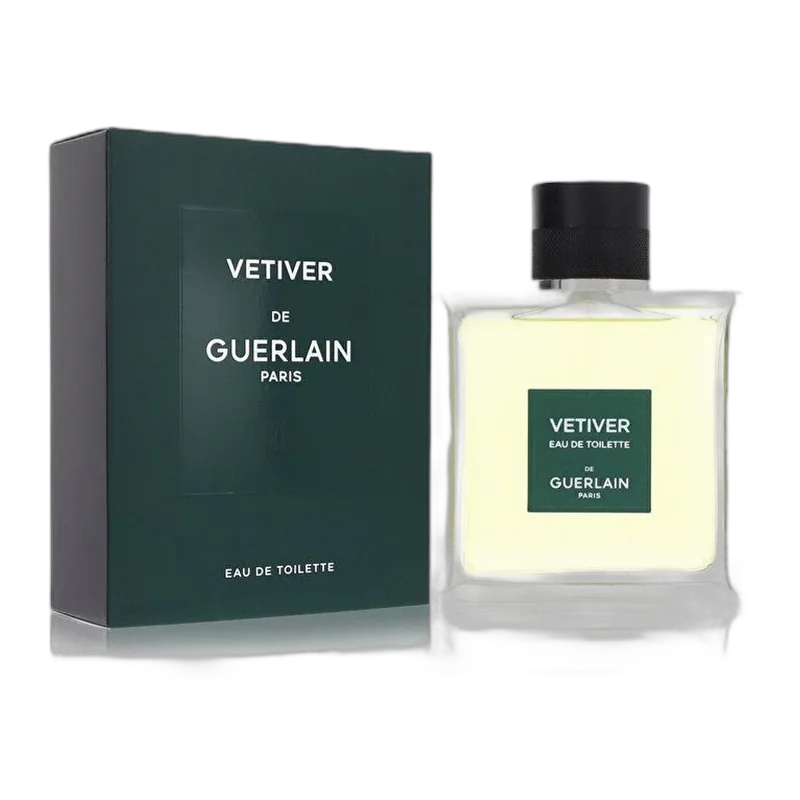
Vetiver Eau De Toilette
Guerlain's 1959 vetiver and the fragrance that codified the aromatic green in masculine perfumery, making it a touchstone for everything that came after. Green Irish Tweed has the lineage, but this is the deeper root, a structured fougère-adjacent that opens with citrus and spice before settling into the dry, earthy, slightly smoky vetiver heart that most later versions have borrowed from. The vetiver here is Haitian and rooty, woody in a way that reads more like turf and soil than wood shavings, with tobacco and florals threading through it to prevent the dryness from going austere. It sits green-adjacent rather than green-forward: the grass is under your feet rather than cut and held in the air. The version tracked here is the current reformulation, which is somewhat lighter than the vintage eau de cologne, though the bones of the composition survive. Performance is restrained, projecting modestly and wearing as a close, precise skin scent over the course of a day. Guerlain still makes Vetiver in-house, which matters — the house DNA is all over it. For green done as earth, as the lived-in outdoors rather than a pastoral ideal, this is the reference.
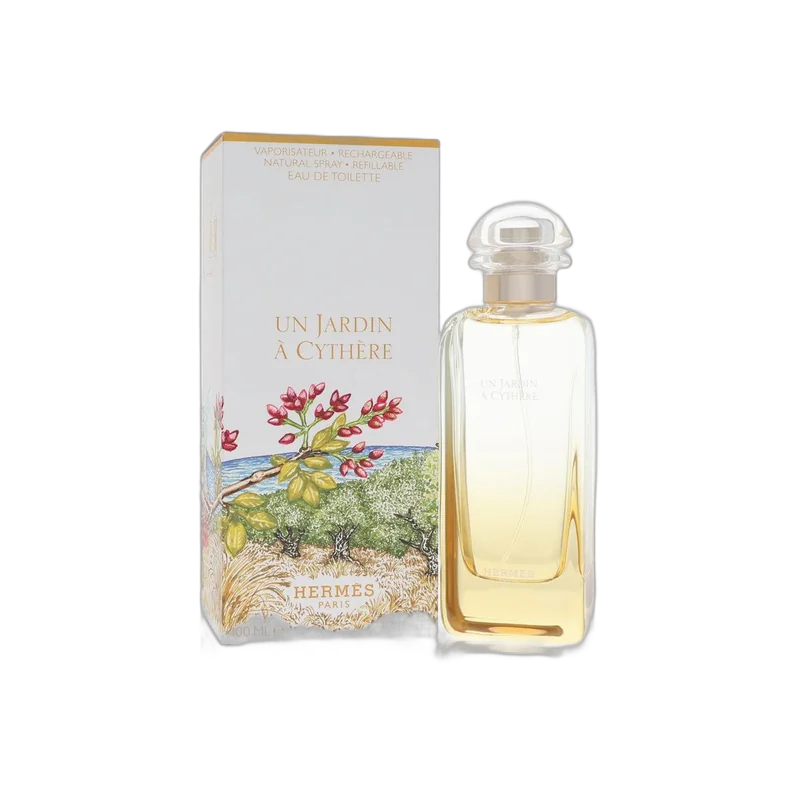
Un Jardin A Cythere Eau De Toilette
Hermès's 2023 garden study and the fifth chapter in the Un Jardin series, composed in-house by Hermès perfumer Christine Nagel. Un Jardin à Cythère is named for the Greek island of Kythira, and the brief was the olive grove: the dusty, mineral smell of olive leaves warming in the sun, the slightly bitter fruit, the dry air coming off the Ionian Sea. The result is austere and Mediterranean in the best sense, a green-grey fragrance built on olive leaf and cistus, with a faintly salted minerality underneath and a warm fig note threading through to give it body. It is not an olive oil scent or a salty aquatic, but something in between, dry and spare and a little resinous, suggesting a specific landscape without trying to render it photographically. Nagel's touch across the Un Jardin series is consistently one of great restraint and this is no exception. It wears unisex, projects gently, and suits warm-weather wear as well as transitional seasons. Hermès puts serious materials into the series and the price reflects that, though it is well within the house's usual designer range. For green done as a garden study rather than a garden fantasy, this is the most considered pick here.
Guerlain Vetiver from 1959 is where green turns earthy rather than grassy. The vetiver here is Haitian, rooty and smoky, the smell of damp turf and turned soil rather than cut lawn, and the overall composition is structured in the way Guerlain's classic masculines are — spice and citrus up top, the real character in the dry-down. It is a green fragrance in the same way a wood is green rather than a field: the colour comes from the ground up. The current reformulation is lighter than vintage batches, though the bones hold.
Hermès Un Jardin à Cythère moves the green further towards a specific landscape, the olive grove on a Greek island, composed by Christine Nagel with an austerity she has consistently brought to the Un Jardin series. Olive leaf, cistus, a mineral salt undercurrent, and a thin thread of fig for body — it is a grey-green rather than a lush one, dry in the Mediterranean sense, spare and purposeful. Where the Guerlain says this is what earth smells like, the Hermès says this is what a particular afternoon in a particular garden smells like. Both are among the most intelligent green fragrances available.
The Experiment
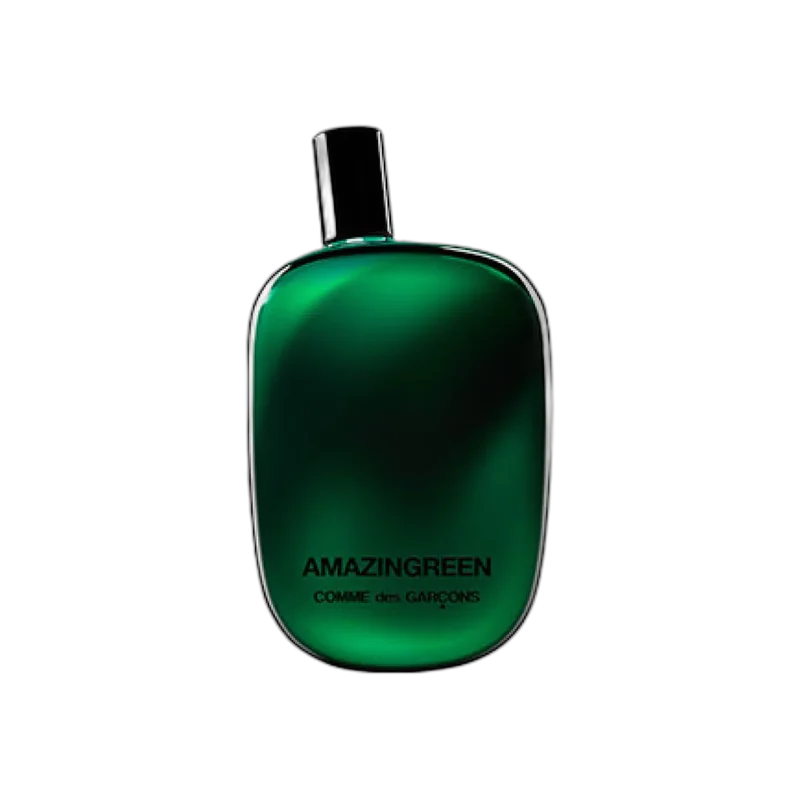
Amazingreen
Comme des Garçons' 2012 conceptual green and the outlier on this list, composed at the label's in-house perfumery as an attempt to capture the colour green itself rather than any green-smelling thing in nature. Amazingreen does not really smell of fig or vetiver or galbanum. It opens with a peculiar, synthetic-clean topnote (cool, mineral, almost electrical) then develops into a green that is hard to name, part violet-leaf abstraction, part crushed stem, part something that has no botanical referent. There is a woody-amber base underneath that grounds the experiment enough to make it wearable, and the whole thing dries down softer than the opening promises. The name plays on the house's deliberately misspelled Comme des Garçons aesthetic, and the scent matches that irreverence: it is intellectually playful in a way the classics above are not. It wears unisex and skews towards fragrance collectors who want something to talk about as much as something to wear. Performance is modest, projecting closely and lasting a few hours. It is not an easy daily driver but it is a genuine experiment, the kind of fragrance that makes you look at a colour differently. If you are curious what green smells like outside of naturals, this is the answer.
Comme des Garçons Amazingreen sits apart from the rest of this list not just stylistically but conceptually. The Guerlain is a green fragrance. Philosykos is a fig fragrance. Amazingreen is an attempt to smell of green the colour, which is a fundamentally different ambition. Whether it works depends partly on what you want from fragrance — if you are after a scent for daily wear that happens to read green, this is not it. If you want the genre pushed to where it becomes strange and interesting, this delivers.
CdG has a long history of these conceptual releases, from the dry paperiness of 2 Man to the musty wool of Odeur 53, and Amazingreen belongs in that lineage rather than in the lineage of the botanical greens above it. The price is modest for what it is, and the retailers we track carry it with reasonable regularity. Think of it as a palate-cleanser after the more traditional picks, and something you would wear when curiosity outranks the desire for broad approval. For collectors and fragrance-curious shoppers who have already worked through the classics, it is worth seeking out. For everyone else, the Creed or Philosykos is the better starting point.
How to Choose
Match the style to the moment. If you want a green that reads smart and outdoorsy in cool weather, Green Irish Tweed is the easy answer. For warm weather, lighter skin-scent greens, Fig Infusion is the most versatile. Philosykos does its best work in the transition seasons — warm enough to bloom but not so hot that the milky quality goes heavy. Both the Guerlain Vetiver and the Hermès Un Jardin suit confident wearers after something quieter and more specific.
On value: Fig Infusion is by far the sharpest buy here, delivering a genuine niche-quality fig composition at a price that undercuts almost every competitor in the category. Green Irish Tweed costs more than Fig Infusion but less than a lot of niche, and the retailers we track stock it heavily enough that the live lowest price is usually well under full retail.
Sample before committing to the Guerlain Vetiver or Hermès Un Jardin — both are restrained and close-wearing, which means they reward you for wearing them but won't shout their quality across a room. The whole family is like that. Green rewards attention more than most.
Compare green fragrance prices across every retailer on Aurexum