
Clone Houses Explained
What a Clone House Actually Is
A clone house is a perfume brand whose entire business model is openly recreating the DNA of famous, expensive fragrances and selling the result under its own name at a fraction of the price. It is legal for one simple reason: a scent formula cannot be copyrighted, so nothing stops a company from studying a popular juice, approximating its accords, bottling the result and marketing it honestly as its own product.
That last part is the whole game, and it is worth slowing down on. These houses are not hiding what they do. They build a scent that gets you most of the way to a hundred-and-fifty-dollar bottle for the price of a takeaway meal, put their own branding on it, and let the resemblance sell itself by word of mouth. The market has decided that is a fair trade, which is why the clone tier has gone from a niche curiosity to one of the fastest-growing corners of the whole hobby.
Clones Versus Fakes: The Line That Matters
The single most important distinction in this space is the one most casual shoppers get wrong. A clone and a counterfeit are not the same thing, and the difference is not about smell at all. It is about the label.
A counterfeit puts someone else's name and packaging on a bottle to trick you into thinking you are buying the real thing. That is fraud, it is illegal, and the juice inside is usually poor and sometimes unsafe. A clone does the opposite. It recreates the scent but wears its own name, its own bottle and its own house branding, and it never pretends to be the original. You know exactly what you are buying. One is a lie about identity; the other is an honest budget alternative that happens to smell familiar.
This matters practically because the two get lumped together constantly, and they should not be. If you are worried about being deceived, the thing to learn is not how to avoid clones but how to spot a fake, because a fake of a designer scent and a legitimately branded clone are opposite problems. Buying a clearly branded clone house on purpose is a choice; getting sold a counterfeit dressed up as the genuine article is a scam.
The Emirati Clone Ecosystem
Most of the clone bottles Australians actually encounter come out of the same corner of the world: the United Arab Emirates, where a cluster of houses has turned this model into a serious industry. Lattafa is the name that broke it into the mainstream, and orbiting the same manufacturing world are operations like Maison Alhambra and Paris Corner, both firmly in the Lattafa-adjacent bracket.
It is worth being careful about what can and cannot be said here. The exact corporate ownership of these houses is murky, and this is not the place to assert who owns whom. What is clear is that they draw on the same Emirati production base, hit the same price points, and pursue the same strategy, which is to take a fragrance the internet is currently obsessed with and get a wearable version of it onto shelves fast. The quality across them is broadly comparable, and the family resemblance in how they smell and how they perform is not a coincidence.
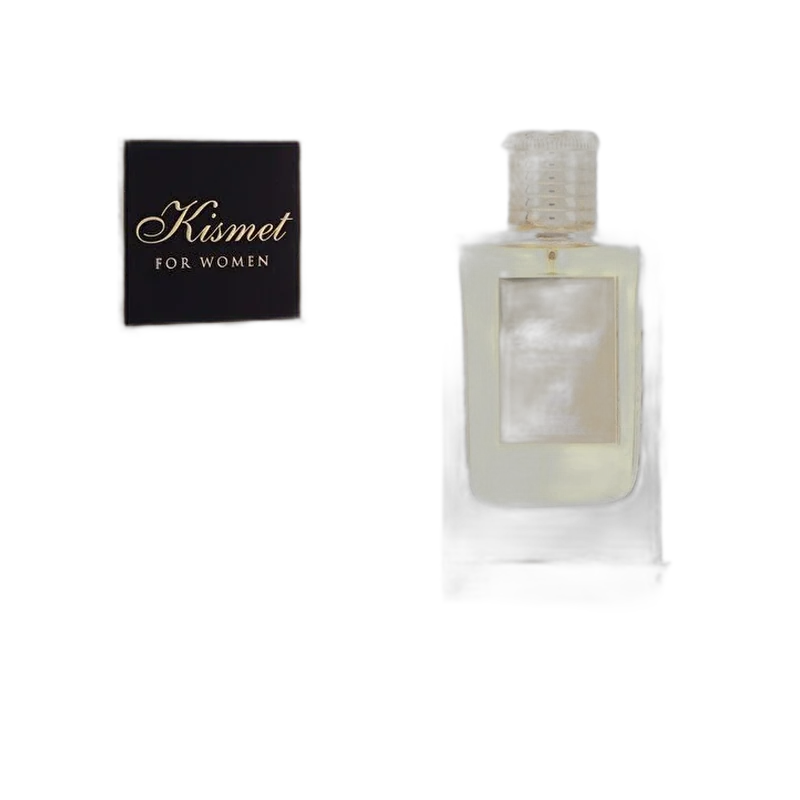
Kismet Man
Maison Alhambra's boozy gourmand and the bottle most people meet the house through, openly built to chase Kilian's Angels' Share at a small fraction of the money. The pitch is dark and edible from the first spray, a cognac-and-cinnamon warmth over praline and tonka that settles into a sweet, faintly smoky vanilla the way the pricier reference does. It is not a one-for-one copy and the house never claims it is, but the opening lands close enough that most noses clock the resemblance immediately. Where the corners show is later, in a drydown that flattens sooner and a sweetness that can turn a touch synthetic after a few hours. Longevity is genuinely strong for the tier, projecting hard early and lingering most of a day on skin and fabric, which is a large part of why it went viral. The plain amber-glass flacon is unremarkable and the branding is the house's own, not a fake of anyone else's, which is exactly what keeps it on the right side of the counterfeit line. As a cold-weather comfort scent for the price of a few coffees, it is a hard one to argue against.
Maison Alhambra is the workhorse of that group, and its boozy gourmand above is the bottle most people meet the house through. It is openly positioned against a well-known Kilian scent, and it is a fair illustration of what the tier does well and where it stops short. Note the framing carefully, though. It is inspired by the original and it gets close in places; it is not the same fragrance, and no honest write-up should present it as an equivalent.
How Clones Get So Close
The reason a good clone can fool a room is that the opening of a fragrance is the easiest part to reverse-engineer. The top notes, the burst you smell in the first ten minutes, rely on a relatively small set of bright, volatile materials that are cheap and widely available. Match those and the initial impression can be startlingly close to the reference.
The materials themselves help. A huge share of the accords in modern designer fragrances are built on the same commercial aroma-chemicals every lab can buy, so a clone house is often working from the same palette as the original perfumer. When a scent's signature is carried by a common synthetic, an ambroxan haze, a sweet ethyl-maltol note, a familiar woody-amber base, the clone can reproduce that signature convincingly because it is using the same building block.
That is also why the most cloned fragrances tend to be the loud, synthetic-forward ones. A composition leaning on a handful of powerful, cheap-to-source materials is far easier to approximate than one built on rare naturals and unusual captives. The blockbusters that hang in every hotel lobby are, almost by definition, the easiest to copy.
Where The Corners Get Cut
Openings close the gap; drydowns are where clones give themselves away. Once the bright top notes burn off, you are left with the base, and the base is where quality and cost actually live. Expensive fragrances use better fixatives, richer naturals and more carefully balanced musks and resins, and that is precisely the part a budget formula trims.
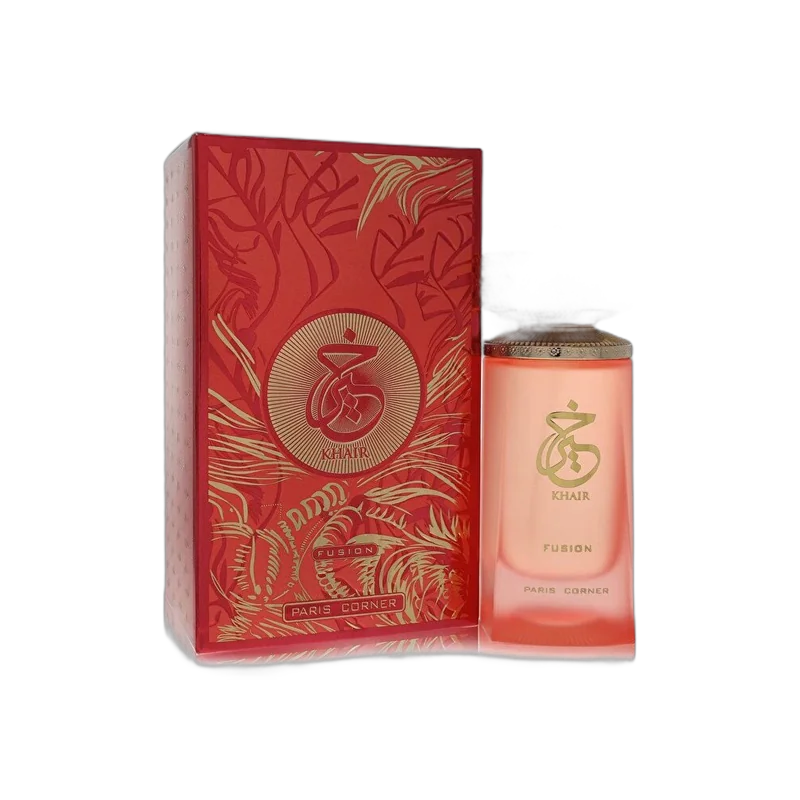
Khair Fusion Eau De Parfum
Paris Corner is the newer face of the Emirati clone world, and Khair Fusion, released in 2024, is the bottle it wants you to judge it by. It sits in the fresh-fruity-sweet lane rather than the dark gourmand one, opening bright and juicy before drying down on a musky, ambery sweetness that reads clean and modern. The house works the same manufacturing world as its Lattafa-adjacent neighbours, and the family resemblance in quality and price is obvious, though Paris Corner tends to aim at the crowd-pleasing daily-driver end rather than the heavy niche recreations. Performance is respectable for what it costs, projecting well for the first stretch and holding on skin for a solid working day without ever demanding attention. The composition is uncomplicated by design, which is the whole point of the tier, a pleasant, inoffensive scent that most people will read as expensive without knowing why. The flacon looks the part on a shelf, undercuts almost everything it smells like, and sits comfortably at the crowd-pleasing end of what the house does.
Paris Corner, the newer house above, shows the same pattern from the fresher end of the spectrum. In practice the compromises show up in three places. The drydown flattens sooner, losing the nuance and movement a pricier scent keeps for hours. Longevity, while often genuinely good for the money, can fall short of the original on the last stretch. And the overall composition is usually simplified, with fewer facets and a slightly more synthetic feel once it settles. None of that makes a clone bad; it makes it a clone. You are paying a tenth of the price and accepting roughly that much less complexity.
The Ethics And Economics, Honestly
From a price-comparison seat, the honest position is that this is genuinely contested, and both sides have a point. The case for clones is straightforward. A scent formula is not protected, the houses brand their work openly, and they make smelling good affordable for people who were never going to spend a hundred and fifty dollars on a bottle anyway. That is a real democratising force, and pretending otherwise is snobbery.
The case against is also real. Original houses spend years and serious money developing a fragrance, and clones ride that investment for free, capturing sales the moment a scent goes viral without carrying any of the creative cost. Enthusiasts who value the craft, the naturals and the perfumer's hand see the tier as a race to the bottom that rewards copying over creation.
Both are true at once. The clone economy would not exist without the originals to copy, and the originals are not owed protection they never legally had. Where you land is a values call, not a factual one, and it is fine to buy across the whole map depending on the bottle and the day.
When A Clone Is The Smart Buy
The practical question is not whether clones are good in the abstract but when one is the right call. A clone is the smart buy when the original leans loud and synthetic, when you want a scent you can over-spray or wear to work without worrying about the cost, or when you are testing whether you even like a style before committing prestige money to it. For a lot of trend-driven blockbusters, the clone genuinely gets you ninety per cent of the way there.
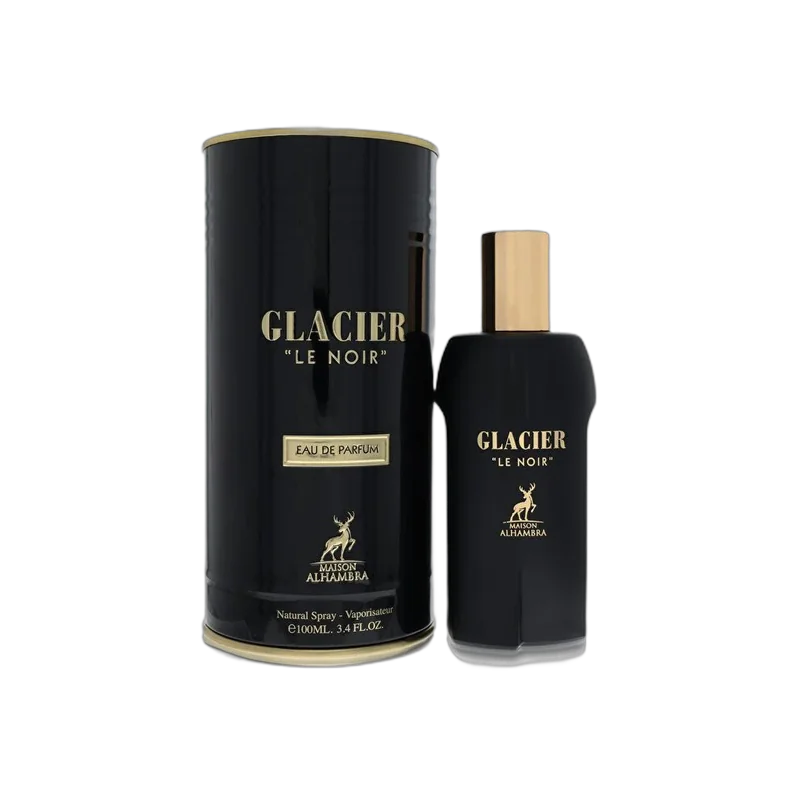
Le Noir
For the dark-oriental end of the catalogue, Maison Alhambra's Le Noir is the house's value take on that smoky, resinous, slightly gothic register a lot of pricier designer and niche scents live in. It leans woody and ambered from the start, with a spiced, incense-tinged heart that turns warm and a little animalic as it settles, the kind of composition built for cold nights rather than a summer desk. The materials are less nuanced than the references it nods toward, and the base can read a shade flat once the opening burns off, which is the trade you accept at this price. Even so it projects confidently for the first few hours and lasts a respectable stretch on skin, output most people expect to pay far more for. It wears masculine-leaning but sits close enough to unisex that it rarely feels boxed in. The bottle is dark glass and understated, matching the mood, and like everything from the house it carries its own name rather than mimicking anyone else's label. Next to the boozy Kismet Man it is the moodier, drier sibling in the same range, and the one to reach for after dark.
The original earns its premium in the opposite cases. When a fragrance is built on rare naturals, unusual materials or a genuinely original idea, the clone tends to fall furthest short, because those are the parts that cannot be reproduced on the cheap. Maison Alhambra's darker bottle above is a good example of the trade-off in miniature: excellent value for a moody after-dark scent, clearly a shade less nuanced than the references it nods toward. The rule of thumb is simple. Clone the crowd-pleasers, and pay up for the ones whose whole appeal is that they smell like nothing else.
Two houses do not make a whole tier, of course. Names like Armaf built their reputation on this same model years before the current wave, and the clone shelf is far deeper than what any one retailer stocks. The point is the pattern, not the specific bottle.
The Short Answer
Clone houses recreate famous fragrances under their own honest branding, which is legal because a formula is not copyrightable, and the good ones nail the opening while cutting corners in the drydown. They are not fakes, and they are not equivalents to the originals; they are a legitimate budget lane with real trade-offs. If a clone is scratching an itch a two-hundred-dollar bottle would, buy it without guilt. If you find yourself chasing dupes of one specific scent rather than the model as a whole, our roundup of the best fragrance dupes goes scent by scent, and if you are simply after the original for less, the reason fragrance is cheaper online is worth understanding too.
Compare clone fragrance prices across every retailer on Aurexum