
Why Is Fragrance So Much Cheaper Online?
The Short Answer, Then the Long One
Online fragrance is cheaper mostly because of parallel importing, the grey market: genuine stock bought in a lower-priced country and resold outside the brand's official distribution, sold alongside lower overheads and much fiercer margin competition than a department store faces. The juice in the bottle is the same. What you are usually buying online is the identical product a counter sells, moved through a different supply chain that skips the retail markup the brand relies on to protect its recommended price.
That one sentence answers the question, but it raises three better ones. Why is the counter price so high to begin with? What actually is a parallel import, and is buying one legal or safe? And where do the real risks sit, because they are not zero. This piece works through all three, and the five bottles pinned above are here as illustrations rather than recommendations, because each one shows a slightly different face of the same discount economy.
How A Recommended Retail Price Gets Set
The number on the counter tag is not the cost of making the perfume plus a fair margin. It is a strategic figure the brand sets and then works hard to defend. A prestige fragrance carries the cost of the juice, yes, but also the flacon, the campaign, the celebrity face, the department-store real estate, the trained staff and the brand's own margin, all stacked into one recommended retail price. In many markets that price is essentially uniform across official stockists, because the brand wants its scent to feel consistent and premium wherever you meet it. Deep discounting at the counter would cheapen the image the marketing spend is buying, so official channels rarely move far off recommended retail.
Two other things inflate the shelf price. The first is that a department store carries enormous fixed costs, floor space, staff, fit-out, and those costs are baked into every bottle it sells. The second is currency and market positioning: brands price the same fragrance differently country to country, sometimes dramatically, based on what each market will bear. A bottle can carry a much lower recommended price in one region than another for reasons that have nothing to do with the product and everything to do with local strategy. Hold those two facts, uniform official pricing and big regional gaps, because together they are the engine of the entire grey market.
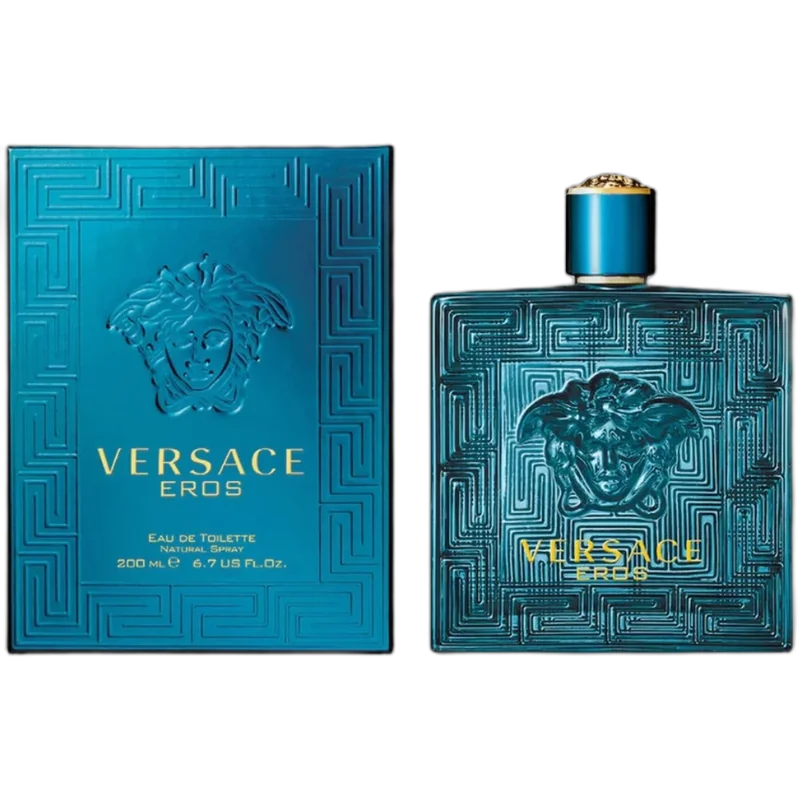
Eros Eau De Toilette
Versace's 2012 flagship men's scent and the bottle people point at when they argue about counter prices. Aurélien Guichard built it at Givaudan around a sharp mint and green apple open that folds into a warm tonka bean, vanilla and cedar base, with ambroxan and geranium giving it that glassy sheen younger buyers went for. It reads as a sweet fresh fougère more than a true aquatic, loud in the first hour and settling into a skin-close warmth that still throws in the heat. Made under EuroItalia's long-running licence rather than in-house, Eros became one of the best-selling designer masculines of the decade, which is exactly why it turns up so often in the grey market. The Medusa-headed teal flacon is instantly readable across a room. Performance is genuinely strong for the tier, projecting hard for hours and lasting most of a working day. It has spawned a full family since, the Flame and the various parfum and EDP versions among them, but the original EDT is the reference. Watch the gap here: the counter number and the live lowest we track rarely sit anywhere near each other, which is the whole point of this article.
Versace Eros is the cleanest demonstration of the counter-versus-online gap, which is why it leads. It sells in huge volume, it is priced very differently across markets, and it is stocked almost everywhere, so it flows through more supply chains than a niche release ever could. The recommended price at a fragrance counter and the live lowest we track for the exact same EDT tend to sit a long way apart. Nothing about the bottle changes across that gap. The Medusa flacon, the batch of juice, the formula are identical. What changes is how many hands and how much markup sit between the factory and you.
So What Is A Parallel Import, Exactly?
A parallel import is genuine, brand-made stock that reaches you outside the brand's chosen distribution network. A wholesaler or retailer buys authentic bottles legitimately in a market where the brand prices them lower, then sells them into a market where the official price is higher, undercutting the local counter while still making a margin. Nothing is faked. The bottles came off the same production line as the ones on the department-store shelf. They simply travelled a route the brand did not plan and does not profit from a second time.
In Australia this is legal. Parallel importing of genuine trademarked goods is permitted here, which is why price-comparison shopping for fragrance is above board rather than a loophole. The brand would prefer you paid full recommended retail at an official stockist, because that protects its pricing and its image, but it cannot stop a legitimately purchased genuine bottle being resold. That legal reality is the foundation the whole discount market stands on, and it is worth understanding before anyone talks you out of an online price on vague grounds.
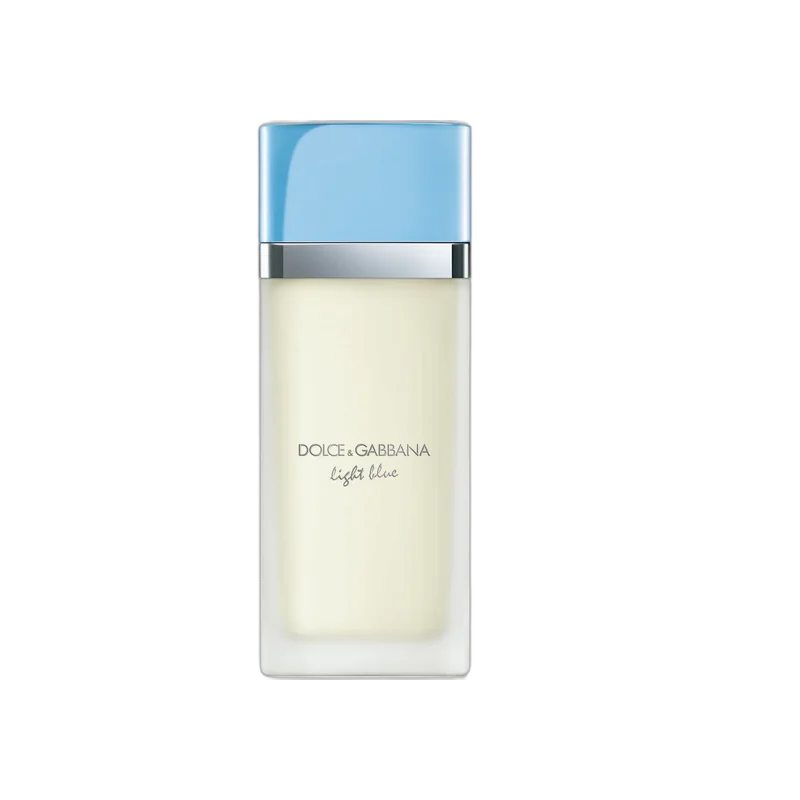
Light Blue Eau De Toilette
Dolce & Gabbana's 2001 citrus staple and one of the most parallel-imported bottles on the market, which makes it a clean worked example. Olivier Cresp composed it at Firmenich, and it opens on Sicilian lemon, Granny Smith apple and bellflower over a cedar, amber and musk base that keeps it soft rather than sharp. It is a fresh, faintly fruity daily scent built for warm weather, more approachable than bracing, and it wears close after the bright open burns off. Light Blue sold in enormous volume across two decades, and that ubiquity is precisely what feeds the discount economy around it, since high-volume classics move through more markets and turn up more often outside official channels. Performance is moderate by design, a few hours of real presence then a quiet musk that lingers, so most people overspray it. The frosted pale-blue bottle is as recognisable as the juice. It anchors a sprawling line of flankers now, the Intense and the various Eau Intense and Summer editions, but the plain EDT is the one that built the franchise. If you want proof that genuine stock trades well under counter, this is it.
Dolce & Gabbana Light Blue is one of the most parallel-imported bottles going, and it shows why volume and grey-market activity travel together. A fragrance that sells in the millions, in every market, at regionally different prices, is exactly the kind of product that moves in bulk through unofficial channels. The more markets a bottle sells in, the more price gaps exist to arbitrage, and the more genuine stock ends up trading well under counter. High-volume classics are the grey market's bread and butter for precisely this reason, and Light Blue has been one of the most durable classics on the counter for over two decades.
What Changes, And What Never Does
Start with what never changes, because it is the important part: the fragrance itself. A parallel-imported bottle contains the same formula, made by the same manufacturer, as the one at the counter. If the batch codes check out and the bottle is genuine, the juice is genuine. The scent, the concentration, the performance are identical to the official-channel version. This is the single most misunderstood point in the whole conversation. Cheaper does not mean weaker, watered, or a lesser formulation. It means the same product sold with less markup.
A few things can differ around the edges. The manufacturer's warranty or any brand guarantee tied to an authorised stockist may not apply to a grey-market bottle, which matters more for a faulty atomiser than for the scent. Packaging can vary slightly by region, and cellophane, inserts or a barcode may look a touch different to the local version. And because grey-market stock sometimes sits in a warehouse longer, you can occasionally receive an older batch, which is only a real concern for fresh citrus scents that fade with age rather than for most compositions. If any of that worries you, a quick read of whether perfume actually degrades will settle it, and our guide on does perfume expire covers batch age and storage in detail.

Le Male Eau De Toilette
Jean Paul Gaultier's 1995 fougère, the sailor-torso bottle, and one of the best-selling men's fragrances ever made. Francis Kurkdjian composed it early in his career around a trick that felt radical then, a barbershop mint and lavender open laid over a sweet vanilla, tonka and coumarin base, with soft cardamom and cinnamon in the heart. The effect is clean and warm at once, a shave-soap freshness sitting on gourmand comfort, which is why it wears so broadly and reads instantly familiar. It has been reformulated over the years and the current EDT is lighter than vintage batches, a point enthusiasts still argue, but the shape is intact. Performance is dependable, projecting well for the first hours then hugging the skin most of a day. The ribbed torso flacon and the tin can it ships in are as much the brand as the scent. Because Le Male has sold in such volume for three decades, it moves through markets at wildly different prices, which is why the counter figure and the live lowest we track can look like two different products. For a household-name masculine that discounting keeps genuinely affordable, it is the textbook case.
Jean Paul Gaultier Le Male is a useful case here because reformulation, not the grey market, is what changes it over time. The current EDT is lighter than the vintage of twenty years ago, a shift the brand made across official and unofficial stock alike. That is a formula change every buyer gets, counter or online, and it has nothing to do with parallel importing. It is worth separating the two ideas cleanly: reformulation is the brand altering the juice for everyone, while parallel importing is the same current juice reaching you by a cheaper route. Le Male has sold in such volume for three decades that its counter price and its live lowest can look like two different products, all while the bottle in your hand is exactly the current formula an official stockist would hand you.
Where The Real Risk Actually Sits
None of this means every cheap listing is safe, and pretending otherwise would be dishonest. The genuine risk is counterfeiting, and it lives almost entirely on open marketplaces where anyone can list a product against a real brand's name. A tiny fraction of the discount world is fakes, refills or decants passed off as sealed retail, and the further you get from a reputable seller the higher that tail climbs. This is a real problem, but it is a marketplace-hygiene problem, not an indictment of legitimate discounting. Parallel imports are genuine; counterfeits are fraud. The two get lumped together by people arguing for full retail, and they should not be.
Mitigating the counterfeit tail is straightforward once you know the levers. Buy from established sellers with a track record rather than anonymous marketplace listings. Check the batch code printed on the box and bottle against a batch-code lookup to confirm it is a real production run and to date it. Be wary of a price that is not just low but implausibly low, well under even the aggressive grey-market floor, because a fake is the usual explanation for that. And know what you are buying: an EDT and an EDP of the same name are different products at different prices, and confusing them can make a fair listing look like a scam or a scam look like a bargain, which is one more reason our EDT vs EDP explained piece is worth a glance before you commit.
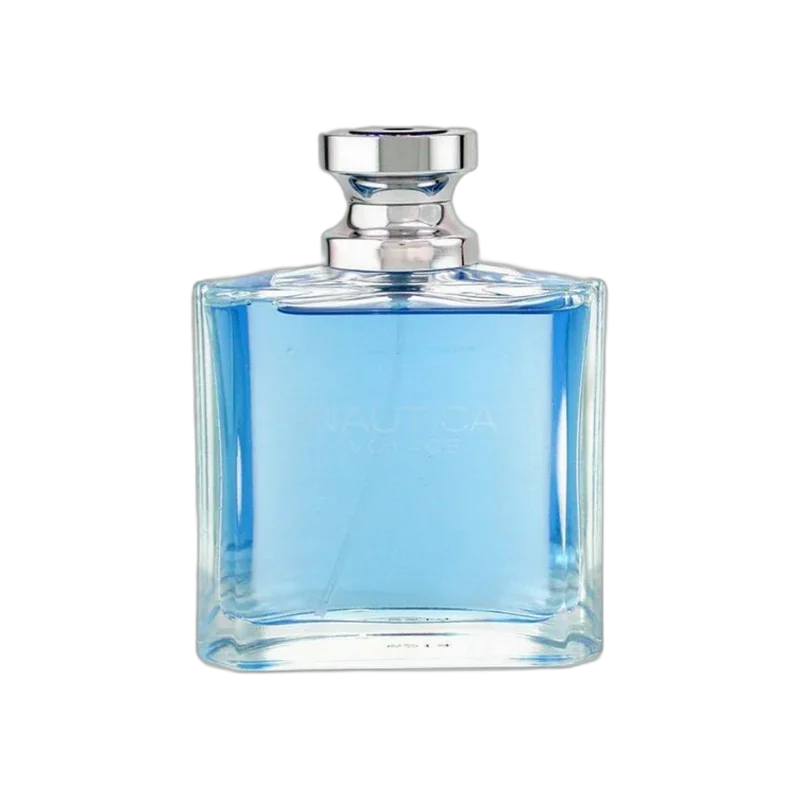
Voyage Eau De Toilette
Nautica's 2006 aquatic and the extreme-value entry on this list, the bottle people buy to prove that cheap does not mean fake. It opens on crisp green apple and water lotus over a base of cedar, sandalwood, amber and musk, a clean marine-fresh profile squarely in the vein of the pricier designer aquatics it quietly borrows from. Made under licence rather than by a fragrance house in its own right, Voyage was built to sit at a supermarket price and still smell like a proper daily fresh scent, which it does. Performance is the honest catch, moderate projection and a few hours of real life before it goes skin-close, so it suits reapplication and warm-weather wear more than a long day out. None of that changes what it is, a genuine, pleasant blue fragrance that costs a fraction of its inspirations. It is one of the most recommended budget blind buys in the hobby for exactly that reason. When people ask whether a low online price means the juice is compromised, Voyage is the answer, because it was designed cheap and the discount only takes it lower still.
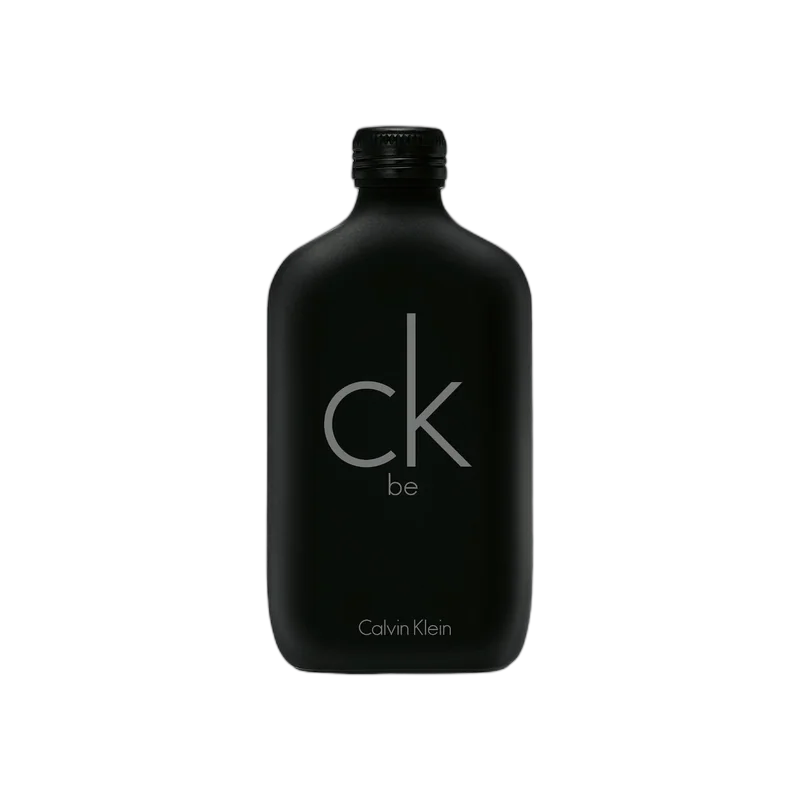
Ck Be
Calvin Klein's 1996 unisex sheer and a survivor of the CK One era, the black-bottle sibling that discounting kept alive long after its moment passed. CK Be is a soft, androgynous musk built on magnolia, juniper berry and bergamot over a base of musk, opoponax, sandalwood and vanilla, cleaner and cooler than the citrusy CK One it followed. It was pitched as a genderless everyday scent for the late nineties, and it still wears that way, quiet, skin-close and unfussy, more a comfortable second skin than a statement. Performance is deliberately restrained, a light projection and a few hours of presence before it settles into a musky hum, which is part of why it reads so casual. Long out of the spotlight, it endures because it is cheap, easy and genuinely wearable, a bottle that stays in rotation precisely because the price never climbed. The slim frosted-black flacon is a snapshot of nineties minimalism. As a lesson in how the discount market keeps older pillars in circulation rather than letting them die, CK Be is a tidy example.
The last two pins close the argument from opposite ends. Nautica Voyage was designed to be cheap and still smell like a proper aquatic, so its low online price is the point rather than a red flag, and it is the answer to anyone who assumes a small number means a compromised bottle. Calvin Klein CK Be shows the other side: a nineties pillar that endures precisely because discounting kept it in circulation long after its cultural moment, a bottle that stays wearable because its price never climbed. One proves cheap can be genuine by design, the other proves the discount market keeps good older scents alive. Between them they cover the reassuring end of the story, the same end most of the market actually lives at.
Why A Price-Comparison Layer Exists At All
Put it together and the reason a site like this exists becomes obvious. Official prices are held high and roughly uniform by brand strategy, genuine stock leaks legally into cheaper channels through regional price gaps, and the same bottle ends up selling at a spread of prices with no easy way to see them side by side. A comparison layer just gathers those live numbers, the lowest and the average across the sellers we track, so you can tell a real bargain from an outlier and a genuine grey-market price from something too cheap to trust. The juice does not change from listing to listing. Only the number does, and seeing every number at once is how you buy the same bottle for less without wandering into the counterfeit tail.