
How to Build a Fragrance Collection
Roles Before Bottles
A good fragrance collection is built on roles and gaps, not impulse. Cover your seasons and occasions first, then collect by what genuinely moves you — a house, a note, an era. That order matters more than any single bottle, and it is the difference between a shelf that does its job and a drawer full of blind buys you never reach for.
This post is about the phase that comes after the basics. If you are still assembling your first handful of scents, the five-fragrance capsule wardrobe is the starter version, and you should read that first. What follows here is the collector's version: fragrance as a hobby rather than a grooming utility, where the goal shifts from "smell good every day" to "own a considered set that teaches you something and covers every situation you actually live in."
The skeleton is a set of roles. Think of it as jobs your collection needs filled before it needs anything clever. A daily driver you can reach for without thinking. An office-safe scent that projects gently and offends no one. An evening or date option with more weight and warmth. A hot-weather fragrance that stays fresh when everything else feels heavy. A cold-weather scent built for resin, spice and sweetness. And a statement piece for the occasions that ask for one. Six roles, roughly, though your life might collapse two of them into one or split another in half.
Fill the roles before you chase the interesting bottles. A collection with three gourmand vanillas and no summer fresh has a hole in it, however good those vanillas are. Once the roles are covered, everything you add is a genuine want rather than a gap, and that is a much healthier place to buy from.
The Versatile Workhorse
The most valuable slot in any collection is the do-everything anchor, and it is worth spending real thought on. This is the scent that covers three or four roles at once, the one you wear when you cannot be bothered deciding, the safe default that never lets you down. A good workhorse buys you freedom everywhere else, because once it exists you can let the rest of the collection get weird and specific.
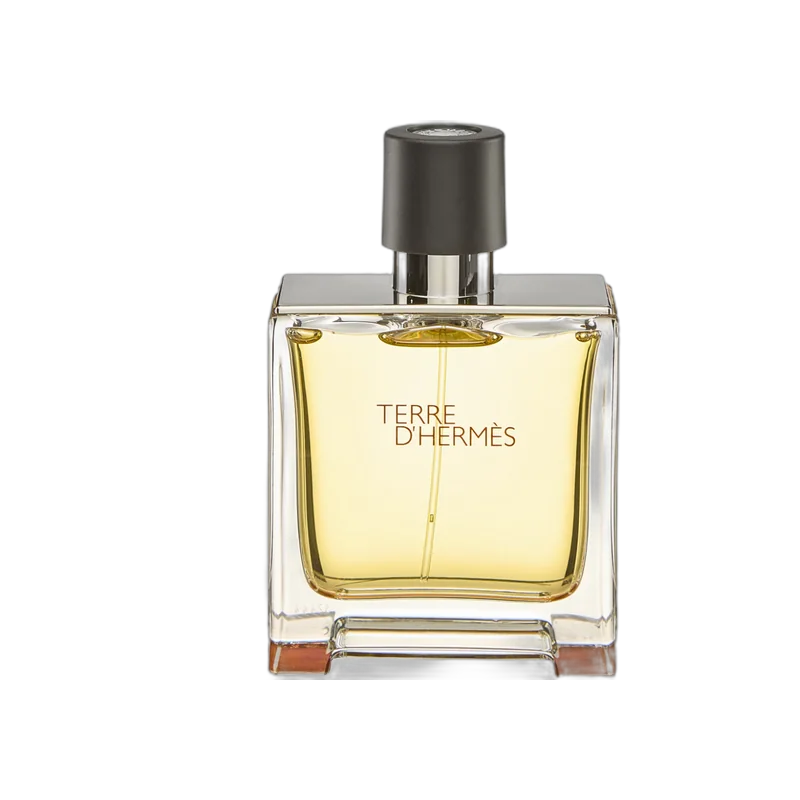
Terre Dhermesparfum Parfum
The single most useful bottle a collection can be anchored on, and the case study in what a do-everything workhorse actually looks like. Terre d'Hermès Parfum is the 2009 concentrated reworking of the 2006 original — a fragrance built around the idea of earth and orange peel cut through with flint and vetiver, dry and abstract in a way that still feels considered rather than clinical. The Parfum strength keeps the bitter-orange top and the grapefruit sparkle but pushes the base harder, so the vetiver, cedar and that faintly petrol-like mineral accord read deeper and warmer than the eau de toilette. It wears masculine but sits close to unisex, and it does the rare thing of working in almost any setting you point it at, from a desk to a cold evening. Performance is where the concentration earns its keep, projecting cleanly for hours and lasting most of a day without ever turning loud. The heavy orange-capped flacon has barely changed in a decade and a half, which tells you how settled the formula is. It is heavily stocked here, so the live price usually lands well under Hermès counter money, and it remains the reference dry-woody every enthusiast eventually owns.
Terre d'Hermès Parfum is the archetype of this slot. It is dry, mineral and woody, reads close to unisex, and works from a desk to a cold night to a warm afternoon without changing character much. Own something like it and you have covered your daily, office and much of your evening roles in one bottle, which frees up your budget for the collecting proper. Not everyone's anchor will be a dry woody, of course. Some people build around a soft amber, others around a fresh citrus. The point is the function, not the specific scent: pick the versatile piece first, then collect around it.
One in Each Family as Education
Once the roles are covered, the best next move is not more of what you already own. It is one representative bottle from each fragrance family you do not yet understand. A chypre. A fougère. A leather. An oriental amber. A green. A proper aldehyde. You are not trying to like all of them. You are trying to learn what the words actually mean on your own skin, so that every future purchase is an informed one.
This is where a collection stops being a wardrobe and starts being an education. When you own a reference example of each genre, you can smell a new release and place it instantly, and you stop being sold to by marketing copy that leans on family names you cannot picture. The reference bottle does not have to be expensive or famous. It has to be characteristic, a clean example of the style with nothing muddying it.

Ambre Sultan Eau De Parfum
Serge Lutens's 1993 amber landmark, composed by Christopher Sheldrake, and the piece that teaches you what oriental amber actually means. Ambre Sultan is not the soft vanilla-amber most people picture. Sheldrake built it around labdanum and benzoin, then wrapped the resin in bay leaf, oregano and a savoury herbal streak that keeps the sweetness in check and gives the whole thing a strange, almost medicinal edge on the open. Underneath sits a thick honeyed amber with myrrh and a little animalic warmth, the sort of base that rewards cold weather and close range rather than a summer afternoon. It wears unisex in practice despite the Lutens framing, and it projects moderately before settling into a long, resinous skin scent that lasts most of a day. This is the one collectors reach for when they want to understand a genre rather than just wear a crowd-pleaser, a benchmark that makes every other amber legible by comparison. Bottled in the plain export flacon, it undercuts a lot of the niche it inspired. A collection that includes it knows what oriental amber means at its resinous, herbal extreme — and that knowledge changes how you hear every amber brief that comes after.
Ambre Sultan is exactly this kind of teaching piece. It is not the soft vanilla-amber most beginners expect, and that is the point: it shows you what oriental amber means at its resinous, herbal, savoury extreme, and once you have worn it, every other amber on the market becomes legible by comparison. That is what a family-education bottle should do. It reframes a whole genre in a single wearing, and it is worth more to a growing collection than another safe crowd-pleaser.
Depth Versus Breadth
Every collector eventually hits the same fork. Do you go wide, sampling one of everything across houses and genres, or deep, learning a single house or note inside out? Both are valid, and most good collections are a bit of each, but it helps to know which way you naturally lean.
Breadth is the education strategy taken to its logical end. You end up with a broad map of the fragrance world and the ability to talk about almost anything, at the cost of never quite knowing any one corner intimately. Depth is the connoisseur's route. You pick a house you love, or a single note, and you follow it through its whole range, its flankers, its vintage batches and its reformulations, until you can tell a 2015 batch from a 2020 one by smell alone. Depth is where the real hobby lives, but it is also where the money goes fast, so choose your obsession carefully.
There is no wrong answer, only self-knowledge. If you find yourself bored the moment you understand something, go wide. If you find yourself wanting to know everything about the one thing that grabbed you, go deep and stop apologising for owning six versions of the same idea.
Budgeting Honestly
This is the part most collecting guides skip, and it is the part that decides whether your hobby stays fun. The single most useful rule: sample before you buy, every time, without exception. A decant of a few millilitres costs a fraction of a full bottle and tells you everything a blind buy cannot — how it wears on your skin, how it lasts, whether you actually reach for it. Our guide to how to sample fragrances covers the mechanics, but the principle is simple: decants before bottles, always.
Grey-market timing is the collector's other lever. The same fragrance swings a lot in price depending on where and when you buy, and the live lowest and average prices from our data exist precisely so you can time a purchase rather than pay counter money on a whim. A scent you have already sampled and know you want is one you can wait on until the price is right.
The trap to avoid is the FOMO drop. Limited editions, viral releases and hyped flankers are engineered to make you buy now and think later, and they are almost never worth the panic. A fragrance you buy because you are afraid it will sell out is a fragrance you bought for the wrong reason. If it is genuinely good, a sample will tell you, and if it disappears before you decide, another excellent thing will always come along. Collections built on fear are the ones that fill up with bottles at ten percent used.
Rotation and Storage as Insurance
A collection is only as good as its condition, and fragrance degrades. Heat, light and air are the enemies, and a shelf on a sunny windowsill will quietly cook your most expensive bottles into something flat and off. Treating storage seriously is not fussiness, it is protecting the money you have already spent — the how to store fragrance guide has the full method, but cool, dark and upright covers most of it.
Rotation is the other half of collection insurance. A bottle you never wear is not being saved, it is being wasted, because the juice ages whether it sees skin or not. Keep a loose rotation going so everything gets worn across a year, and you will both enjoy the collection more and notice sooner when a favourite is running low or turning. A collection is meant to be used, not embalmed.
When to Stop
The healthiest collectors have a rule for shrinking, not just growing. The simplest is wear-it-or-sell-it: if a bottle has gone a full year untouched, it is not part of your collection, it is clutter with a nice cap. Decant a keepsake amount, move it on, and let someone else enjoy it. This keeps the shelf honest and funds the next genuine want.
Knowing when to stop buying is harder than knowing when to start, because the hobby rewards acquisition and rarely rewards restraint. But a collection with a role for every occasion, a reference for every family you care about, and depth in the one or two things you truly love is complete. Everything past that is either a considered upgrade or a blind buy dressed up as one. Build the skeleton, learn the families, go deep where it moves you, and stop when the gaps are filled.