
Alien vs Angel — Which Mugler to Buy
The Short Version
These are the two monuments Thierry Mugler's house is built on, and shoppers pit them against each other constantly because they carry the same badge, the same reputation for volume, and the same love-or-hate charge. The honest answer is that neither is better. They are different animals aimed at different tempers.
Angel, from 1992, is the patchouli-praline gourmand that invented a genre. It is sweet, earthy, chocolatey and enormous, the loudest and most polarising of the pair, a cold-weather statement scent that announces itself before you arrive. Alien, from 2005, is the solar jasmine amber, still divisive but far more wearable, a radiant signature scent that works across more seasons and more occasions without demanding the room's full attention.
So the split is temperament and use, not quality. If you want gourmand drama and you dress your scent for winter nights, buy Angel. If you want a warm, radiant signature you can wear most days, buy Alien. Both are performance beasts, and both punish a heavy hand, so whichever you land on, spray less than you think. Everything below is the detail behind that divide.
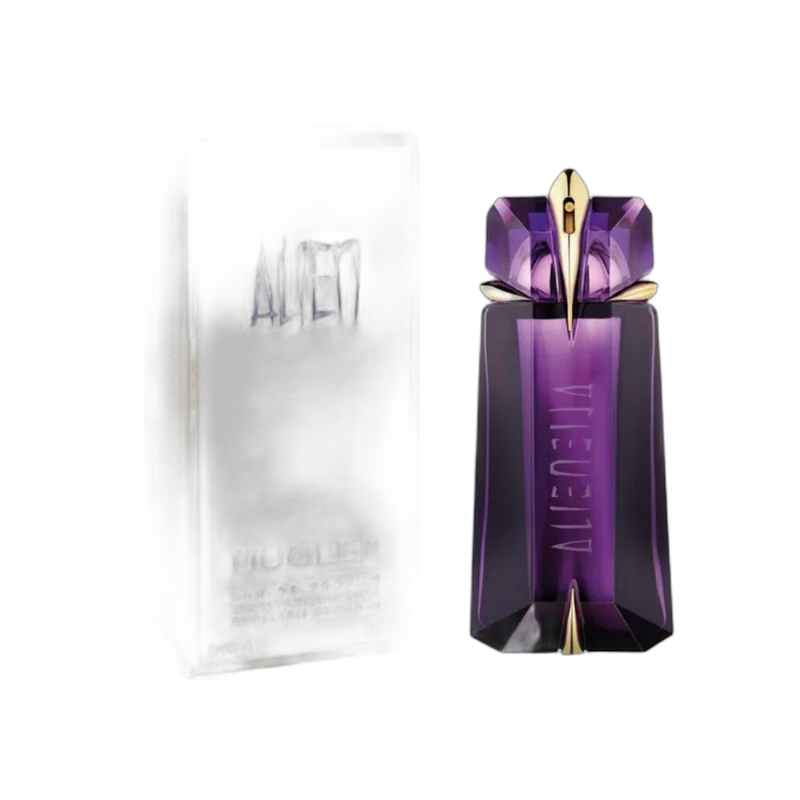
Alien Eau De Parfum
The more wearable of the two Mugler titans and, for a lot of people, the one that finally made the house make sense day to day. Alien landed in 2005, composed by Dominique Ropion and Laurent Bruyère around a deceptively short idea, a huge sambac jasmine set against warm amber and the woody hum of cashmeran. There is almost nothing else in it, which is the trick, because that jasmine reads solar and radiant rather than fresh, closer to sunlit petals than a bouquet, and the amber underneath gives it a golden weight that carries for hours. It projects hard and lasts most of a day on skin, so a single spray is genuinely the correct dose. Wear more and it fills a room whether the room wants it or not. Like everything Mugler, it divides people cleanly, but the split runs quieter than Angel's does, and plenty who bounce off the gourmand find they can live with this one full-time. The purple faceted talisman of a bottle is refillable, part of the house's long ecological streak. As a signature scent that works across seasons and most occasions, it is the easier commitment.
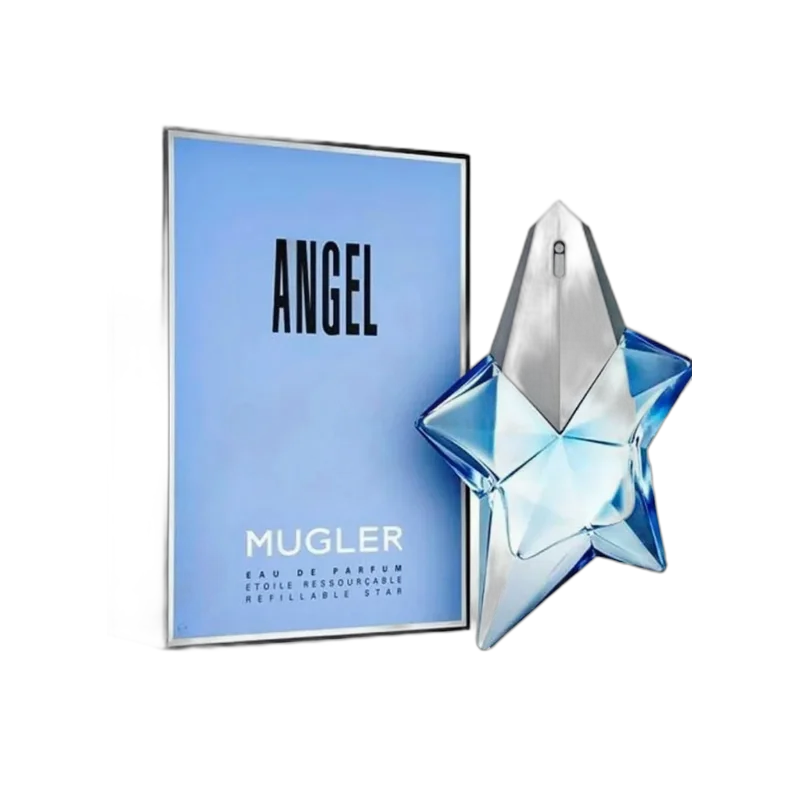
Angel Eau De Parfum
The bottle that invented an entire genre and split perfume counters in half doing it. Mugler released Angel in 1992, composed by Olivier Cresp and Yves de Chirin, and nothing before it smelled remotely like it, a collision of ripe red berries and honey up top over a base of dark patchouli, praline, caramel and chocolate that reads like a fairground dipped in earth. This is the fragrance that founded the modern gourmand, and every sweet-and-dirty scent since owes it something. It is loud in a way few things are, projecting across a room for hours and clinging to fabric for days, so restraint at the nozzle is not optional. The patchouli is what stops it turning to candy, dragging all that sugar somewhere adult and slightly feral, which is exactly why it is a love-or-hate proposition and always has been. The blue star-shaped flacon is as recognisable as the juice and refillable by design. Best in cold weather and after dark, it rewards anyone who wants to be unmistakable rather than agreeable. Three decades on, it still smells like nothing else on the shelf.
How the scent profiles compare
The same note families charted on each card above, lined up so you can see where each one leans.
How They Differ
Start with the accord at the centre of each, because that one choice explains almost everything else about how they wear.
Angel is built on dark patchouli, praline, caramel and chocolate, with a top of ripe red fruit and honey that fades fast into the base. Olivier Cresp and Yves de Chirin composed it, and the patchouli is the load-bearing note: it drags all that sugar down into the earth and stops the whole thing collapsing into dessert. What you are left with is a sweet, dirty, almost savoury warmth that smelled like nothing before it and founded the modern gourmand outright. It is a cold-weather structure through and through, best after dark, and it does not do subtle.
Alien takes a cleaner route. Its signature is a single huge sambac jasmine set over warm amber and cashmeran, and that is very nearly the whole formula. Dominique Ropion and Laurent Bruyère kept it deliberately spare, so the jasmine reads solar and golden rather than green or fresh, glowing over an amber base that gives it real weight. Where Angel is busy and layered, Alien is one big idea held for hours. It has warmth without the gourmand sweetness, which is why it slides into daytime and warmer months far more easily than Angel ever could.
The way each opens tells the same story. Angel hits with a jarring blast of fruit and sweetness in the first minutes, sharp enough to alarm the uninitiated, before the patchouli and praline settle into the thick, chocolatey warmth it holds for the rest of the wear. Alien is smoother from the first spray, the jasmine and amber arriving together and simply deepening as the woods warm underneath, so it never really surprises you. One ambushes you and then mellows; the other is coherent from the start.
Performance is where they are twins. Both are beasts. Angel projects across a room for hours and lives on fabric for days, genuinely one of the longest-lasting things you can buy. Alien is not far behind, projecting hard and lasting most of a day on skin. This shared trait is also the shared warning, because both reward a light hand and punish a heavy one. A single spray of either is the correct dose for anywhere with other people in it.
Gender framing is worth a line, since both are marketed as feminines. Angel wears that way, though its sheer strangeness pulls in plenty of men who like a gourmand with grit. Alien is the more conventionally feminine of the two on the surface, all that solar jasmine, but the amber base gives it a warmth that reads unisex on the right skin. Neither is trying hard to cross over, but both attract wearers the marketing did not target.
The one thing they truly share, beyond the badge and the strength, is that nobody wears either quietly. Both are conversation-starters, and the compliments they draw are never polite background murmurs. Ask anyone who owns one, and they will tell you people either love it or physically step back. That reaction is the point of a Mugler, not a flaw in it.
Price & Value
Both bottles sit in the same designer-prestige bracket, and both are heavily stocked in the retailers we track, which is the most useful thing about cross-shopping them. When a fragrance is this widely carried, the gap between the dearest and cheapest listing on any given day runs wide, and the live lowest price usually lands well under full department-store retail. That holds for both, so spend is rarely the tiebreaker here. You are choosing on scent, not on cost.
Where value genuinely tilts is longevity, and it tilts hard in both their favour. These are two of the most efficient performers at any price. A bottle of either lasts a very long time in practice, because you physically cannot use much per wear without overwhelming everyone near you. That turns the price-per-wear into some of the best value in the whole designer tier, gourmand or otherwise. You are buying scent that outlasts most things twice its price.
The other value angle is the refill system. Both flacons are designed to be refilled at Mugler's fountains rather than replaced, part of the house's long ecological streak, and where that service is available it drops the cost of the next fill well below a fresh bottle. It is worth knowing before you commit, because it changes the maths on living with either one long-term. Sample first regardless, because both are strong enough that a bad match is an expensive mistake, and both read very differently from one person's skin to the next.
Which One to Buy
Here is the split, as plainly as it goes.
Buy Angel if you want gourmand drama and you are not remotely interested in blending in. It is the sweeter, dirtier, more theatrical of the two, a patchouli-praline monument that founded a genre and still sounds like nothing else. It is at its best in cold weather and after dark, and it rewards anyone who wants to be the most memorable person in the room. Go in knowing it is enormous and genuinely polarising, so a single spray and a skin test come first. If gourmands are your world, it is also the historical root of half of them, which you can trace across our guide to the best gourmand fragrances.
Buy Alien if you want a warm, radiant signature you can wear most days without a second thought. The solar jasmine and amber give it real presence with far less of Angel's cold-weather-only, evening-only narrowness, so it spans more seasons and more occasions. It is still a performance beast, and it still divides people, but it divides them more quietly, and plenty who cannot live with the gourmand wear this one full-time.
If you cannot choose, think about when you will actually reach for it. People who mostly dress up at night in winter end up loving Angel and finding Alien a touch tame. People who want an everyday signature find the reverse, that Angel is far too much for a Tuesday and Alien is exactly right. The two lead our roundups of the best jasmine fragrances and the best patchouli fragrances respectively, which tells you in one line where each really lives. There is no wrong answer here, only a right temperament.
Compare Mugler fragrance prices across every retailer on Aurexum