
What Is a Flanker Fragrance?
What a Flanker Actually Is
A flanker is a spin-off fragrance that borrows an existing bestseller's name and bottle while changing the juice inside. It is the perfume industry's way of monetising a proven hit without the risk and expense of launching something entirely new, which is why the biggest sellers on any shelf tend to be surrounded by a small cloud of variants.
If you have ever stood in front of a counter looking at five bottles that all say the same brand name in slightly different colours, you have met a flanker range. One of them is the original pillar. The rest are flankers, and understanding how they relate to that pillar, and to each other, is the single most useful skill for not wasting money at the fragrance counter.
Why Houses Make So Many of Them
The economics are simple and a little cynical. A new fragrance name is a gamble. Marketing it means building recognition from zero, and most launches quietly fail. A name that already sells, by contrast, comes with built-in demand, shelf space, brand recall and a customer who already trusts it. Bolting a variant onto a known quantity is far cheaper and far safer than starting again.
So when a house has a genuine hit, it milks it. The original keeps selling to newcomers while flankers capture the existing fans looking for something a little different, a seasonal option, or simply a reason to buy the bottle they love a second time. A strong pillar can carry a dozen flankers over its lifetime, and the good ones subsidise the house's riskier, more creative work elsewhere.
None of that is a reason to avoid flankers. Plenty are excellent, and a few comfortably outdo the original. It is only a reason to shop them with your eyes open, because the marketing is deliberately built to make you assume a family resemblance that may not exist in the bottle.
The Flanker Taxonomy
Flankers are not all the same beast, and learning the common types tells you most of what you need before you even sniff.
The concentration flanker is the most honest of the lot. It takes the original composition and rebuilds it at a higher concentration, usually badged Intense, Parfum, Elixir or Extrait. Done well, this means a richer, denser, longer-lasting take on a scent you already know. This is the category where the name on the bottle is the most reliable guide to what is inside, and it is worth understanding how the concentrations differ before you shop, which is covered in our EDT vs EDP explained guide.
The Intense or Elixir that changes the recipe is trickier. Many flankers wear the word Intense or Extrait but are not simply a stronger version of the original at all. They keep the general theme and swap materials around, adding spice, sweetness or smoke that the base version never had. Here the badge tells you the house wants you to think richer, but the actual juice might be a different scent that only rhymes with its parent.
The sport, fresh or aquatic flanker takes a warm or heavy original and makes a lighter, more citrus- or marine-driven summer version for people who find the pillar too much in heat. These often share very little with the original beyond the name.
The seasonal or limited edition is a cosmetic reshuffle, frequently a tweak to the top notes and a new bottle colour, released to give fans a reason to buy again. The differences are usually small.
Then there is the "same name, entirely different scent" flanker, the trap for the unwary. This is a variant that keeps the name and the recognisable bottle silhouette but is built to smell like something else completely. The bottle does the work of implying continuity that the formula never honours.
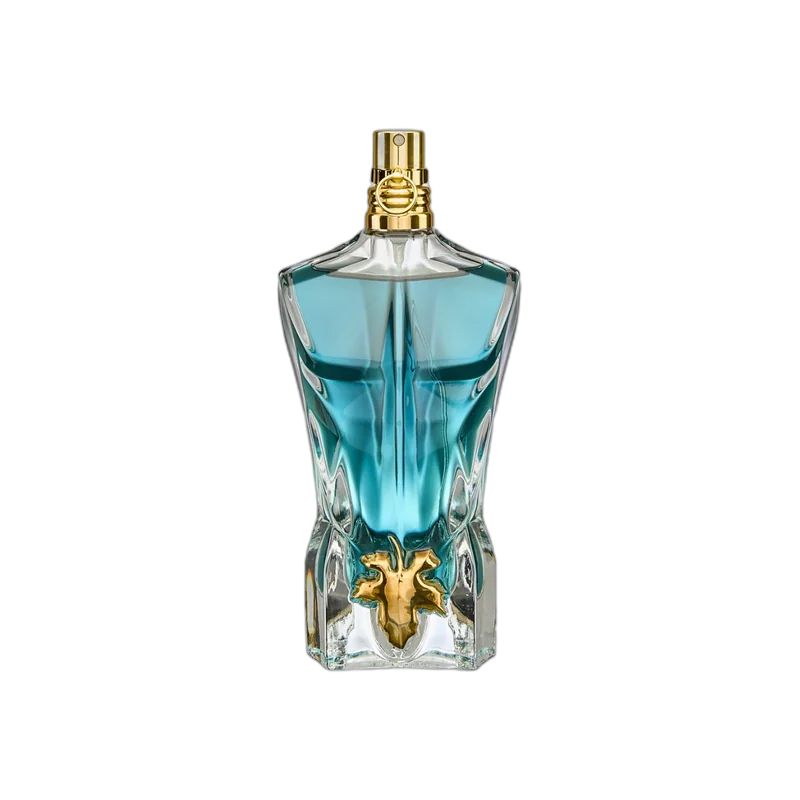
Le Beau
Jean Paul Gaultier's 2019 flanker to Le Male, and the cleanest proof that a flanker can share a name and a bottle while sharing almost nothing else. Where Le Male is a barbershop lavender-vanilla, Le Beau went the opposite way, a warm woody-amber built on coconut wood and a big dose of tonka, with bergamot up top and a synthetic cedar spine holding it together. It reads sweet and creamy rather than fresh, closer to a beachy skin scent than the classic it descends from, which is exactly why blind-buying it on the strength of the original catches people out. Performance is moderate, projecting for a few hours before settling close for most of a day, and it wears best in warm weather where the coconut has room to breathe. The bottle is the same muscular sailor torso in a bronzed finish, doing the work of making shoppers assume a family resemblance that the juice never delivers. It has since spawned its own sub-line of Le Beau Le Parfum editions. As a lesson in how far a flanker can drift from its source, few are more instructive than this one.
Le Beau above is the textbook case of that last category. It shares the muscular sailor-torso bottle with Jean Paul Gaultier's Le Male and almost nothing of the scent, trading the barbershop lavender for a warm coconut-and-tonka woody amber. If you want to see how far three bottles under one name can drift apart, our Le Male vs Ultra Male vs Le Beau comparison lays the family out side by side.
How to Read a Flanker Shelf
The core skill is working out, before you buy, whether a flanker is a genuine reformulation of the original at higher strength or a different scent wearing the same name. A few habits make that easy.
Start with the badge, but do not trust it blindly. Intense and Elixir sometimes mean richer, and sometimes mean merely louder or simply different. The word on the front is a marketing decision, not a technical guarantee.
Read the note list against the original. If a flanker's listed materials look like the pillar with a couple of extras, it is probably a faithful concentration bump. If the notes are wholesale different, treat it as a new scent that happens to share a name.
Watch the bottle. Houses signal a heavier concentration with darker or smoked glass, which is a genuinely useful visual cue when the concentration flanker is done properly. The Boss Bottled Parfum further down does exactly this, keeping the familiar silhouette in darker glass to flag the step up in weight.
Above all, sample. The single biggest flanker mistake is buying one on the assumption it smells like the original, only a bit stronger. Two of the three cases in this post disprove that assumption on their own.
When Flankers Beat the Original
For all the cynicism around them, flankers regularly improve on what came before. Sometimes a house nails the formula second time round, softening a polarising original into something more people can wear, or adding the depth the pillar always lacked.
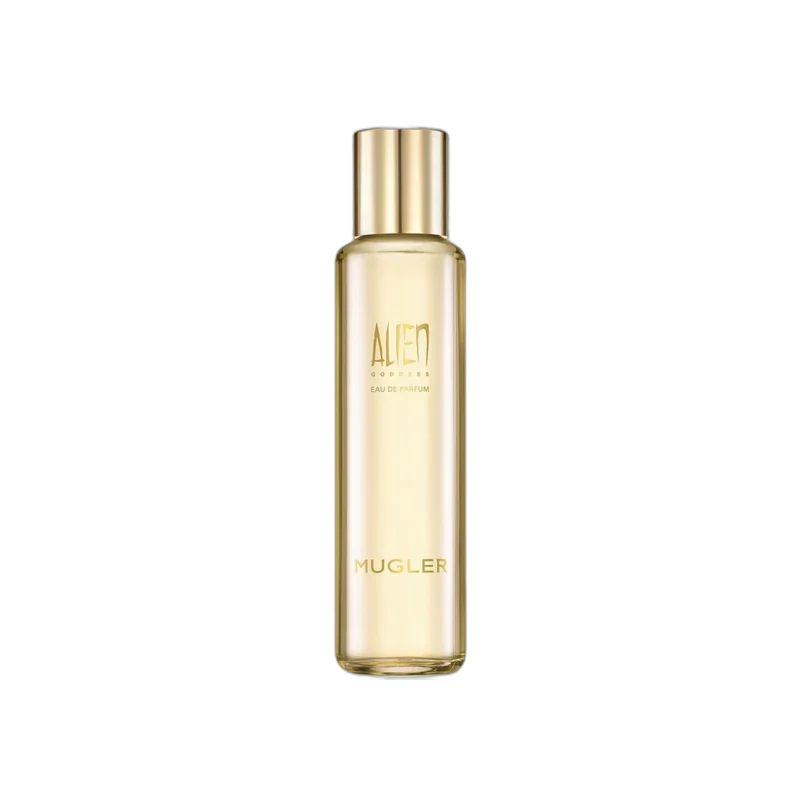
Alien Goddess Eau De Parfum
The solar jasmine that anchors Alien has been the house's signature since 2005, but the original was dense and almost aggressive enough to clear a room. Alien Goddess, released in 2021, keeps that jasmine at the centre and wraps it in bergamot, a creamy vanilla and cashmeran, so the whole thing turns rounder, warmer and far more approachable than the spiky mother scent. It still carries obvious Mugler DNA, that radiant white-floral glow, but the sharp edges are gone and the vanilla base makes it read closer to a modern crowd-pleaser than a statement piece. Projection is strong for the first hours before it settles into a soft floral hum lasting most of a day, and it suits daytime and warmer months better than the heavy original ever did. The purple faceted stone bottle refills, in keeping with the house's long-running sustainability angle. It has grown its own set of Intense and Supra Florale editions on top. Where the original demanded you meet it halfway, Goddess simply gets out of the way and lets the jasmine do its work.
Mugler's Alien Goddess is the clearest example of the softening move. The original Alien was famously divisive, a dense jasmine-and-amber that split opinion hard. Goddess keeps the solar jasmine but wraps it in vanilla and cashmeran, turning a statement scent into an approachable crowd-pleaser without losing the house signature. It is a rare case of a flanker widening a fragrance's appeal rather than just extending its shelf life.
The concentration flanker done properly is the other reliable win, and it is where the badge actually earns your trust.
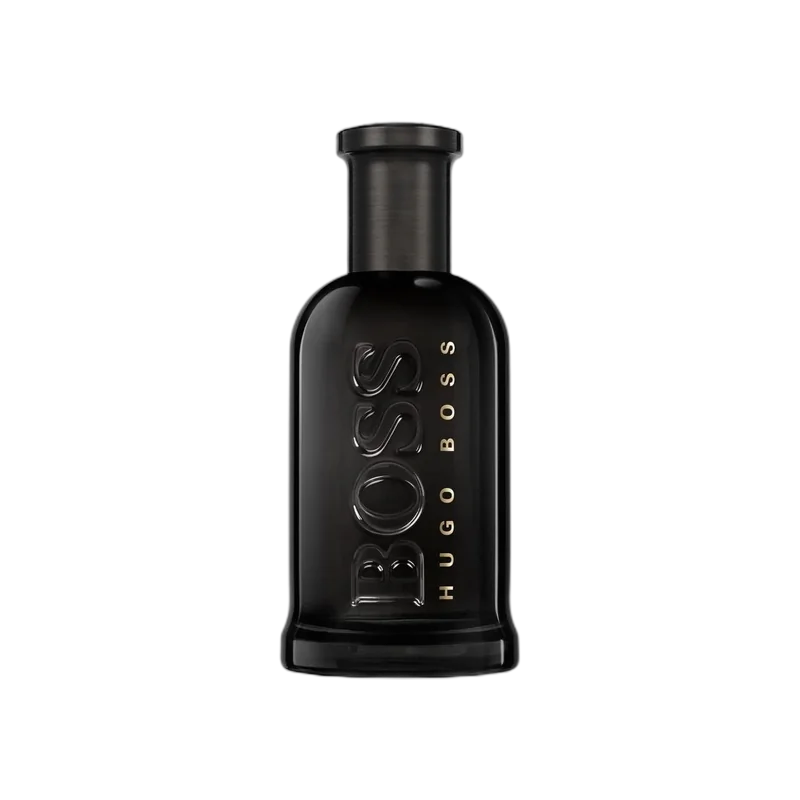
Boss Bottled Parfum
The original Boss Bottled has sat on office shelves since the late nineties, an apple-and-cinnamon woody staple that works year-round and rarely offends anyone. The 2022 Parfum takes that dependable shape and deepens it, trading the crisp apple opening for a darker, denser core of cinnamon, patchouli and a resinous amber, with sandalwood and vanilla thickening the base into something closer to cold-weather territory. It is unmistakably related to its parent yet noticeably richer and more nocturnal, the sort of step-up that rewards wearing them side by side to feel the difference. Performance is the main upgrade, projecting harder and lasting appreciably longer than the everyday version, which is the whole point of paying for the heavier concentration. It leans evening and autumn-winter where the original works year-round at a desk. The bottle keeps the familiar rounded Boss Bottled silhouette in a smoked, darker glass that signals the shift without abandoning the line. Done properly, a concentration flanker earns your trust by delivering exactly that shift in weight — and this one does.
Boss Bottled Parfum is that format at its most convincing, taking the office-staple original and deepening it into something darker, denser and built for cold weather and evenings. It is unmistakably the same fragrance family, only richer and longer-lasting, which is exactly what a concentration flanker should deliver. The same logic drives some of the best-loved upgrades in the hobby: the flanker ladders in our Sauvage EDT vs EDP vs Elixir and Terre d'Hermès EDT vs Parfum breakdowns show how a heavier concentration can genuinely transform a scent rather than just amplify it. On the feminine side, our Delina vs Delina La Rosée comparison is a good study in how a lighter, brighter flanker can become the more wearable everyday choice.
How to Buy a Flanker Without Regret
The golden rule is the one worth repeating: never blind-buy a flanker assuming it smells like the original. That single mistake accounts for most flanker disappointment, because the whole marketing apparatus is designed to make you assume continuity.
Beyond that, a few things keep you on the right side of the trade. Sample the flanker on skin next to the original if you can, because that side-by-side is the fastest way to tell a faithful concentration bump from a different scent in a familiar bottle. Read the notes rather than the name, and let the materials, not the badge, set your expectations. Treat the bottle colour as a hint about intended strength rather than a promise. And check the live price, because flankers of big pillars are heavily stocked and the everyday cost usually sits well under full retail once you compare across sellers.
Get those habits right and flankers stop being a trap and start being what they should be, a way to own several angles on a scent you already love, or to find the version of a famous fragrance that finally suits you.
Compare flanker fragrance prices across every retailer on Aurexum