
Fragrance Families Explained
What Are Fragrance Families?
Fragrance families are the standard way of classifying scents by their dominant character. At the broadest level there are four: fresh (citrus, aquatic and green), floral, oriental or amber (spicy, vanilla and oud), and woody. Sitting across those four are the crossover families that most guides skip over, fougère, chypre, gourmand and leather, each defined by a structure rather than a single note. Learn those and you can place almost any bottle you smell.
The reason this matters for shopping is simple. Once you know which family a scent belongs to, you know roughly how it will wear, what weather it suits, and what else you are likely to enjoy. Someone who loves one fresh citrus will usually get along with most of them. Someone who finds ambers too heavy can skip a whole section of the shelf. The families are a shortcut, not a science, and the edges blur constantly, but they are the most useful map we have.
This is the hub we point back to from every note guide on the site. Below we walk each family in turn, say what it actually smells like and who it suits, and put one archetype beside it so you have a real bottle to anchor the idea. Where a family has its own full guide, we link it so you can go deeper.
The Fresh Family
Fresh is the easiest family to recognise and the hardest to wear badly. It covers three overlapping styles. Citrus scents lead with lemon, bergamot, grapefruit or orange, bright and short-lived at the top. Aquatic scents chase the smell of sea air and rain using synthetics like calone and ambroxan. Green scents lean vegetal, all cut grass, crushed leaves and galbanum. What they share is a top-heavy structure that reads clean and cool, which is why fresh scents dominate summer and daytime wear.
The trade-off is longevity. Citrus molecules are volatile and burn off fast, so the freshest scents often need reapplying, and the better ones cheat by grounding that brightness on musks or light woods. If you want to go deeper, our guides to citrus fragrances, aquatic fragrances and green fragrances each cover one branch in full.
The archetype below is the fresh family at its most textbook, citrus and apple over a quiet woody base.
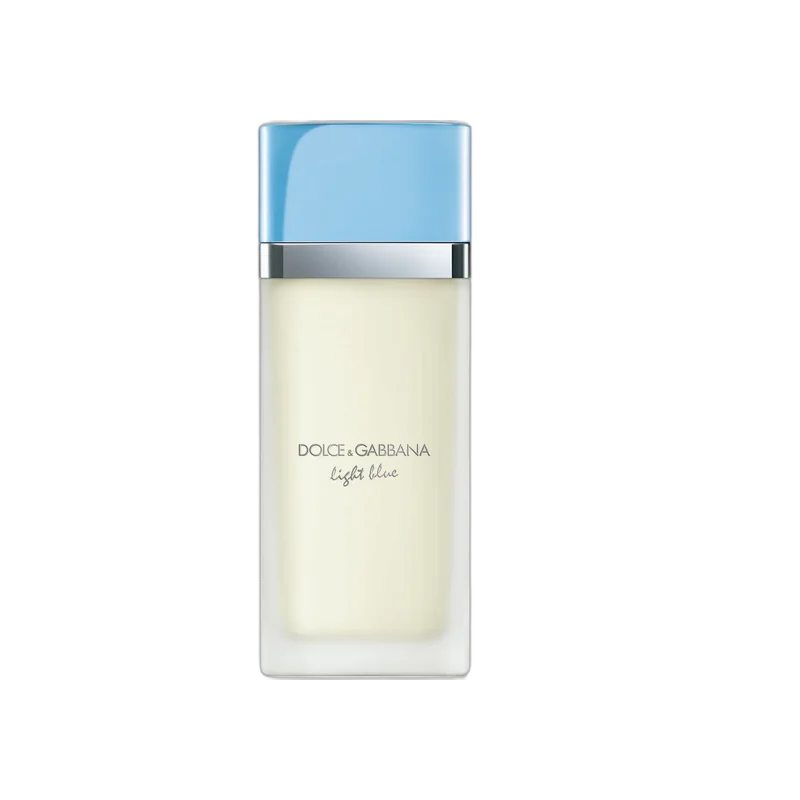
Light Blue Eau De Toilette
Dolce & Gabbana's 2001 summer staple and the fresh family made obvious, composed by Olivier Cresp for the Italian house. Light Blue opens on Sicilian lemon and crisp Granny Smith apple, moves through jasmine and bamboo, then dries down on cedar and a soft white musk that keeps it clean rather than soapy. That citrus-over-woods build is the textbook fresh structure, bright at the top and quietly grounded underneath, which is why it still gets recommended to anyone learning the category from scratch. It wears best in heat and daylight, projecting moderately for the first hours before settling into a close skin scent, so it reads as an everyday warm-weather choice more than an evening statement. Made under licence and stocked almost everywhere, it has spawned a long line of flankers and Intense versions, but the original EDT remains the reference point. It sits at the affordable-designer tier and is one of the most cloned fresh scents on the market, which tells you how well the formula landed. For a first lesson in what fresh actually means on skin, this is the one to smell.
The Floral Family
Floral is the largest and most varied family, which makes it the one people most often misjudge. It is not all soft and feminine. A floral is simply any scent built around flowers as the lead, and that covers everything from a single sheer rose to a dense white-floral bouquet of jasmine, tuberose and orange blossom that can wear as loud as anything on the shelf. Soliflores focus on one flower; bouquets layer several. The character depends entirely on which flower leads and what sits underneath it.
The useful thing to understand is that a flower changes completely depending on its structure. A rose over clean musk reads bright and modern. The same rose over patchouli and oud reads dark and serious. That is why florals cross into so many other families, and why we treat the base as half the story. Our guide to floral perfumes for women breaks the sub-styles down, and the lavender guide covers the one flower that behaves more like an aromatic than a bloom.
The archetype here is a modern rose kept deliberately light, a clear lesson in how one flower gets steered.
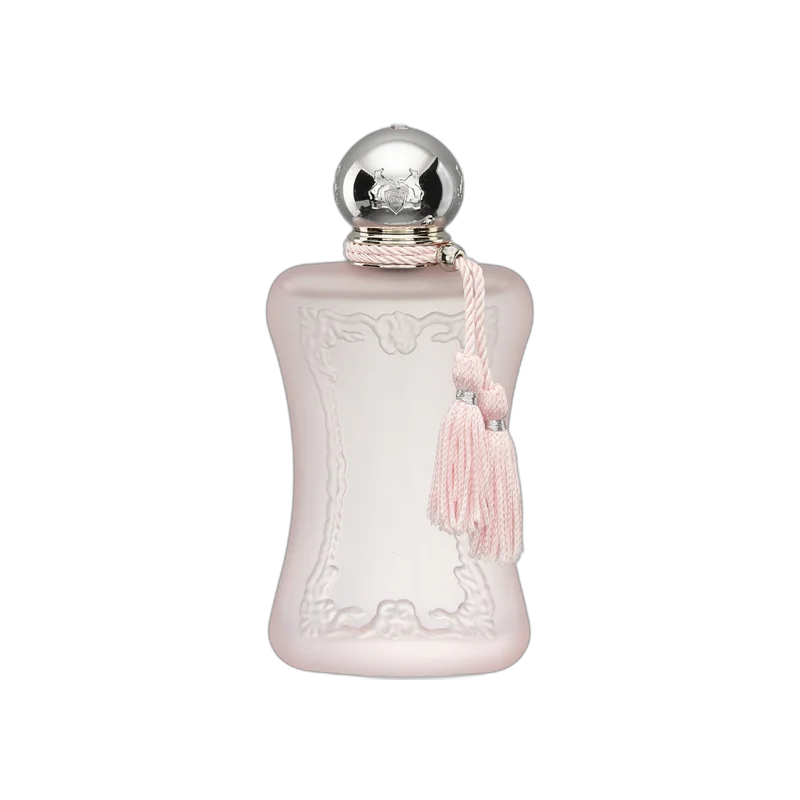
Delina La Rosee
Parfums de Marly's 2021 rose and the floral family at its most modern and polished, built for the house's feminine line. Delina La Rosée is the lighter, dewier sister of the original Delina, trading some of that scent's plush warmth for a translucent, watery freshness. It centres on Turkish rose lifted by lychee and bergamot, with peony and a clean musk keeping the whole thing airy rather than heavy, and a soft base of vanilla and cedar rounding the edges. This is a good way to understand what floral means beyond the cliche of a bouquet, a single hero flower placed in a structure that decides its whole character. Where a chypre or an amber would darken a rose, here it is kept bright and almost sheer, a daytime and warm-weather reading of the same note. Performance is moderate and close to the skin, more of a personal-space scent than a room-filler, which suits its transparent style. It sits in the affordable-prestige bracket the house occupies and undercuts much of the niche competition. For a clean, contemporary floral that shows how one flower can be steered, start here.
The Oriental and Amber Family
This is the warm, heavy end of the wheel, and the name is in flux. The trade increasingly says amber where it used to say oriental, but they point at the same thing, scents built on resinous warmth rather than freshness or flowers. The core is usually labdanum, benzoin and vanilla, giving that sweet, golden, slightly powdery glow. From there the family splits by what it adds. Spicy ambers push cinnamon, clove and pepper. Vanilla ambers lean sweet and edible. Oud ambers add the smoky, medicinal woodiness of agarwood.
These are cold-weather and evening scents almost by definition. That density of resin and vanilla feels wrong in summer heat and comes alive in the cold, projecting warmly and lasting for hours. They are also where sweetness lives, so anyone who finds ambers cloying usually wants to look at fresh or woody instead. For the branches, see our guides to amber fragrances, vanilla fragrances, oud fragrances and spicy fragrances.
The archetype below is amber at its plainest, warm resin and vanilla with a little saffron and oud for depth.
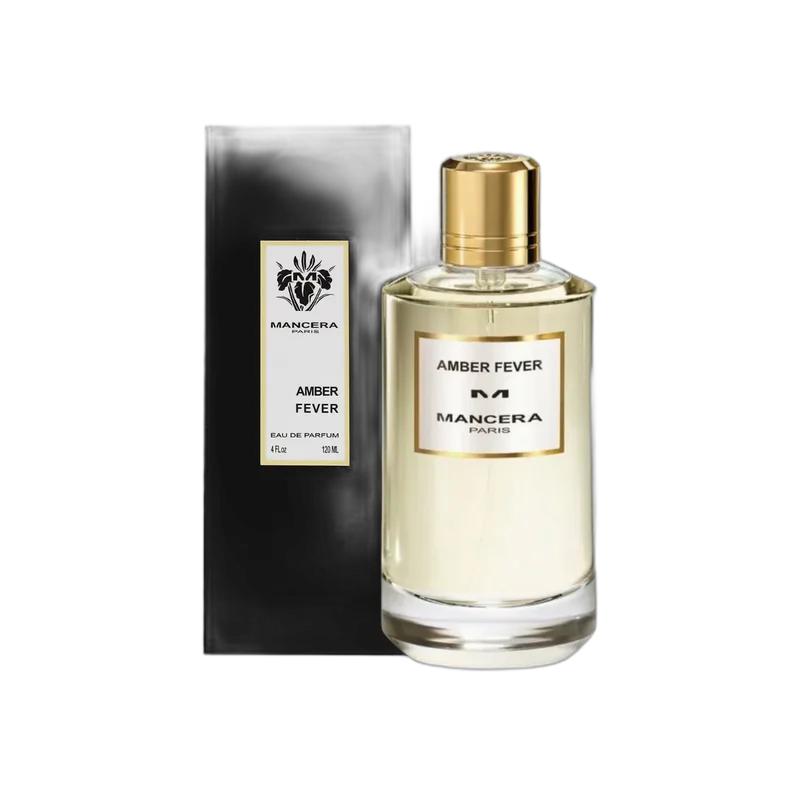
Amber Fever
Mancera's 2019 amber and a plainly labelled way into the oriental family, built by the Paris house in its signature loud, high-value style. Amber Fever does what the name says, a warm amber and vanilla core dusted with saffron and dried fruit, with a little rose and oud giving it depth and a faintly boozy edge. This is the amber structure at its clearest, sweet resinous warmth carried by labdanum and benzoin rather than the citrus or florals that lead the fresher families, which is exactly what makes it a useful teaching example. It reads unisex despite the framing and skews strongly to cold weather and evenings, where that dense sweetness has room to breathe. Performance is the Mancera calling card, projecting hard for hours and lasting most of a day on skin and fabric, output that shames pricier designer ambers. Bottled in the house's heavy black-and-gold flacon, it sits in the affordable-niche bracket and undercuts almost everything in its lane. It has stablemates across the Montale and Mancera lines, but this is a clean shot at the family. For learning what amber wears like without prestige money, it is a smart pick.
The Woody Family
Woody is the backbone of the whole wheel, because almost every scent uses wood somewhere in its base. As a family in its own right, though, it means scents where the wood leads: sandalwood creamy and soft, cedar dry and pencil-sharp, vetiver rooty and smoky, and the modern amberwoods like Iso E Super and ambroxan that give so many contemporary bottles their transparent, skin-close warmth. Woods read dry and grounded rather than sweet or bright, which makes the family unusually versatile across seasons and genders.
The reason woods matter for classification is that they anchor everything else. A citrus over cedar becomes a fresh woody. A rose over sandalwood becomes a woody floral. Understanding the woody base under a scent tells you how it will dry down long after the top notes have gone. Our woody fragrances guide covers the family in full, from creamy sandalwoods to the sharp synthetic ambers that define the current mainstream.
The Crossover Families
Here is where most guides go quiet, and where a fragrance wheel earns its keep. Four families are defined not by a single note but by a structure, a recipe of accords, which is why they sit between the big four rather than inside them.
Fougère is the classic barbershop shape: lavender up top, a mossy base, and a hay-like sweetness from coumarin bridging the two. It was invented in 1882 and has powered masculine perfumery ever since, so if a men's scent smells clean, aromatic and slightly soapy, it is almost certainly a fougère. Chypre is its more serious cousin, built on a contrast between a bright citrus top and an earthy base of oakmoss, patchouli and labdanum. That tension between fresh and dark is the whole point, and it gives chypres their dry, autumnal gravity.
Gourmand is the youngest family, born in the 1990s, and the easiest to describe: scents that smell edible, built on notes like vanilla, caramel, chocolate, coffee and praline. Leather is the oddest, a family named for an accord that recreates tanned hide, ranging from soft suede to harsh smoky birch tar, and it borrows so freely from amber and woods that the wheel treats it as a bridge. Our guides to gourmand fragrances and leather fragrances go further on the two most shoppable of these.
The two archetypes below show why single-family labels break down. The first is a suede leather that leans woody-amber. The second is a fruity amber-musk that refuses to sit in one section at all.
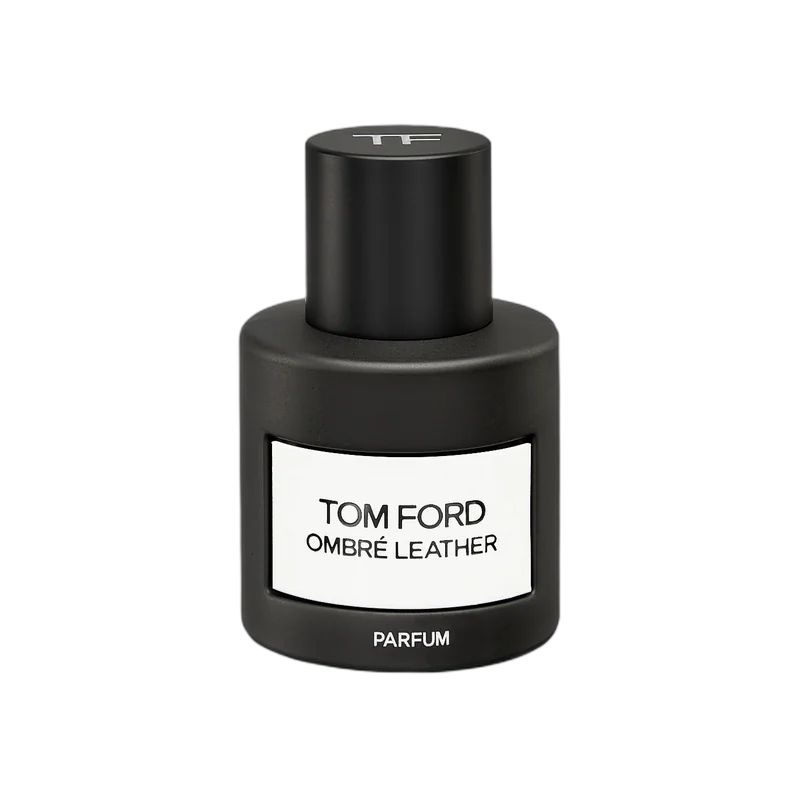
Ombre Leather
Tom Ford's 2018 leather and the crossover family made legible, composed for the American house as a Signature-line pillar. Ombré Leather is a suede-soft leather rather than a harsh tar one, built on a smooth leather accord with cardamom and a touch of jasmine up top, then a base of amber, patchouli and moss that pushes it toward woody-amber territory. That is the whole point of showing it here, leather sits between families, borrowing warmth from amber and dryness from woods, which is why the fragrance wheel treats it as a bridge rather than a pure family. It wears close and warm, unisex in practice despite the masculine marketing, and suits cooler weather and evenings more than a summer daily. Performance is solid without being overbearing, projecting for the first hours then hugging the skin, a considered rather than aggressive leather. Made under licence and heavily stocked, it undercut the older niche leathers on price when it launched and became the accessible modern reference for the style. For understanding how leather crosses into woods and amber at once, this is the clearest single example to smell.
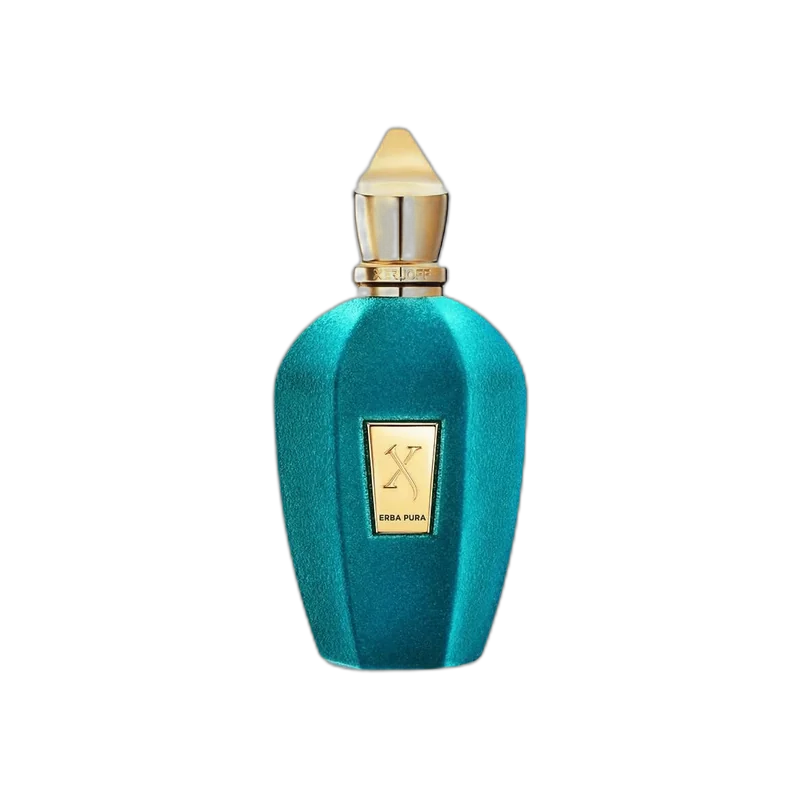
Erba Pura
Xerjoff's 2013 fruity amber-musk and a perfect lesson in how the crossover families blur, built for the Italian house's Casamorati line. Erba Pura opens on a bright, almost jammy fruit accord of orange, bergamot and tropical fruits, then settles into a sweet amber and white-musk base that gives it its cosy, radiant warmth. It sits across several families at once, fresh and fruity at the top, amber and musk underneath, which is precisely why single-family labels start to break down at the niche end and the fragrance wheel becomes more useful than a list. It wears unisex and works across seasons better than most ambers, that fruit keeping it wearable in warmth while the base carries it into cooler evenings. Performance is excellent, projecting strongly for hours and lasting well over a day on skin and fabric, the kind of output the price implies. Bottled in Casamorati's ornate apothecary-style flacon, it sits at the prestige end and has become one of the house's signatures and a frequently cloned scent in its own right. For seeing how fruit, amber and musk share a single fragrance, this is the one.
How to Use the Families When You Shop
The wheel is a starting point, not a verdict. Use it to narrow the field, then trust your nose. If you know you love fresh scents, you can skip the amber wall entirely and spend your budget where it counts. If a scent you like turns out to be a chypre, you now have a whole family worth exploring instead of one lucky bottle.
Two habits make the families genuinely useful. First, learn to spot the base, since the drydown tells you more about a scent's family than the fleeting top notes ever will. Second, remember that the more expensive a bottle gets, the more it tends to blur lines, because niche houses build across families on purpose. The archetypes above are deliberately clean examples; plenty of great scents sit in the cracks between them.
Sample before you commit at the dearer end, because a family only tells you the shape of a scent, not how it will read on your skin. The same amber wears warmer on one person and sweeter on another. When you are ready to compare what a scent actually costs across the retailers we track, the price data does the rest.